

Quick Facts: Picky Eating in Kids
Picky eating is common during childhood, especially between the ages of 2 and 6, and is often a normal part of development.
Parents can encourage healthy eating habits by offering a variety of foods, avoiding pressure during meals, and providing repeated exposure to new foods.
If picky eating leads to poor growth, weight loss, nutritional deficiencies, extreme food restriction, or significant mealtime stress, it may be time to talk to a pediatrician.
Is It Normal for Kids to Be Picky Eaters?
If your child seems to survive on chicken nuggets, crackers, or a handful of favorite foods, you're not alone.
Picky eating is one of the most common concerns parents bring up during pediatric visits. Many children go through phases where they suddenly refuse foods they previously enjoyed, avoid vegetables, or seem interested in eating very little.
Picky eating often becomes more noticeable during feeding transitions, such as moving from purees to textured foods, transitioning to family meals, or adjusting to school meals and routines.
The good news is that picky eating is often a normal part of childhood development. Understanding what is typical—and what may need medical attention—can help reduce stress, support healthy eating habits, and make mealtimes more enjoyable for the entire family.
Why Are Kids Picky Eaters?
There is not one single cause of picky eating. Instead, several developmental and environmental factors can influence a child's eating habits.
Developmental Independence
As children grow up, they naturally seek more control over their environment. Food choices are often one of the first areas were children express independence.
Changing Appetites During Growth
Children do not grow at the same pace every day. The appetite often fluctuates, and some days they may eat much less than parents expect.
Taste Preferences
Children tend to prefer sweeter flavors and may be more sensitive to bitter tastes, which can make vegetables more challenging.
Food Texture Sensitivities
Some children dislike certain textures, temperatures, or food consistency.
Exposure to New Foods
Many children need multiple exposures to new food before they are willing to try it. Refusing food once does not necessarily mean they will never eat it.
Family Mealtime Dynamics
Stressful mealtimes, pressure to eat, or inconsistent routines can sometimes make picky eating more difficult.
Key takeaway: Picky eating is often a normal developmental phase, particularly between ages 2 and 6.
What Does Normal Picky Eating Look Like?
Many parents worry that their child's eating habits are unusual when they are actually quite common.
Normal picky eating may include:
- Preferring familiar foods
- Refusing vegetables
- Eating very little at some meals
- Eating well one day and very little the next
- Rejecting a new food several times before accepting it
- Preferring foods prepared in a specific way
- Going through temporary food "phases"
While these behaviors can be frustrating, they are often part of normal childhood development.
What Foods Should You Offer a Picky Eater?
Rather than focusing on getting your child to eat specific foods, aim to offer a variety of nutritious options over time.
Try to include at least one food your child already accepts alongside new or less familiar foods. This approach can help reduce mealtime stress while encouraging exposure to a wider variety of foods.
Protein Sources
Protein supports growth and development.
Examples include:
- Chicken
- Turkey
- Eggs
- Fish
- Greek yogurt
- Cheese
- Tofu
- Beans
Fruits
Many picky eaters are more willing to eat fruit than vegetables.
Examples include:
- Apples
- Berries
- Bananas
- Grapes
- Oranges
- Pears
Vegetables
Continue offering vegetables regularly, even if your child refuses them.
Examples include:
- Carrots
- Cucumbers
- Bell peppers
- Broccoli
- Green beans
- Sweet potatoes
Whole Grains
Whole grains provide fiber and energy.
Examples include:
- Oatmeal
- Whole-grain bread
- Brown rice
- Whole-grain pasta
- Quinoa
Dairy and Dairy Alternatives
Examples include:
- Milk
- Yogurt
- Cheese
- Unsweetened, fortified soy milk, when recommended or appropriate.
The goal is not perfection for every meal. Instead, focus on providing opportunities for balanced nutrition throughout the week.
Meal Ideas for Picky Eaters
Breakfast Ideas
- Yogurt parfait with fruit and granola
- Oatmeal topped with berries
- Egg muffins with cheese
- Whole-grain toast with nut butter
- Smoothies made with fruit and yogurt
Lunch Ideas
- Turkey roll-ups
- Cheese and whole-grain crackers
- Quesadillas
- Bento-style lunch boxes
- Mini sandwiches with fruit
Dinner Ideas
- Build-your-own tacos
- Pasta with lean protein
- Homemade pizza with customizable toppings
- Chicken and rice bowls
- Grilled chicken with roasted vegetables
Snack Ideas
- Apple slices with peanut butter
- Cheese sticks
- Smoothies
- Hummus and crackers
- Yogurt with fruit
For toddlers and younger children, cut round foods like grapes lengthwise into quarters, cook or thinly slice hard fruits and vegetables, avoid whole nuts, and spread nut butters thinly.
Offering choices within healthy boundaries can help children feel involved without creating mealtime battles.
Food Safety Tips for Younger Children
For toddlers and younger children, cut round foods like grapes, cherry tomatoes, and berries into small pieces, cook or thinly slice hard foods like carrots and apples, avoid whole nuts, and spread nut butters thinly. Children should sit upright and be supervised while eating.
If your child frequently gags, chokes, coughs during meals, or has trouble chewing or swallowing, talk with your pediatrician.
Watch Drinks Between Meals
For many children, water and plain milk are the best everyday drinks. Too much milk, juice, or sweet drinks can fill children up and make them less hungry at meals. Juice is not recommended before 12 months unless advised by a pediatrician. After age 1, offer whole fruit more often than juice and keep juice portions small.
How to Introduce New Foods Without Mealtime Battles
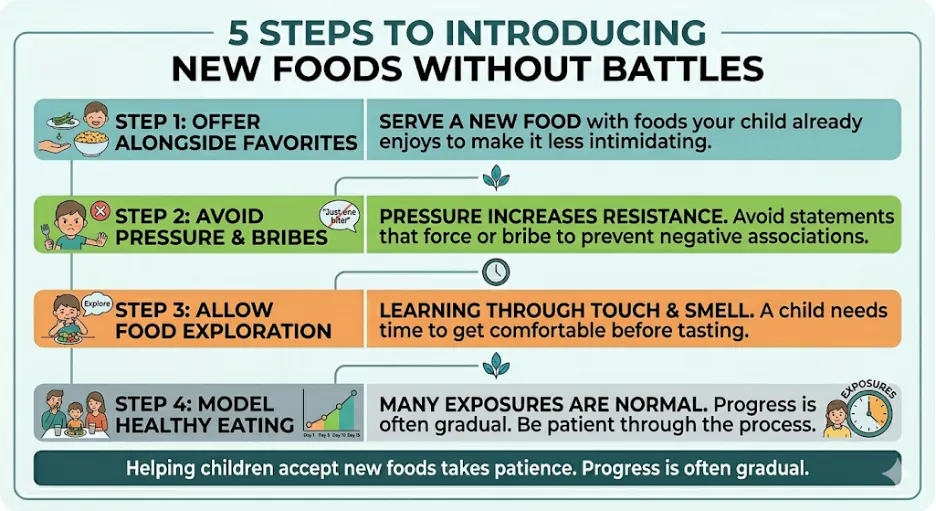
Helping children accept new foods takes patience.
Offer New Foods Alongside Familiar Favorites
Serving a new food alongside foods your child already enjoys can make it feel less intimidating.
Avoid Forcing or Bribing
Pressure can make eating feel more stressful for children and may make them less willing to try new foods over time.
Statements like:
- "Just take one bite."
- "You can't leave the table until you finish."
may create negative associations with eating.
Let Children Explore Foods
Touching, smelling, or looking at food can be part of the learning process. A child may need time to become comfortable with a food before tasting it.
Model Healthy Eating
Children often learn by watching adults and siblings. Eating meals together, when possible, can help children see a variety of foods in a positive setting.
Be Patient
Children may need many exposures to a new food before accepting it. Progress is often gradual.
Feeding Transitions by Age
Toddlers: Ages 1–3
Toddlers commonly:
- Refuse foods
- Change preferences frequently
- Eat inconsistently
- Want more control over meals
This is often a normal developmental stage.
Preschoolers: Ages 3–5
Preschoolers become increasingly independent and may assert control through food choices. Consistent meal routines are helpful during this stage.
School-Age Children
Friends, school schedules, lunch options, and extracurricular activities may influence eating habits. Involving children in simple meal planning or grocery choices can help build interest in new foods.
Teens
Busy schedules, social influences, sports participation, body image concerns, and increased independence can all affect food choices. Teens may benefit from supportive conversations about balanced eating rather than pressure or criticism.
What Not to Do When Your Child Is a Picky Eater
Avoid Pressuring Children to Eat
Pressure can increase food-related anxiety and resistance.
Avoid Using Dessert as a Reward
This may unintentionally make certain foods seem "bad" and others seem more valuable.
Try Not to Become a Short-Order Cook Every Night
Offering a family meal with at least one familiar food can help promote flexibility over time.
Avoid Labeling Your Child as "Picky"
Children often internalize labels.
Instead of saying:
"She's a picky eater."
Try:
"She's still learning to try new foods."
When Is Picky Eating a Concern?
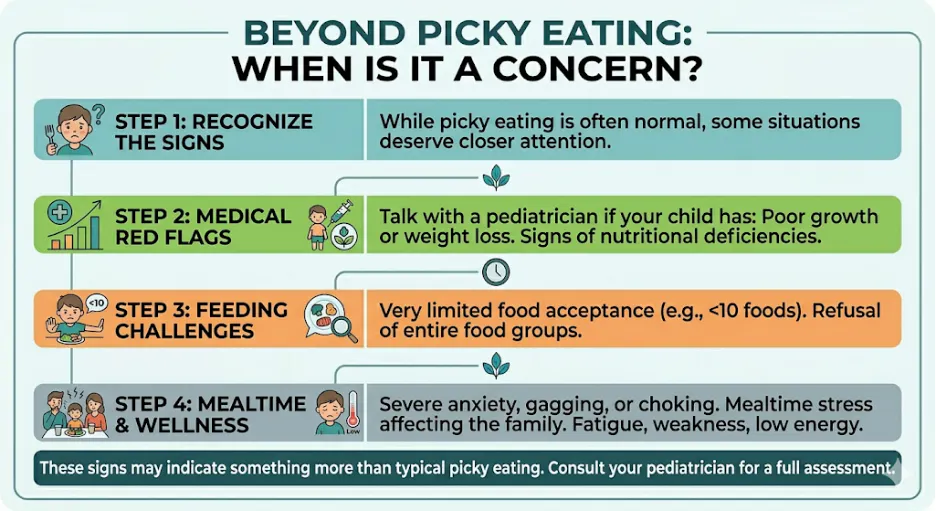
While picky eating is often normal, some situations deserve closer attention.
Red Flags That May Need Medical Evaluation
Talk with a pediatrician if your child has:
- Poor growth
- Weight loss
- Signs of nutritional deficiencies
- A very limited number of accepted foods, such as fewer than 10 to 15 foods, especially if the list keeps shrinking or affects nutrition
- Frequent gagging, choking, or coughing during meals
- Extreme texture avoidance
- Anxiety around eating
- Persistent feeding challenges
- Mealtime stress that affects the whole family
- Avoiding an entire food group, such as most proteins, dairy foods, fruits, or vegetables
- Fatigue, weakness, or low energy that may be related to limited intake
These signs may indicate that something more than typical picky eating is occurring.
Could It Be More Than Picky Eating?
Sometimes feeding difficulties may be related to underlying medical, developmental, or behavioral concerns.
Examples include:
Food Allergies
Certain foods may be avoided because they cause discomfort or allergic reactions. Do not remove major food groups long term without guidance from your pediatrician, especially if growth or nutrition is a concern.
Gastrointestinal Conditions
Reflux, constipation, abdominal pain, or other digestive concerns can affect eating habits.
Sensory Processing Challenges
Some children are highly sensitive to textures, smells, temperatures, or food appearance.
Autism Spectrum Disorder
Feeding challenges may be more common in children with autism, especially when sensory preferences or routines affect food choices.
ARFID
ARFID stands for Avoidant/Restrictive Food Intake Disorder. It is a feeding disorder characterized by significant food restriction that may affect nutrition, growth, or daily functioning.
Unlike typical picky eating, ARFID can have a substantial impact on health and quality of life. It is not driven by body image concerns and may be related to sensory sensitivities, fear of choking or vomiting, low interest in eating, or distress around food.
How a Pediatrician Can Help
A pediatrician can help determine whether your child's eating habits fall within a normal range or warrant further evaluation..
This may include:
- Growth assessment
- Nutrition review
- Developmental screening
- Evaluation for underlying medical conditions
- Guidance on feeding strategies
- Screening for feeding disorders when appropriate
- Specialist referrals when needed
Sometimes reassurance is all that is needed. Other times, additional support may be beneficial.
When a Dietitian or Feeding Specialist May Help
A pediatric dietitian may help if your child has:
- Limited food variety
- Nutrient deficiencies
- Growth concerns
- Significant mealtime stress
- Special dietary needs
- Medical conditions that affect nutrition
A feeding therapist may be recommended when oral-motor skills, sensory concerns, or feeding behaviors require additional evaluation and support.
FAQs
Yes. Picky eating is extremely common during the toddler years and is often related to developmental independence, changing appetites, and normal growth patterns.
Many children improve gradually as they get older. However, the timeline varies, and some children require additional support if eating challenges persist.
Generally, no. Encouraging children to listen to their hunger and fullness cues can help support a healthier relationship with food.
Continue offering fruits and vegetables without pressure. Repeated exposure over time often helps children become more comfortable with new foods. You can also serve small portions alongside foods your child already accepts.
Sometimes. Children with very limited diets may be at risk for nutrient deficiencies, particularly if they eat only a small number of foods or avoid entire food groups.
Consider talking to a pediatrician about whether your child has poor growth, weight loss, nutritional concerns, extreme food restriction, frequent gagging or choking, or significant anxiety around eating.
ARFID stands for Avoidant/Restrictive Food Intake Disorder. It is a feeding disorder involving severe food restrictions that can affect nutrition, growth, and overall health. It is different from typical picky eating and may require support from a medical, nutrition, or behavioral health professional.
Concerned About Your Child's Eating Habits?
Most picky eating improves over time with patience, consistent routines, and repeated exposure to new foods.
However, if your child has a very limited diet, poor growth, weight loss, nutritional concerns, frequent gagging or choking, or ongoing mealtime challenges, it's important to seek professional guidance. A pediatrician can evaluate your child's growth, nutrition, and overall health and determine whether additional support from a dietitian or feeding specialist may be beneficial.
At CLS Health, our pediatricians and pediatric nutrition specialists work together to help children develop healthy eating habits and ensure they receive the nutrients they need to grow and thrive.