

Key Takeaways
Allergy testing helps identify whether your symptoms are caused by an allergy and which allergens may be responsible.
Testing is personalized based on your symptoms and medical history—not broad screening panels.
Skin testing results are often available during the same visit, helping your allergist recommend the most appropriate treatment plan.
Allergy testing helps determine whether your symptoms are caused by an allergic reaction and, if so, which allergens may be involved. At CLS Health, our allergy specialists use targeted testing—including skin testing, patch testing, blood tests, and drug allergy evaluations—to support accurate diagnosis and treatment planning.
Testing is guided by your symptoms and clinical history, not broad screening. We provide comprehensive allergy evaluations at our Houston Galleria and Greater Heights locations.
What Is Allergy Testing?
Allergy testing is a medical evaluation used to assess whether your immune system is reacting to specific substances, known as allergens. These may include environmental exposures, foods, medications, insect stings, or substances that contact the skin.
A positive allergy test indicates sensitization, meaning your immune system recognizes an allergen. Importantly, sensitization alone does not always equal a clinical allergy. Test results must be interpreted alongside your history of symptoms and reactions to determine whether an allergy is clinically significant.
Because allergy symptoms can overlap with many other conditions, testing helps allergists distinguish allergic disease from non-allergic causes and guide appropriate care.
Common Reasons Patients Seek Allergy Testing
Most patients pursue allergy testing after a suspected allergic reaction or ongoing symptoms, such as:
- Sneezing, congestion, or seasonal allergy symptoms
- Hives, rashes, or itching
- Reactions to foods or medications
- Asthma symptoms linked to specific exposures
- Insect sting reactions
- Chronic sinus or skin conditions
The type of reaction and suspected trigger determine which testing method is most appropriate.
Who Should Consider Allergy Testing?
Allergy testing may be recommended for people who:
- Have recurring seasonal allergy symptoms
- Experience hives, eczema, or persistent itching
- Suspect food or medication allergies
- Have asthma that worsens after certain exposures
- Have experienced an insect sting reaction
- Continue to have allergy symptoms despite treatment
Types of Allergy Testing We Offer
Our allergy specialists select testing based on your symptoms, medical history, and suspected allergens. Testing is individualized—not one-size-fits-all.
Skin Prick Testing
Skin prick testing is commonly used to evaluate immediate allergic reactions to environmental allergens such as pollen, dust mites, pet dander, and molds.
Small amounts of allergen are introduced into the superficial layer of the skin, usually on the forearm or back. Results are typically available within 15–20 minutes, so many patients can review their results and next steps with their allergist during the same visit. The test is quick, well-tolerated, and does not require downtime.
Intradermal Skin Testing
Intradermal testing places a small amount of allergen just beneath the skin’s surface. It may be used when additional sensitivity is needed, such as for insect sting allergies or select environmental allergens.
Patch Testing
Patch testing evaluates delayed allergic skin reactions, also known as contact dermatitis.
Patches containing specific substances are applied to the skin and worn for a defined period. Common triggers include metals, fragrances, preservatives, adhesives, and chemicals found in personal care products.
Blood Testing (IgE Allergy Testing)
Blood testing measures allergen-specific IgE antibodies. It may be used when skin testing is not appropriate or practical, such as when:
- Certain medications cannot be safely stopped
- Extensive skin disease limits skin testing
- Additional confirmation is needed alongside skin testing
Blood testing is not a screening tool, and results must be interpreted carefully in the context of symptoms.
Drug Allergy Testing
Drug allergy testing helps evaluate suspected allergic reactions to medications, including certain antibiotics. Testing can help determine whether a prior reaction represents a true allergy or another type of adverse reaction, which may expand safe treatment options.
Preparing for Your Allergy Test
Preparation depends on the type of testing planned. Before your visit:
- Some medications may interfere with testing results
- Your provider will give individualized instructions
- Bring a list of symptoms, suspected triggers, and prior reactions
- Photos of rashes or reactions can be helpful
- Wear clothing that allows easy access to your arms or back if skin testing is planned.
Do not stop prescription medications without guidance from your healthcare provider.
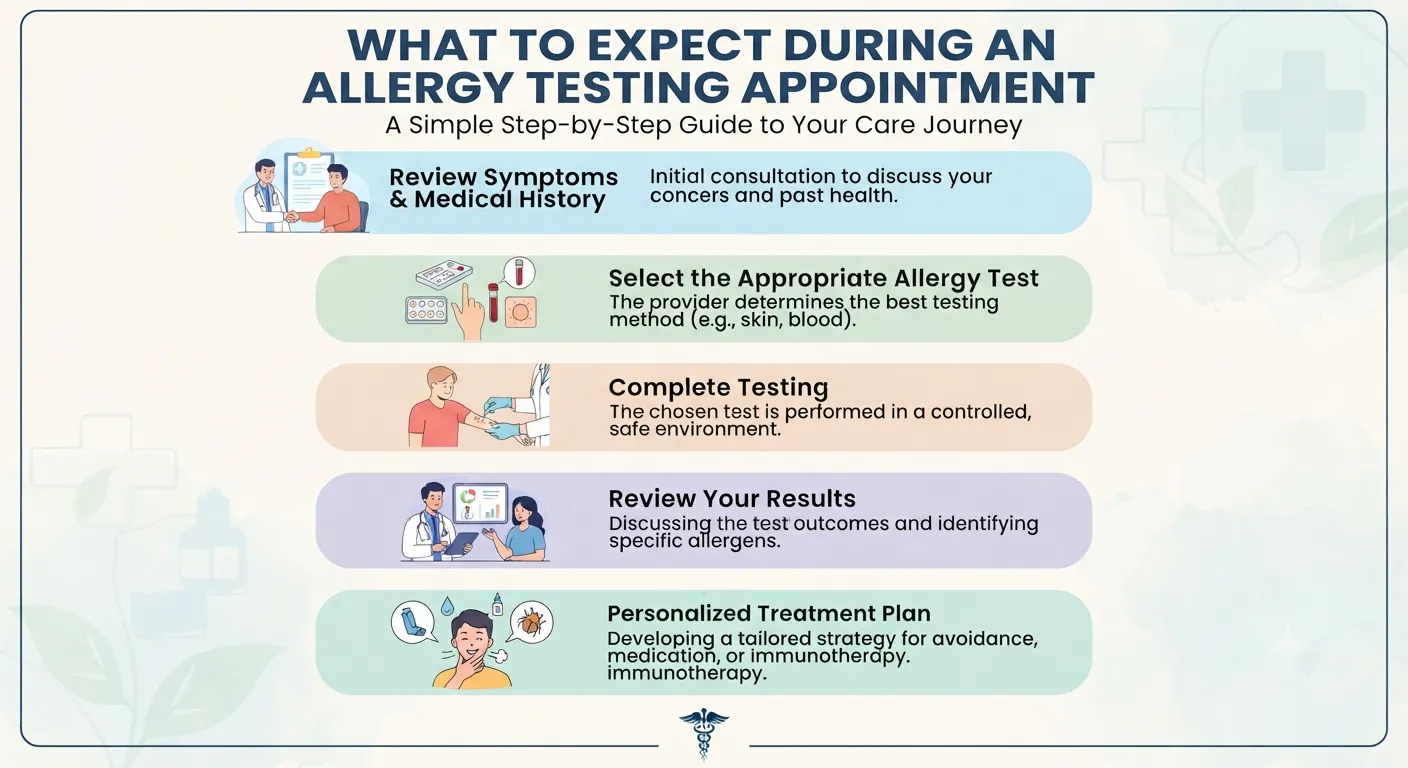
What to Expect During Your Appointment
Most allergy testing visits include:
- Review of medical history and reaction details
- Targeted allergy testing based on your symptoms
- Discussion of results and next steps
Many skin testing results are available during the visit, allowing for same-day discussion and treatment planning.
Results help guide treatment recommendations, which may include avoidance strategies, medications, or discussion of immunotherapy when appropriate.
Ready to Find the Cause of Your Symptoms?
Our board-certified allergists can help identify potential triggers and develop a personalized treatment plan based on your symptoms and test results.
Allergy Testing Near You
We provide allergy testing at our Houston Galleria and Greater Heights clinics, making it convenient for patients throughout Houston and nearby communities to receive personalized allergy care close to home.
Allergy Testing FAQs
Accuracy depends on the allergen being evaluated and the clinical context. Skin testing and blood testing are both reliable when used appropriately. Your allergist will determine the best option.
Many allergy medications, particularly antihistamines, can interfere with skin testing. Your provider will let you know whether any medications should be temporarily stopped before your appointment. Do not stop prescription medications without medical guidance.
Most visits last one to two hours, depending on the testing performed.
Skin testing results are often available on the same day. Blood test results typically return within several days.
Yes. Allergy testing, including skin testing, is safely performed in children of all ages under specialist supervision.
Referral requirements vary by insurance plan. Our team can help you verify coverage before your visit.
Allergy Testing vs. Allergy Panels: What’s the Difference?
Patients often ask about “allergy panels.” In practice:
- Skin testing provides targeted, immediate results
- Blood testing may assess multiple allergens when skin testing is not ideal
Importantly, allergists do not use broad, one-size-fits-all panels. Testing is selected based on your history, symptoms, and suspected triggers to avoid unnecessary or misleading results.
What Happens After Allergy Testing?
After reviewing your results, your allergist will recommend a personalized treatment plan based on your symptoms and confirmed allergens. Depending on your diagnosis, treatment may include:
- Allergen avoidance strategies
- Prescription or over-the-counter medications
- Allergy immunotherapy (allergy shots) when appropriate
- Follow-up testing or monitoring if needed
Schedule an Allergy Testing Appointment
Get clear answers about what’s causing your symptoms and a personalized plan for care. Our board-certified allergy specialists provide targeted allergy testing at our Houston Galleria and Greater Heights locations.
Book with Dr. Savjani

Allergy and Immunology