Quick Facts: Sore Leg Recovery
Sore legs after sports, tournaments, and intense exercise are often caused by delayed onset muscle soreness (DOMS), accumulated fatigue, or sudden increases in training volume.
Recovery strategies such as hydration, proper nutrition, sleep, active recovery, and appropriate rest can help reduce soreness and support athletic performance.
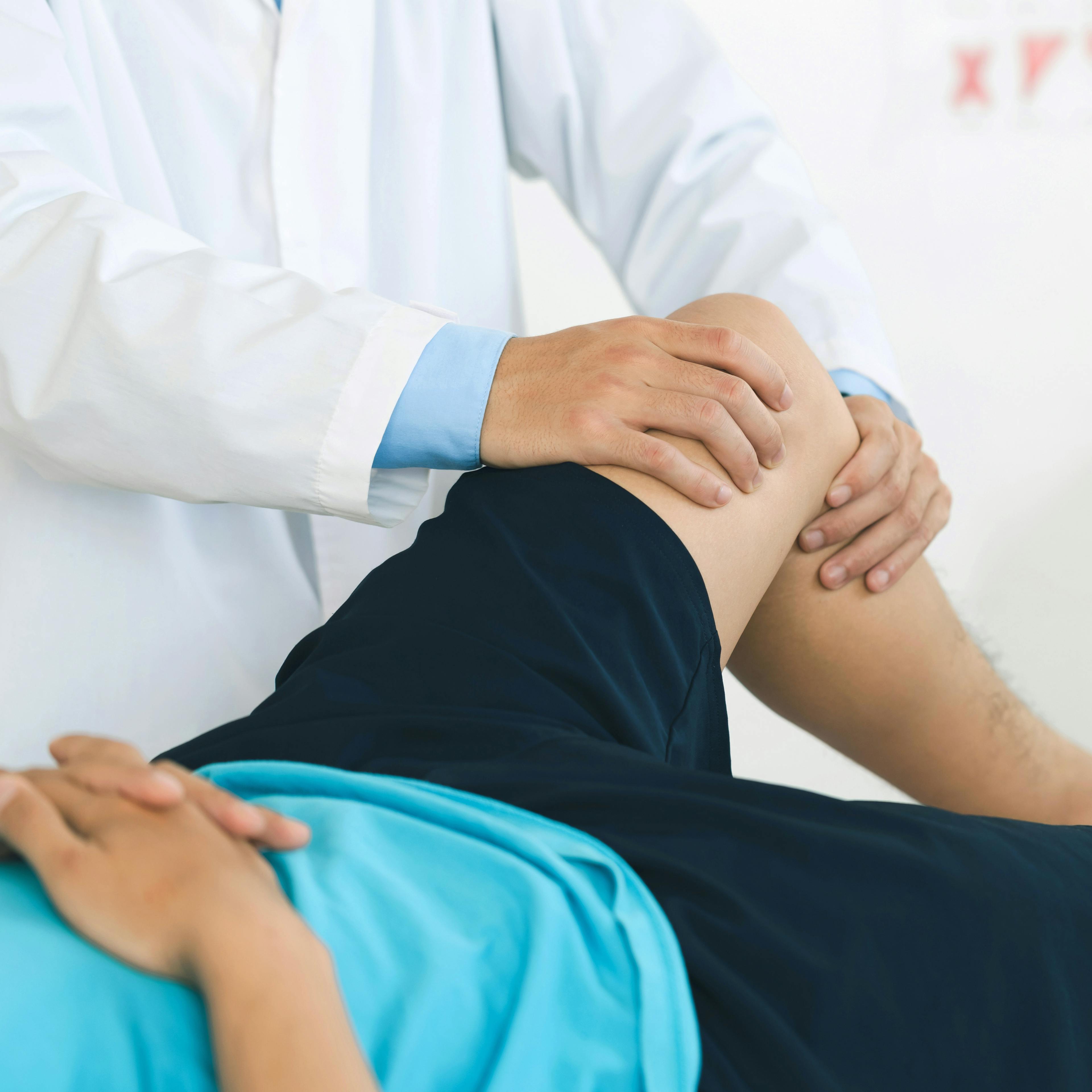
Persistent pain, swelling, weakness, numbness, difficulty bearing weight, or symptoms that worsen over time may indicate an injury that requires evaluation by a sports medicine specialist.
If Your Legs Are Sore After Sports, You’re Not Alone
If you’ve ever finished a tournament, race, or intense workout and struggled to walk down the stairs the next day, you’re not alone.
Muscle soreness is a common part of athletic performance, especially after intense exercise, back-to-back games, tournaments, or sudden increases in training volume. While some soreness is expected, understanding how to recover properly can help you return to training and competition feeling stronger and more prepared.
While you may not be able to eliminate soreness overnight, the right recovery steps can help reduce discomfort, support muscle repair, and lower the risk of returning to activity too soon.
Whether you’re a high school athlete, weekend warrior, distance runner, or parent supporting a young athlete, knowing how to recover effectively is an important part of staying healthy and performing at your best.
Quick Answer: How Do You Recover Sore Legs Faster?
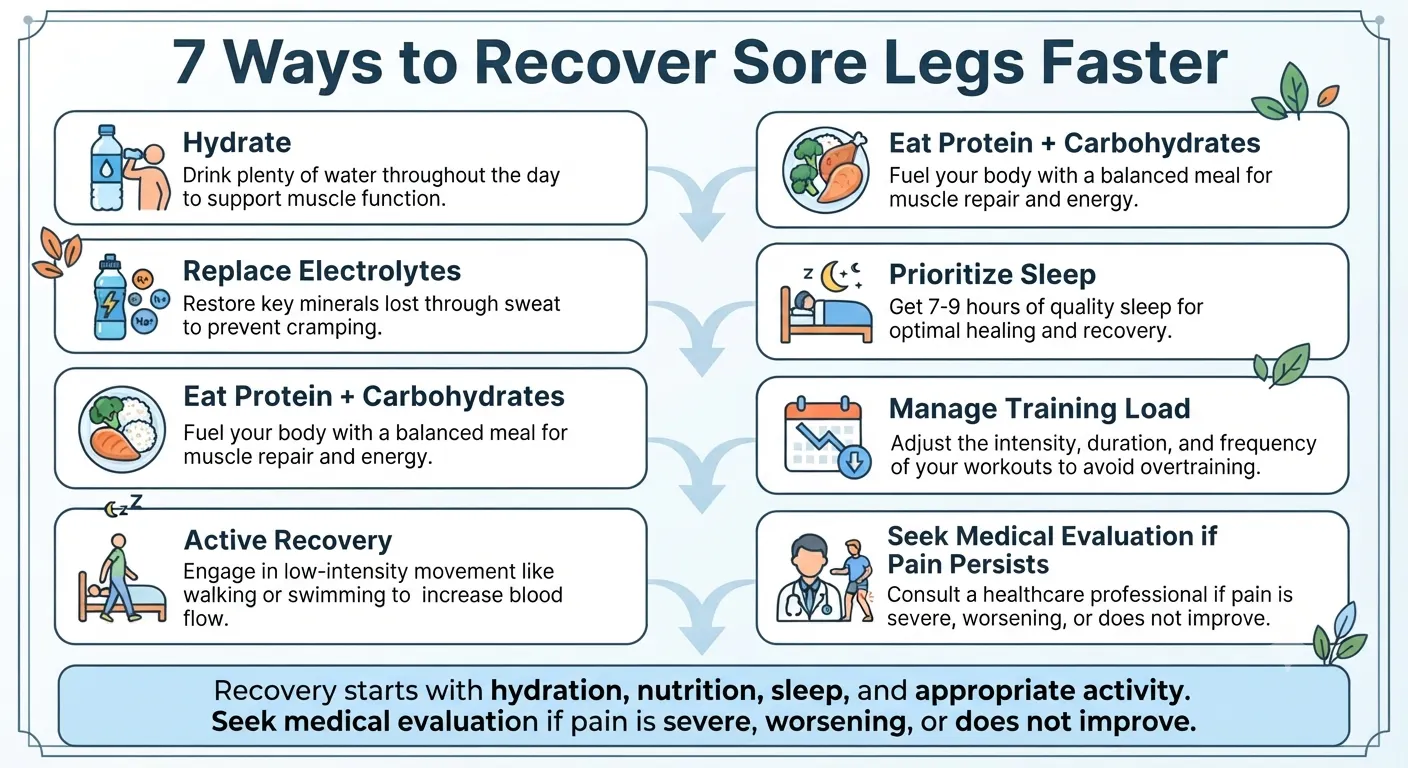
The best ways to recover sore legs after sports include:
- Staying hydrated
- Replacing electrolytes when needed
- Eating enough protein and carbohydrates
- Prioritizing sleep
- Using light movement and active recovery
- Managing training volume appropriately
- Seeking medical evaluation when symptoms persist or worsen
Some athletes may also benefit from sports medicine evaluation. In select cases, advanced recovery options such as radial shockwave therapy may be discussed, although its use for post-competition muscle soreness is still an emerging area of research.
What Causes Sore Legs After Sports?
Muscle soreness after sports can develop for several reasons. In many cases, soreness is a normal response to training stress and the body’s adaptation process.
Delayed Onset Muscle Soreness (DOMS)
Delayed onset muscle soreness, commonly called DOMS, is one of the most common causes of sore legs after exercise.
DOMS typically develops:
- 12 to 24 hours after activity
- Peaks approximately 24 to 72 hours after exercise and usually improves within several days
- Gradually improves over several days
Common symptoms include:
- Muscle tenderness
- Stiffness
- Reduced range of motion
- Temporary decreases in strength
- Soreness when walking, squatting, or climbing stairs
DOMS is especially common after workouts that challenge the muscles in new ways.
Tournament Fatigue and Back-to-Back Competition
Athletes competing in multiple games or events over a short period often experience accumulated muscle stress.
Examples include:
- Basketball tournaments
- Baseball tournaments
- Soccer showcases
- Volleyball competitions
- Track meets
- Multi-day races
- Recreational sports (e.g., Pickleball games)
Limited recovery time between events can make soreness more noticeable and affect performance.
Eccentric Muscle Loading
Eccentric contractions occur when muscles lengthen while under tension.
Activities that commonly create eccentric loading include:
- Sprinting
- Jumping
- Landing
- Cutting and changing direction
- Decelerating
- Downhill running
These movements place significant stress on muscle fibers and are often associated with DOMS.
Overuse and Increased Training Volume
Sudden increases in activity can contribute to soreness and overuse injuries.
Examples include:
- Starting a new exercise program
- Increasing mileage too quickly
- Returning to sports after time off
- Adding extra practices or workouts
The body needs adequate time to adapt to increased training demands.
Is it Normal Soreness or a Sports Injury?
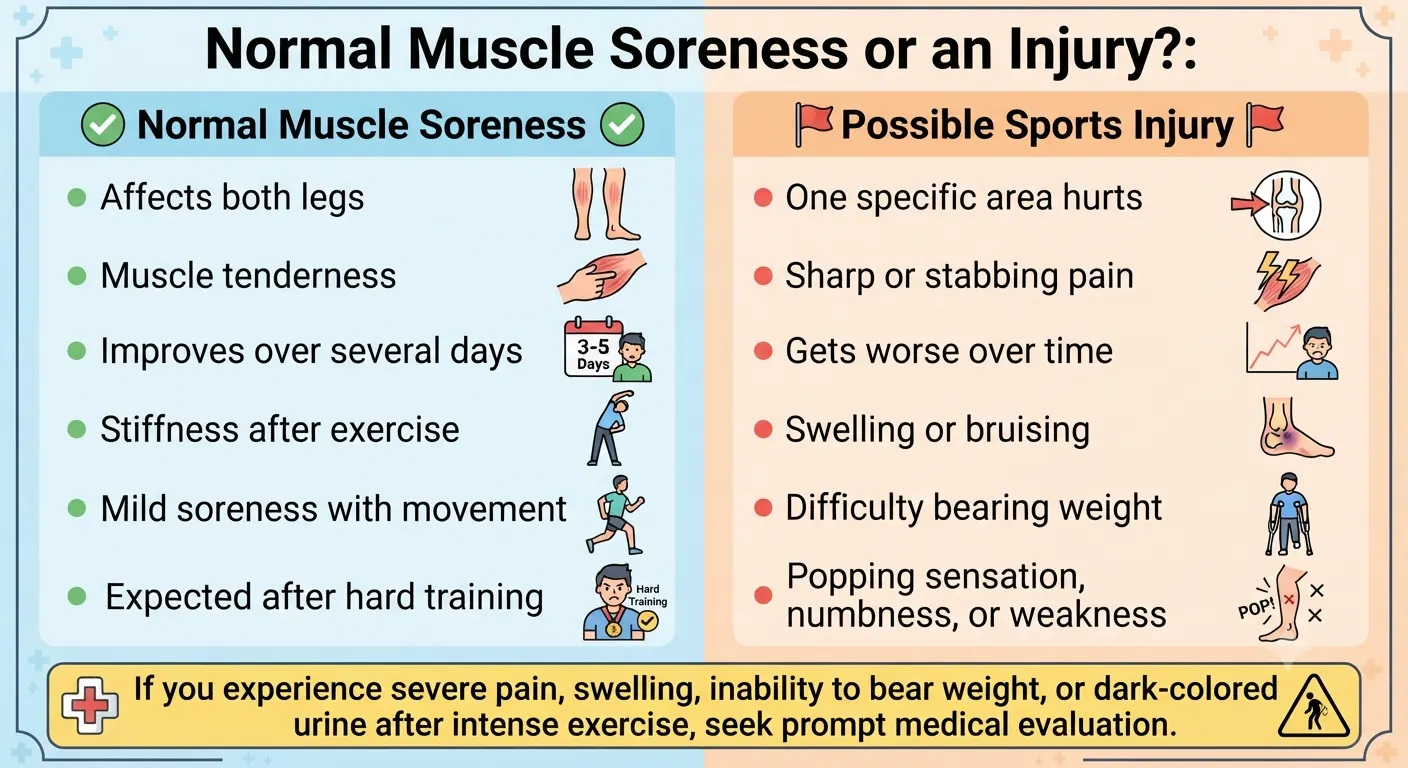
Not all soreness is the same. Understanding the difference between expected muscle soreness and potential injury is important.
Signs of Normal Muscle Soreness
Normal post-exercise soreness often:
- Affects both legs equally
- Feels like generalized muscle tenderness
- Improves gradually over several days
- Occurs after increased activity
- Does not significantly affect walking or daily activities
Signs You May Have an Injury
Seek evaluation if you experience:
- Sharp or stabbing pain
- Significant swelling or bruising
- Pain localized to one specific area
- Limping
- Joint instability
- Numbness or tingling
- Significant weakness
- Difficulty bearing weight
- Pain after a pop or tearing sensation
- Pain that lasts more than several days without improvement
- Symptoms that worsen instead of improving
These symptoms may indicate a muscle strain, tendon injury, stress fracture, joint injury, or another condition that requires medical attention.
Why Recovery Matters for Athletes
Recovery is not simply about feeling better. It is an important part of athletic performance and injury prevention.
Support Performance and Competition Readiness
Proper recovery supports strength, speed, endurance, power, and training consistency. It is especially important during tournament weekends, back-to-back practices, and multi-day competitions, when limited recovery can affect performance in later events.
Reduce Injury Risk
Excessive fatigue can alter movement patterns and increase stress on muscles, tendons, and joints.
Proper recovery may help reduce the risk of overuse injuries and compensation-related problems.
Best Ways to Recover Sore Legs Faster
Hydrate and Replace Electrolytes
Hydration plays a critical role in muscle recovery.
After exercise:
- Drink water consistently
- Replace fluids lost through sweat
- Consider electrolyte replacement during prolonged activity or hot-weather events
Even mild dehydration can affect recovery and athletic performance.
Eat Enough Protein and Carbohydrates
Nutrition is one of the most effective recovery tools available.
Protein helps support muscle repair, while carbohydrates help replenish energy stores.
Although both are commonly used in sports nutrition, creatine and protein support the body in different ways.
Recovery meals may include:
- Lean protein sources
- Whole grains
- Fruits
- Vegetables
- Healthy fats
After intense or prolonged activity, athletes often benefit from a meal or snack that includes both carbohydrates and protein. Examples include yogurt with fruit, a turkey sandwich, eggs with toast, chocolate milk, or a smoothie with protein and fruit.
Prioritize Sleep
Sleep is the body’s primary recovery mechanism.
During sleep, the body supports:
- Muscle repair
- Hormone regulation
- Tissue recovery
- Energy restoration
Athletes should aim for consistent, high-quality sleep whenever possible.
Use Light Movement and Active Recovery
Complete inactivity is not always necessary. Mobility work may reduce stiffness, support circulation, and help maintain mobility during recovery.
Options include:
- Walking
- Light cycling or swimming
- Leg swings
- Dynamic stretching
- Hip and ankle mobility exercises
Movement should feel light and controlled. Stop if it increases pain, causes limping, or worsens your symptoms.
Consider Compression, Massage, or Foam Rolling
Some athletes report benefits from:
- Compression sleeves
- Massage therapy
- Foam rolling
- Recovery boots
Research results vary, but these approaches may help some individuals manage soreness and improve perceived recovery.
Know When Rest Is Necessary
Sometimes the best recovery strategy is reducing training load temporarily.
Athletes should consider backing off intense activity when:
- Soreness significantly affects movement
- Performance declines substantially
- Recovery is not keeping pace with training demands
- Pain becomes sharp, localized, or worsening
Continuing to train through significant pain may increase the risk of injury and delay recovery.
How to Recover Sore Legs Between Games
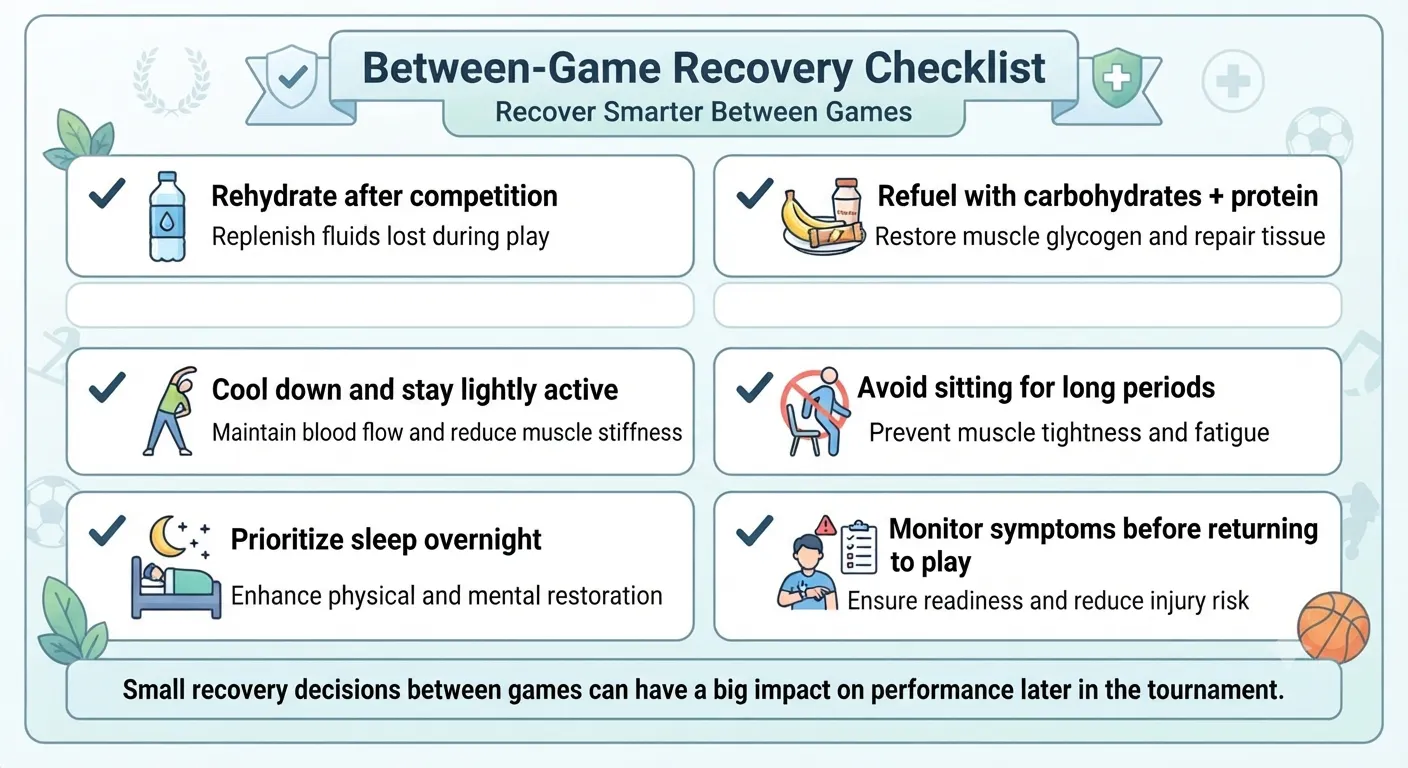
Tournament athletes often have limited recovery windows.
Between-Game Recovery Checklist
- Rehydrate after competition
- Eat carbohydrates and protein
- Cool down after games
- Stay lightly active
- Avoid sitting for long periods
- Prioritize sleep overnight
- Monitor symptoms closely
Small recovery decisions made between games can influence performance later in the tournament.
Can Shockwave Therapy Help Muscle Recovery?
While sleep, hydration, nutrition, and active recovery remain the foundation of athletic recovery; researchers continue exploring additional strategies that may help athletes manage muscle soreness during competition.
Radial shockwave therapy is one emerging recovery option being studied for post-competition muscle soreness. It should be viewed as a possible tool for select athletes, not a replacement for recovery fundamentals or injury evaluation.
What Is Radial Shockwave Therapy?
Radial shockwave therapy uses acoustic pressure waves delivered through the skin.
Sports medicine providers commonly use shockwave therapy for certain musculoskeletal conditions involving muscles, tendons, and other soft tissues.
Researchers are now exploring whether shockwave therapy may also play a role in athletic recovery and post-competition soreness management.
What the Research Says About Shockwave Therapy and Muscle Soreness
One study published in the Journal of Sports Medicine and Physical Fitness evaluated whether radial shockwave therapy could improve recovery in competitive basketball players.
Basketball Tournament Recovery Study
Researchers enrolled 61 male and female basketball athletes participating in an international tournament.
Fifty-six athletes completed the study.
Athletes in the treatment group received radial shockwave therapy within four hours of games. Treatment targeted:
- Quadriceps
- Hamstrings
- Calf muscles
Results
By Day 4 of the tournament:
- Athletes reported approximately 35% less muscle soreness
- Perceived recovery improved
- Participants reported feeling more prepared for subsequent competition
For athletes competing in back-to-back events, these findings suggest shockwave therapy may help reduce localized muscle soreness during demanding competition schedules.
What the Study Did Not Show
The study did not demonstrate significant improvements in:
- General fatigue
- Sleep quality
More research is needed to better understand the role of shockwave therapy in athletic recovery.
What Shockwave Therapy Does Not Replace
Shockwave therapy is not a substitute for:
- Sleep
- Hydration
- Nutrition
- Appropriate training loads
- Injury evaluation
Athletes experiencing persistent pain should seek professional evaluation rather than relying solely on recovery modalities.
When Should Athletes See a Sports Medicine Specialist?
Schedule an evaluation if soreness does not improve after several days, affects your ability to walk or compete, repeatedly returns, or is accompanied by sharp pain, swelling, bruising, weakness, numbness, or tingling.
Seek prompt medical care for dark-colored urine or severe muscle pain accompanied by significant weakness, swelling, fever, confusion, or feeling very ill after intense exercise.
Important Note
Dark-colored urine following intense exercise should be evaluated immediately, as it may indicate a serious medical condition that requires urgent medical attention.
You should also seek prompt medical care if severe muscle pain is accompanied by weakness, swelling, fever, confusion, or feeling very ill after intense exercise.
Shockwave Therapy and Sports Medicine at CLS Health
CLS Health Sports Medicine provides evaluation and treatment for athletic injuries, recovery concerns, overuse conditions, and performance-related issues.
Dr. Javier Rios and the sports medicine team develop individualized recovery plans based on each athlete’s goals, training demands, and medical history. Shockwave therapy may be considered as part of a broader recovery or treatment strategy when appropriate.
Recovery support may benefit competitive athletes, endurance athletes, active adults, and weekend warriors when soreness begins affecting movement, training consistency, or competition readiness.
Schedule a Sports Medicine Consultation
Whether you are preparing for your next tournament, recovering from intense training, or dealing with persistent or recurring soreness, the sports medicine team at CLS Health can help identify the cause of your symptoms and recommend a recovery plan that fits your goals.
Book an appointment for shockwave therapy today.
Book with Dr. Rios

Non-Operative Orthopedics, Sports Medicine, Regenerative Medicine