
How Wearables Support Heart Health
Heart-monitoring technology has advanced far beyond basic step tracking. In 2026, many leading wearables provide continuous insights into your cardiovascular health—tracking heart rate, detecting potential heart rhythm irregularities, estimating blood oxygen levels, and showing how well your heart recovers after activity or stress.
Understanding these metrics can help you notice meaningful changes in your heart’s patterns and share useful information with your healthcare provider. While wearables cannot diagnose heart conditions, they can improve awareness and encourage timely medical evaluation when something feels off.
How Do Wearable Heart Monitors Work?
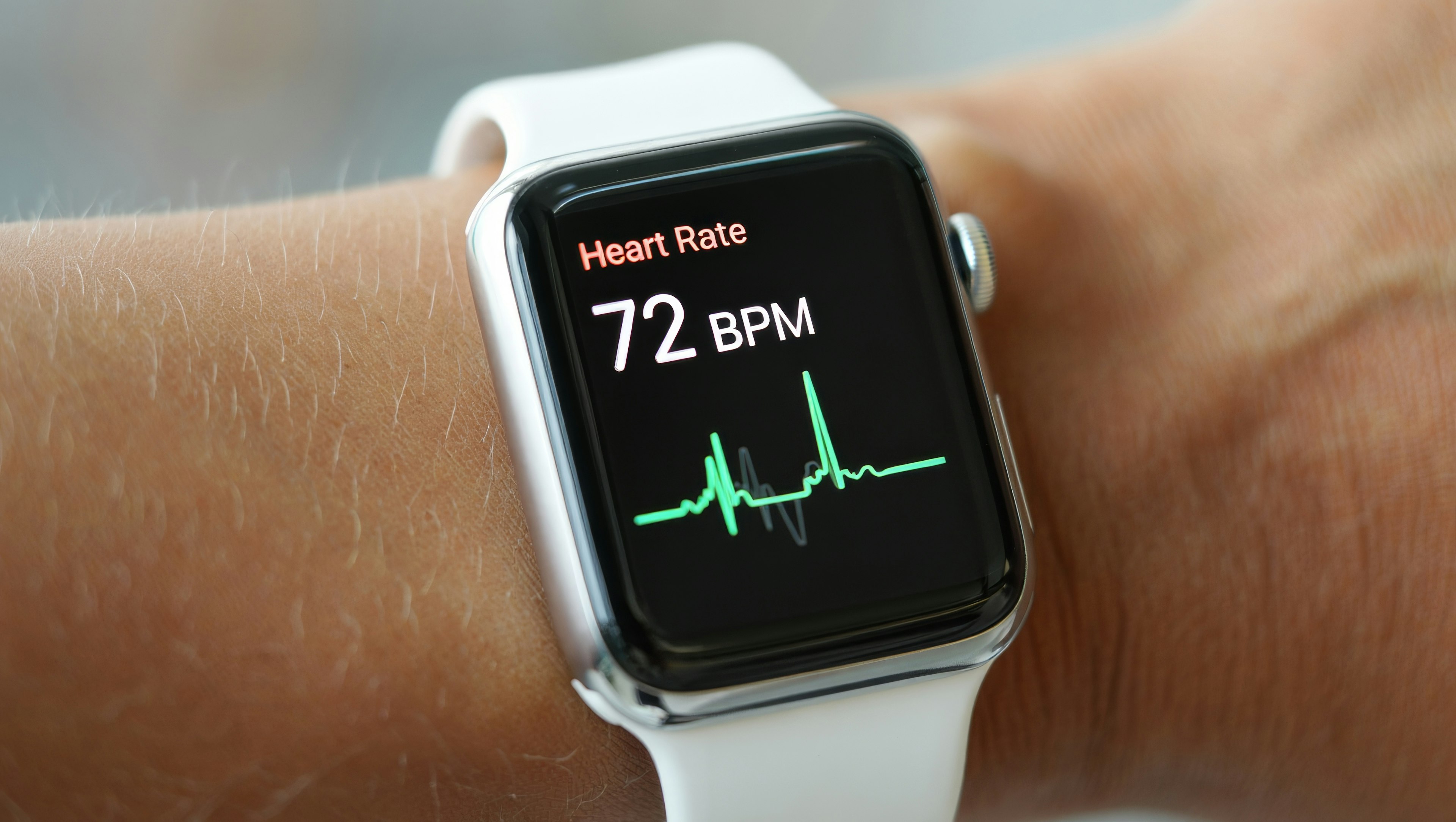
Most wearable heart monitors use optical sensors, which shine light into the skin to measure changes in blood flow and estimate your heart rate throughout the day. Some devices also include electrocardiogram (ECG) sensors, which record your heart's electrical activity and can detect signs suggestive of certain rhythm abnormalities, such as atrial fibrillation (AFib).
Continuous monitoring helps identify patterns that may not be noticeable during a single doctor's visit. Rather than focusing on one isolated reading, healthcare providers often look at long-term trends—such as changes in resting heart rate, heart rate variability (HRV), recovery after exercise, or repeated irregular rhythm alerts—to better understand your cardiovascular health.
Below are the top options, organized by the heart-health features they monitor best.
Who Should Use a Wearable Heart Monitor?
Wearable heart monitors can benefit many people—not just those with known heart conditions. They may be especially helpful for individuals with risk factors for atrial fibrillation (AFib) or other heart rhythm disorders, including adults with high blood pressure, diabetes, heart disease, or a family history of cardiovascular conditions. Older adults may also benefit from monitoring changes in heart rate or rhythm over time.
Athletes and physically active individuals often use wearables to monitor heart rate, recovery, and training intensity, while people managing chronic health conditions or monitoring recovery from illness may find ongoing heart rate trends helpful during daily activities. Even healthy adults can use wearable devices to better understand their baseline heart rate and recognize changes worth discussing with their healthcare provider.
Although wearable devices can provide valuable insights, they are most effective when used alongside regular medical care rather than as a substitute for professional evaluation.
Which Wearable Heart Monitor Is Right for You?
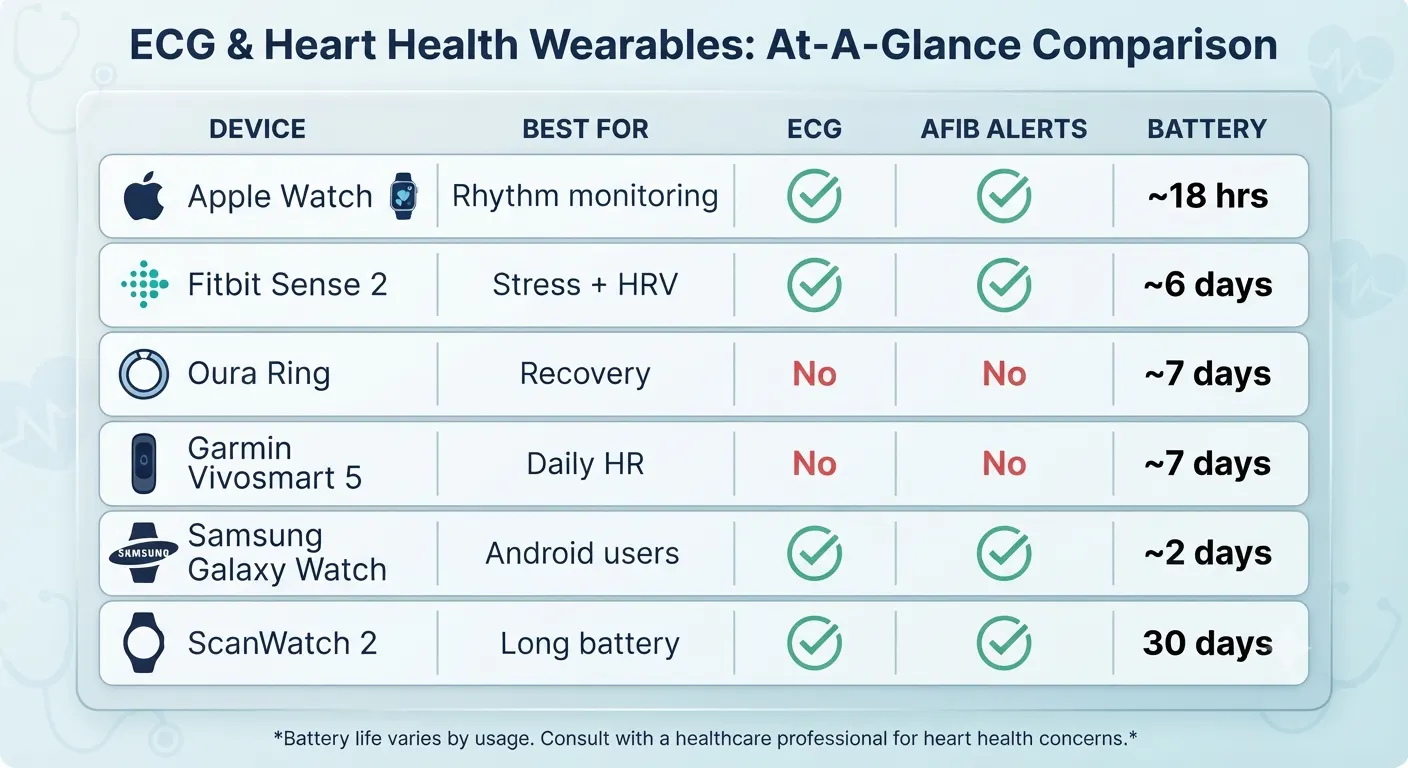
1. Best for Detecting Heart Rhythm Changes — Apple Watch Series 9 (or later)
Apple’s smartwatch remains a leader in rhythm-focused monitoring.
Key Heart Features:
- ECG app that can help detect signs suggestive of atrial fibrillation (AFib)
- High and low heart rate alerts
- Blood oxygen (SpO₂) monitoring
- Heart rate recovery patterns after exercise
Ideal for:
Those who want proactive rhythm notifications or have been advised to monitor irregular heartbeat patterns.
2. Best for Stress + Heart Rate Variability (HRV) Insights — Fitbit Sense 2
Fitbit Sense 2 blends cardiac tracking with insights into stress and autonomic nervous system responses.
Key Heart Features:
- Continuous heart rate monitoring
- ECG app for AFib checks
- Irregular rhythm notifications
- “Body Response” stress-detection sensor
Ideal for:
People interested in how physical and emotional stress influence heart rhythms and recovery.
3. Best for Recovery & HRV — Oura Ring Gen 3
A discreet, ring-style wearable focused on how your heart performs during rest and sleep.
Key Heart Features:
- Resting heart rate trends
- Heart rate variability (HRV) for recovery insights
- Nighttime SpO₂ monitoring
- Temperature trends that can reflect wellness changes
Ideal for:
Individuals prioritizing sleep quality, recovery, and day-to-day readiness—including athletes, shift workers, or anyone with demanding schedules.
4. Best for Everyday Heart Rate Awareness — Garmin Vivosmart 5
A simple, lightweight tracker offering reliable daily heart and wellness monitoring.
Key Heart Features:
- All-day pulse monitoring
- Sleep and recovery insights
- Heart rate zone tracking during exercise
- Long battery life for uninterrupted data
Ideal for:
People who want steady, easy-to-understand heart rate information throughout the day.
5. Best for Comprehensive Cardiac Metrics — Samsung Galaxy Watch
Samsung’s smartwatches combine heart-health tracking with advanced fitness tools.
Key Heart Features:
- ECG app for rhythm checks
- Blood pressure monitoring (where available; requires calibration with a traditional blood pressure cuff)
- Stress tracking with guided breathing
- VO₂ max estimates for cardiovascular endurance
Blood pressure measurements require calibration with a traditional cuff and should not replace routine blood pressure checks recommended by your healthcare provider.
Ideal for:
Android users looking for a blend of heart-health monitoring and fitness-focused metrics.
6. Best for Long-Term Tracking — Withings ScanWatch 2
A hybrid watch with medical-grade features and exceptional battery life.
Key Heart Features:
- FDA-cleared ECG
- Continuous heart rate and rhythm monitoring
- SpO₂ tracking
- Up to 30 days between charges
Some wearable ECG features have received FDA clearance for detecting signs suggestive of atrial fibrillation in appropriate users, but they are not intended to diagnose every heart condition.
Ideal for:
People who want continuous, reliable monitoring without frequent charging or app adjustments.
7. Best for Occasional Checks — Portable ECG Monitors
Handheld or chest-strap ECG devices (such as KardiaMobile or CheckMe) provide on-demand rhythm checks without wearing a daily device.
Ideal for:
Individuals who need periodic heart rhythm assessments under clinician guidance.
Why Track Your Heart Health with a Wearable?
Daily monitoring can help you:
- Understand your typical heart rate and rhythm
- Notice irregularities earlier
- Track recovery after stress or exercise
- Share consistent, reliable trends with your healthcare provider
Wearables offer valuable day-to-day insight but do not replace diagnostic testing or medical evaluation.
How Cardiologists Use Wearable Data
Non-invasive cardiologists often review wearable data as part of a comprehensive evaluation. Trends such as resting heart rate, heart rate variability, rhythm irregularities, or changes in exercise recovery can guide discussions during your appointment.
If a device repeatedly flags concerns, your cardiologist may recommend further testing—such as a Holter monitor, ECG patch, or echocardiogram—to look more closely at your heart’s electrical activity and structure.
Wearables may occasionally produce false alarms due to movement, poor sensor contact, skin characteristics, or other factors, so abnormal readings should always be interpreted alongside your symptoms and confirmed by a healthcare professional when appropriate.
Wearables support these decisions, but they are not used alone to diagnose conditions.
When to See a Cardiologist
Schedule an appointment if you notice:
- Repeated irregular heart rhythm alerts
- Ongoing palpitations, fluttering, or skipped beats
- A noticeable or persistent change in your resting heart rate
- Wearable readings that repeatedly seem abnormal, even if you feel well
Seek emergency medical care immediately if wearable alerts occur along with:
- Chest pain or pressure
- Fainting or loss of consciousness
- Severe shortness of breath
- Sudden weakness, difficulty speaking, or other signs of stroke
A cardiologist can interpret your wearable data, determine whether additional testing is needed, and recommend a personalized treatment plan based on your symptoms, medical history, and risk factors.
Talk to a Heart Specialist at CLS Health
Wearables can help you stay aware of your heart health, but interpreting the data often requires expert guidance. Our board-certified cardiologists use advanced diagnostic tools to help identify risk factors and support long-term cardiovascular wellness.
If your wearable shows unusual patterns—or you’re concerned about symptoms—schedule an appointment with a cardiologist for a professional evaluation.
Book with Dr. Lee

Cardiology
FAQ
Wearable devices with FDA-cleared ECG features, such as certain Apple Watch, Samsung Galaxy Watch, Fitbit, and Withings models, are among the most accurate for detecting signs suggestive of atrial fibrillation (AFib). However, no wearable is 100% accurate, and abnormal readings should be evaluated by a healthcare provider.
Yes. Many smartwatches include ECG apps and irregular rhythm notifications that can detect signs suggestive of atrial fibrillation (AFib). However, they cannot diagnose AFib, and abnormal results should be confirmed with medical testing such as an ECG or Holter monitor.
Some wearable heart monitor features have received FDA clearance for specific uses, such as recording a single-lead ECG or detecting signs suggestive of AFib. They are not intended to diagnose all heart conditions or replace medical evaluation.
Not necessarily. Wearables can occasionally produce false alerts due to movement or poor sensor contact. However, repeated irregular rhythm notifications—especially with symptoms like palpitations, dizziness, chest pain, or shortness of breath—should be evaluated by a healthcare provider.
No. Wearable heart monitors are useful for tracking heart rate and detecting potential rhythm changes, but they cannot replace a medical-grade ECG or other diagnostic tests. If your device repeatedly detects abnormalities or you have concerning symptoms, see a healthcare provider for further evaluation.