

Quick Facts: Creatine vs. Protein
Protein and creatine serve different purposes. Protein helps build and maintain muscle, while creatine supports energy production during high-intensity activity.
For most people, meeting daily protein needs should be the priority before considering supplements.
The best choice depends on your goals, whether you're focused on weight loss, athletic performance, muscle growth, or healthy aging.
Creatine vs. Protein: Which Is Better for Your Goal?
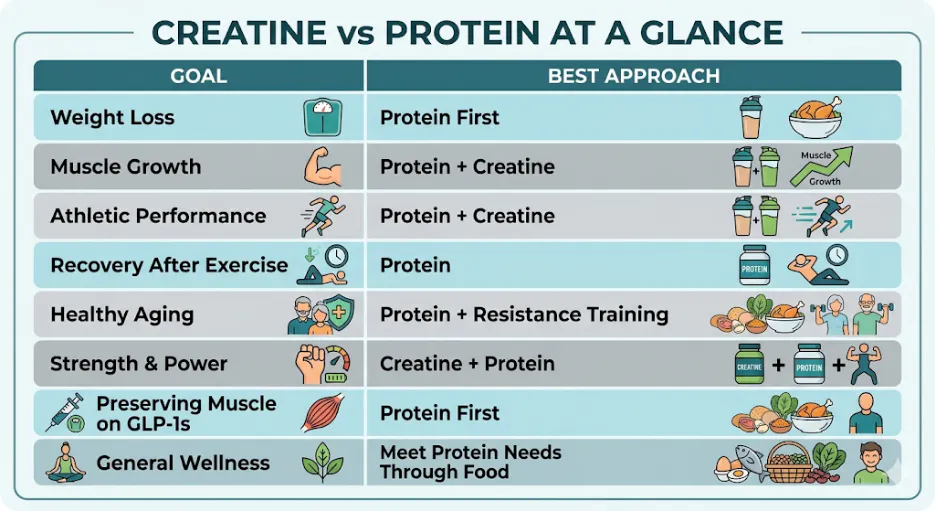
Whether you're trying to lose weight, build muscle, improve athletic performance, or maintain strength as you age, you've probably heard recommendations for both creatine and protein supplements.
The challenge is that these supplements are often discussed together even though they serve very different functions in the body.
Most people are not really asking:
"Which supplement is better?"
They're asking:
- Which supplement fits my goals?
- Do I need either one or the other?
- Can I take both together?
- Are they safe?
- Should I talk to a healthcare provider before starting?
The answer depends on your nutrition, activity level, medical history, and overall health goals.
This guide explains the differences between creatine and protein from the perspectives of nutrition, weight management, sports medicine, healthy aging, and men's health.
Quick Answer: Creatine vs. Protein
Protein and creatine work differently.
- Protein provides the amino acids your body needs to build and repair muscle, recover from exercise, and preserve lean body mass during weight loss and aging.
- Creatine helps muscles generate energy during short bursts of high-intensity activity, supporting strength, power, and athletic performance.
For most people, meeting daily protein needs is a priority. Creatine may provide additional benefits depending on your activity level, training routine, and health goals.
What's the Difference Between Creatine and Protein?
What Is Protein?
Protein is an essential macronutrient made up of amino acids, which serve as the building blocks for muscles, organs, skin, hormones, and many other tissues throughout the body.
Protein plays a critical role in:
- Building and repairing muscle tissue
- Supporting exercise recovery
- Preserving muscle during weight loss
- Supporting immune function
- Promoting fullness and satiety
Protein can be obtained through foods such as:
- Poultry
- Fish
- Eggs
- Dairy products
- Lean meats
- Beans
- Lentils
- Soy products
- Nuts and seeds
Protein powders may be useful when dietary intake falls short, or convenience is a factor.
What Is Creatine?
Creatine is a naturally occurring compound that plays a central role in cellular energy metabolism, particularly in skeletal muscle, the brain, and the heart. Most of the body’s creatine is stored in skeletal muscle, where it helps rapidly replenish adenosine triphosphate (ATP)—the primary energy source used during short bursts of intense activity.
Creatine is found naturally in:
- Red meat
- Fish
- Poultry
However, obtaining performance-enhancing levels through food alone can be difficult, which is why many athletes choose supplementation.
The most studied form is creatine monohydrate.
Food First: Do You Actually Need a Supplement?
For many people, the answer is yes.
A balanced eating pattern that includes adequate protein from whole foods can support muscle maintenance, exercise recovery, and overall health without supplementation.
- Whole-food protein sources provide additional nutrients that supplements may lack, including vitamins, minerals, fiber, and healthy fats.
- Supplements should be used to fill nutritional gaps rather than replace a healthy diet.
Many people can meet their protein goals through food alone. Creatine may benefit certain performance or strength goals but is not essential for everyone.
Before Taking Creatine or Protein: Safety and Supplement Quality
Who Should Talk to a Healthcare Provider First?
Before starting any supplement, consider discussing it with a healthcare provider if you have:
- Kidney disease
- Liver disease
- Diabetes
- High blood pressure
- Heart disease
- Chronic medical conditions
- Pregnancy or breastfeeding
- Prescription medications
- Concerns about supplement interactions
Parents should also speak with a healthcare professional before giving supplements to adolescents and young athletes.
Is Creatine Safe?
Creatine is one of the most extensively studied sports supplements available.
Research suggests that creatine monohydrates are generally safe for healthy adults when used appropriately.
Common myths include concerns about dehydration, muscle cramps, or widespread health risks. Current evidence has not consistently supported these concerns in healthy individuals.
Is Creatine Bad for the Kidneys?
For healthy adults with normal kidney function, research has not shown that creatine causes kidney damage when used as directed.
However, individuals with underlying kidney disease or abnormal kidney function should consult a healthcare provider before using creatine.
It's also important to know that creatine supplementation may increase the effects of creatine on laboratory testing, which can sometimes affect how results are interpreted.
Are Protein Powders Safe?
Many protein powders are safe when sourced from reputable manufacturers.
However, quality can vary significantly.
Potential concerns include:
- Added sugars
- Excess stimulants
- Proprietary blends
- Heavy metal contamination
- Poor ingredient transparency
How to Choose a Quality Supplement
Look For
- NSF Certified for Sport
- Informed Choice Certification
- USP Verification
- Transparent ingredient labeling
- Third-party testing
Avoid
- Proprietary blends
- Excessive stimulants
- Unrealistic marketing claims
- Megadosing
Is Creatine Monohydrate the Best Form?
Creatine monohydrate remains the most studied and widely recommended form of creatine.
While newer forms may be marketed as superior, most research continues to support creatine monohydrates as the most effective, affordable, and evidence-based option.
Safety Takeaway: For most healthy adults, protein and creatine supplements are generally considered safe when used appropriately and sourced from reputable manufacturers.
Should You Take Creatine, Protein, or Both?
When Protein May Be More Important
Protein may deserve priority if your goals include:
- Weight loss
- Preserving muscle while using GLP-1 medications
- Healthy aging
- Exercise recovery
- Improving satiety
- Building a foundation of good nutrition
When Creatine May Be More Helpful
Creatine may be beneficial for individuals focused on:
- Strength training
- Sprinting
- High-intensity interval training
- Power sports
- Athletic performance
Creatine is most beneficial for short, high-intensity activities that require repeated bursts of power. It is generally less helpful for improving performance during prolonged endurance exercise, such as long-distance running or cycling.
Can You Take Creatine and Protein Together?
Yes. Creatine is not a protein. It is a compound the body produces from three amino acids: arginine, glycine, and methionine. Protein supplies amino acids that support muscle repair and growth, while creatine helps provide rapid energy for short, high-intensity activity. Because they work differently, creatine and protein can be taken together and may complement one another.
The decision should still be individualized based on your health goals and medical history.
Creatine vs. Protein for Weight Loss and Body Composition
Why Muscle Matters During Weight Loss
When people lose weight, they often lose both fat and muscle.
Preserving lean muscle mass is important because it supports:
- Metabolic health
- Physical function
- Strength
- Long-term weight management
Protein's Role in Weight Management
Protein may help support weight loss by:
- Increasing fullness
- Supporting muscle preservation
- Helping manage hunger
- Supporting recovery from exercise
Can Creatine Help During Weight Loss?
Creatine is not a weight loss supplement.
However, it may support exercise performance and strength maintenance while losing weight.
Some people experience mild water retention after starting creatine, but this does not necessarily reflect fat gain.
Dietitian's Perspective
For most patients pursuing weight loss, meeting protein needs should be prioritized before considering creatine supplementation.
Looking to Lose Weight While Preserving Muscle?
Schedule a consultation with our weight management specialists or Registered Dietitians.
Creatine vs. Protein for Athletic Performance and Recovery
How Protein Supports Recovery
Protein provides the amino acids necessary for:
- Muscle repair
- Exercise adaptation
- Recovery between workouts
How Creatine Supports Performance
Creatine may help improve:
- Strength
- Power output
- Sprint performance
- High-intensity exercise capacity
Which Is Better for Athletes?
The answer depends on the sport.
- Strength athletes may benefit from both.
- Team sport athletes may benefit from both.
- Endurance athletes should prioritize overall nutrition and adequate protein intake.
- Recreational athletes may not need supplementation if nutritional needs are met through food.
Sports Medicine Perspective
Athletes often benefit from both adequate protein intake and creatine supplementation, depending on their sport, goals, and training demands.
Want to Optimize Recovery and Athletic Performance?
Creatine vs. Protein for Healthy Aging and Muscle Preservation
Why Muscle Loss Happens with Age
Age-related muscle loss, known as sarcopenia, can occur due to:
- Reduced activity
- Inadequate protein intake
- Hormonal changes
- Chronic disease
- Changes in metabolism
Why Maintaining Muscle Matters
Maintaining muscle supports:
- Mobility
- Independence
- Fall prevention
- Metabolic health
- Quality of life
Protein and Healthy Aging
Protein becomes increasingly important with age because older adults often need more dietary protein to maintain muscle mass and function.
What Does Research Say About Creatine and Aging?
Emerging research suggests creatine may support strength and resistance-training outcomes in older adults.
However, research continues to evolve, and supplementation should be considered within the context of overall health and physical activity.
When Muscle Loss May Signal Something More
Sometimes muscle loss may indicate:
- Hormonal changes
- Nutritional deficiencies
- Sleep disorders
- Chronic illness
- Medication side effects
Healthy Aging Perspective
Muscle loss should not automatically be accepted as an inevitable part of aging. Nutrition, exercise, preventive care, and medical evaluation can help support strength and quality of life.
Concerned About Muscle Loss as You Age?
When Should You Talk to a Healthcare Provider?
Consider speaking with a healthcare professional if:
- You have chronic medical conditions
- You take prescription medications
- You have abnormal lab results
- You're unsure whether supplementation is appropriate
- You want guidance tailored to your goals
FAQs
Yes. Creatine and protein serve different functions and are often used together by individuals pursuing muscle growth, athletic performance, or strength training goals.
Neither is universally better. Protein provides the building blocks needed to build muscle, while creatine may enhance training performance. Many individuals use both as part of a comprehensive fitness program.
Protein is generally more beneficial for weight loss because it promotes satiety and helps preserve lean muscle mass during calorie reduction.
Research suggests creatine is generally safe for healthy adults with normal kidney function. Individuals with kidney disease should consult a healthcare provider before use.
Some people experience mild weight gain from increased water retention within muscle tissue. This is different from gaining body fat.
Not necessarily. Protein powder is a convenience tool and may not be needed if you consistently meet your protein needs through food.
Yes. Research suggests creatine is generally safe for healthy women when used appropriately. Women may use creatine for strength training, athletic performance, and healthy aging goals.
Which Supplement Is Right for You?
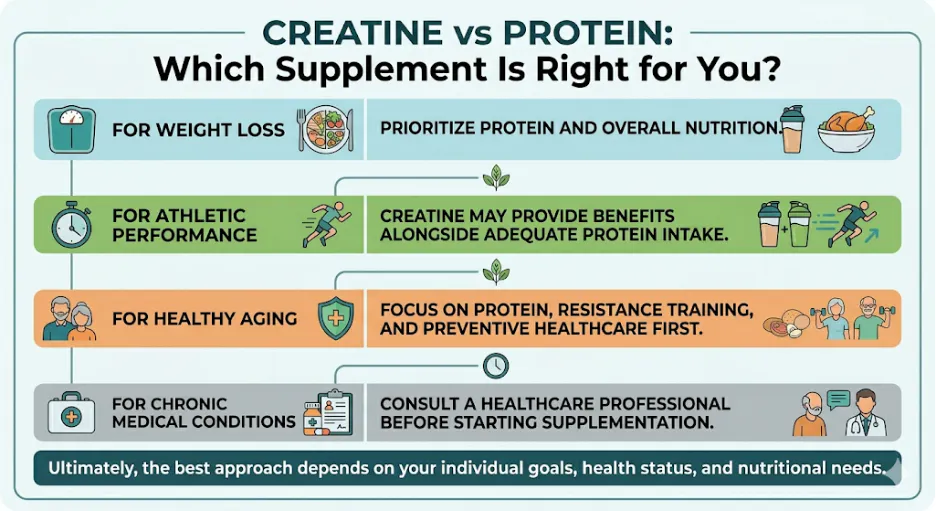
Get Expert Guidance Before Starting a Supplement Plan
Creatine and protein can both support health and performance, but the best approach depends on your goals, activity level, medical history, and nutritional needs.
Whether you're trying to lose weight, improve athletic performance, preserve muscle as you age, or make informed decisions about supplements, CLS Health can help connect you with the right specialist.