

Quick Facts: Nutrition Apps
The best nutrition app depends on your health goals, such as meal planning, carb counting, diabetes support, or detailed nutrient tracking.
Cronometer is strongest for detailed nutrition tracking, while MyNetDiary, Diabetes:M, Glucose Buddy, and Carb Manager offer stronger diabetes and carb-counting support.
AI tools like Gemini and Perplexity can help with meal ideas and research, but they should not replace verified nutrition data or guidance from a Registered Dietitian.
Choosing the Right Nutrition App for Your Goals
Nutrition apps can help you track meals, count carbohydrates, plan groceries, manage diabetes patterns, or better understand your eating habits. But the best app is not always the most downloaded app — it is the one that fits your health goals, medical needs, and lifestyle.
A person managing Type 2 diabetes may need very different tools than someone focused on weight management, sports nutrition, heart health, or family meal planning.
This guide compares nutrition tracking apps, carb-counting tools, meal planning platforms, and emerging AI nutrition assistants from a dietitian-informed perspective.
Important note: Nutrition apps can support healthy habits, but they should not replace medical care, diabetes education, or individualized nutrition counseling. If you have diabetes, kidney disease, heart disease, high blood pressure, are pregnant, use insulin or glucose-lowering medications, have a history of disordered eating, or follow a medically restricted diet, speak with a healthcare professional before making significant dietary changes.
Quick Answer: What Is the Best Nutrition App?
The best nutrition app depends on your goal.
- Best overall nutrient tracking: Cronometer
- Best simple food logging: Nutritionix Track
- Best carb lookup tool: CalorieKing
- Best Type 2 diabetes support: MyNetDiary
- Best advanced diabetes management: Diabetes:M
- Best blood glucose tracking: Glucose Buddy
- Best low-carb tracking: Carb Manager
- Best AI meal planning assistant: Gemini
- Best AI nutrition research tool: Perplexity
- Best meal planning app: Mealime
- Best for busy families: Feeding Littles
No single app is perfect for every patient. Feeding Littles may be especially helpful for busy families looking for meal plans and grocery lists, though some features require a paid subscription.
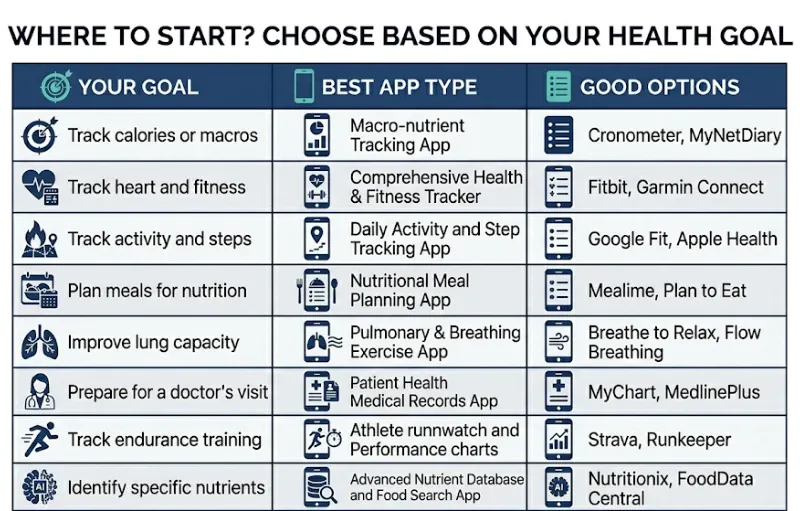
Start Here: Choose Based on Your Health Goal
How We Evaluated These Apps
We evaluated each app using five practical criteria:
Nutrition Tracking
- Food database quality
- Macro and micronutrient tracking
- Barcode scanning
- Restaurant food coverage
- Recipe functionality
Meal Planning
- Grocery list generation
- Dietary preference filters
- Recipe management
- Family meal planning tools
Carb Counting and Diabetes Support
- Carbohydrate tracking
- Blood glucose logging
- Medication tracking
- Diabetes-specific reports
For patients managing diabetes, understanding carbohydrate intake is only one piece of the puzzle. A comprehensive diabetes eating plan may also include portion awareness, balanced meals, and blood sugar management strategies. Learn more about the dietary management of diabetes.
Ease of Use
- Learning curve
- Speed of logging
- App navigation
- Long-term sustainability
Privacy and Data Control
- Data collection practices
- Ability to export data
- Account deletion options
- Third-party sharing policies
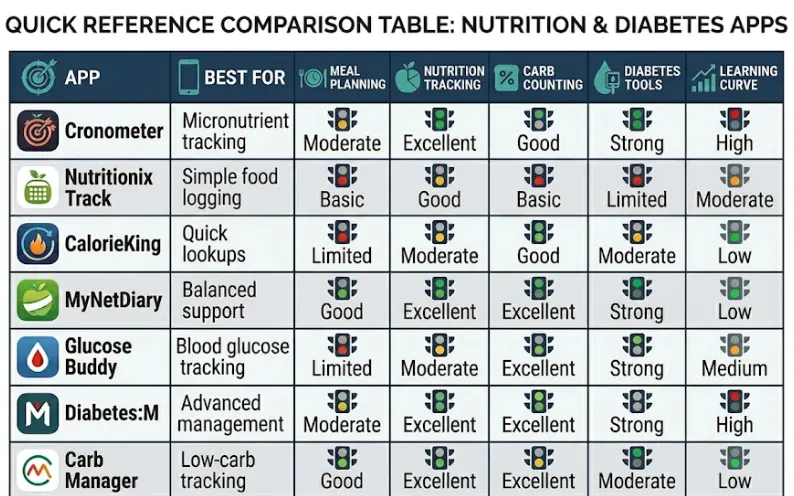
Best Nutrition Apps: Quick Comparison Table
Best Nutrition Tracking Apps
Cronometer
Best for: Detailed nutrition and micronutrient tracking.
Cronometer provides extensive nutrient analysis beyond calories and macros, including fiber, vitamins, minerals, amino acids, and other nutrients that may be important for patients working with a Registered Dietitian. It can also be useful for active adults who are monitoring protein intake as part of a strength-training or healthy aging program.
Strengths:
- Extensive nutrient reporting
- Strong database quality
- Useful nutrition reports
- Helpful for chronic disease management
Limitations:
- Higher learning curve
- May feel overwhelming for beginners
Nutritionix Track
Best for: Simple food logging.
Nutritionix Track is useful for people who want a straightforward way to log meals and estimate calories without spending significant time tracking. Available to Android and Apple users.
Strengths:
- Easy to use
- Fast logging
- Strong restaurant database
Limitations:
- Less robust nutrient detail
- Limited diabetes-specific features
CalorieKing
Best for: Quick food and carbohydrate lookups.
CalorieKing is a useful reference tool for checking calories and carbohydrates, especially for common foods and restaurant items. It may support patients who are learning carb awareness.
Strengths:
- Easy food lookup
- Large food database
- Helpful carb reference
Limitations:
- Not a comprehensive tracking platform
- Limited meal planning features
Best Diabetes and Carb Counting Apps
MyNetDiary
Best for: Type 2 diabetes support and balanced nutrition tracking.
MyNetDiary combines nutrition tracking, carb counting, and diabetes-focused features in a user-friendly interface. Patients newly diagnosed with Type 2 diabetes may also benefit from learning the fundamentals of a diabetes meal plan and dietary management before relying on tracking tools alone.
Strengths:
- Easy to navigate
- Diabetes-friendly reports
- Strong food database
- Helpful for weight and nutrition tracking
Limitations:
- Some premium features require payment
Glucose Buddy
Best for: Tracking blood glucose patterns.
Glucose Buddy helps users identify relationships between meals, medications, activity, and blood sugar trends.
Strengths:
- Glucose tracking
- Medication logging
- Pattern recognition
Limitations:
- Limited meal-planning functionality
Diabetes:M
Best for: Advanced diabetes management.
Diabetes:M is designed for people who need comprehensive diabetes tracking and detailed reporting.
Strengths:
- Extensive reporting
- Advanced carb tracking
- Medication integration
Limitations:
- Steeper learning curve
- May be overwhelming without support from a care team
Carb Manager
Best for: Low-carb and carb-conscious eating.
Carb Manager helps users monitor total carbohydrates, net carbohydrates, fiber, and macros.
Strengths:
- Detailed carb tracking
- User-friendly interface
- Helpful recipe database
Limitations:
- Lower-carb approaches are not appropriate for every patient
- Patients with diabetes, kidney disease, pregnancy, or glucose-lowering medications should speak with a provider before making major carb changes
AI Tools for Meal Ideas and Nutrition Research
Artificial intelligence tools are becoming increasingly popular for meal planning and nutrition education. While they can be useful, they should not replace verified nutrition databases or professional medical advice.
Gemini
Best for: Meal planning assistance and recipe modifications.
Gemini can help generate grocery lists, meal ideas, and ingredient substitutions based on preferences.
Limitations:
- Nutrition calculations may be inaccurate
- Does not automatically account for medical restrictions
- Should not be used to calculate insulin doses or make medical decisions
Perplexity
Best for: Nutrition education and research.
Perplexity can help summarize nutrition topics and provide cited information for further reading.
Limitations:
- Not a food tracking tool
- Does not create personalized medical nutrition plans
- Sources still need to be reviewed for quality
What AI Nutrition Tools Should Not Do
AI tools should not be used to:
- Calculate insulin doses
- Diagnose medical conditions
- Replace a meal plan from a Registered Dietitian
- Create restrictive diets for children or teens
- Manage kidney disease or pregnancy nutrition without clinician guidance
- Provide final calorie, carb, sodium, or protein totals without verification
Use AI for ideas, not final medical decisions. Always verify nutrition numbers with food labels, trusted databases, or your care team.
Responsible AI Prompt Examples
- General Meal Planning
“Create a 5-day meal plan with simple meals, a grocery list, and leftovers. I prefer quick meals, moderate protein, and budget-friendly ingredients. Do not include calorie targets.” - Diabetes-Friendly Meal Ideas
“Give me diabetes-friendly meal ideas with balanced carbohydrates, lean protein, vegetables, and fiber. Do not calculate insulin doses or replace advice from my diabetes care team.”
How to Start Tracking Without Getting Overwhelmed
Food tracking does not need to be perfect to be helpful. For many people, the goal is not to record every bite forever—it's to identify patterns that may be affecting their health, energy levels, or blood sugar.
A good place to start is by tracking:
- Three days of meals and snacks
- At least one weekday and one weekend day
- Hunger levels, energy levels, cravings, symptoms, and meal timing
As you review your entries, look for patterns related to protein intake, fiber, carbohydrates, sodium, portion sizes, and eating habits throughout the day.
Remember, food tracking is meant to provide insight—not create stress. If tracking begins to cause anxiety, guilt, or an unhealthy focus on numbers, consider taking a break and speaking with a healthcare professional or Registered Dietitian for personalized guidance.
How to Use a Nutrition App Before a Dietitian Appointment
Nutrition apps can make nutrition counseling visits more productive.
Before your visit, consider bringing:
- Three to seven days of food logs
- Common meals and snacks
- Carb totals, if you are managing diabetes
- Blood sugar readings, if applicable
- Notes about hunger, energy, cravings, or digestive symptoms
- Questions about protein, sodium, fiber, calories, or portion sizes
- App reports or exported summaries
Your dietitian can help you interpret the data and turn it into a realistic plan.
Before You Choose an App: Review Privacy Settings
Nutrition apps may collect sensitive health information, including food choices, weight, blood sugar readings, medications, activity, and health goals.
Before choosing an app, review what data it collects, whether it may share data with third parties, and whether you can export or delete your data. This is especially important if you use apps for diabetes management or other medical conditions.
FAQs
Cronometer is often considered one of the strongest nutrition tracking apps because it provides detailed nutrient data and emphasizes verified food entries.
MyNetDiary, Diabetes:M, Glucose Buddy, and Carb Manager each offer useful carb-counting features. The best choice depends on your diabetes management needs, comfort with tracking, and whether you need glucose, medication, or insulin-related tools.
Mealime is a strong option for simple meal planning because it combines recipes, grocery lists, and meal organization in a user-friendly format. Feeding Littles may be helpful for busy families who want meal plans and grocery lists designed with family meals in mind, though some features require a paid subscription. eMeals, Eat This Much, Cooklist, and Plan to Eat may also be useful depending on your needs.
No. AI tools can generate meal ideas and educational content, but they cannot provide individualized medical nutrition therapy or replace professional healthcare guidance.
They can help identify eating patterns, increase awareness, and support behavior change. However, sustainable weight management typically involves nutrition, physical activity, sleep, medical history, and individualized support.
When to Work with a Registered Dietitian
Consider scheduling a nutrition appointment if you:
- Have diabetes or prediabetes and need help developing a sustainable eating plan
- Need help with meal planning
- Want to lose weight safely
- Have heart disease or high blood pressure
- Need support with kidney disease nutrition
- Experience digestive symptoms related to food
- Feel overwhelmed by nutrition information
- Are unsure whether an app’s recommendations are appropriate for you
A Registered Dietitian can help translate nutrition data into a practical plan that supports long-term health.
Get Personalized Nutrition Guidance in Houston
Nutrition apps can help you track meals, monitor patterns, count carbohydrates, and plan groceries, but they cannot replace individualized nutrition counseling.
If you are managing diabetes, prediabetes, weight concerns, heart health, or simply want to help build healthier eating habits, the CLS Health nutrition team can help. Our Registered Dietitians work with patients throughout the Houston area to create realistic nutrition plans that fit medical needs, cultural preferences, family schedules, and long-term health goals.