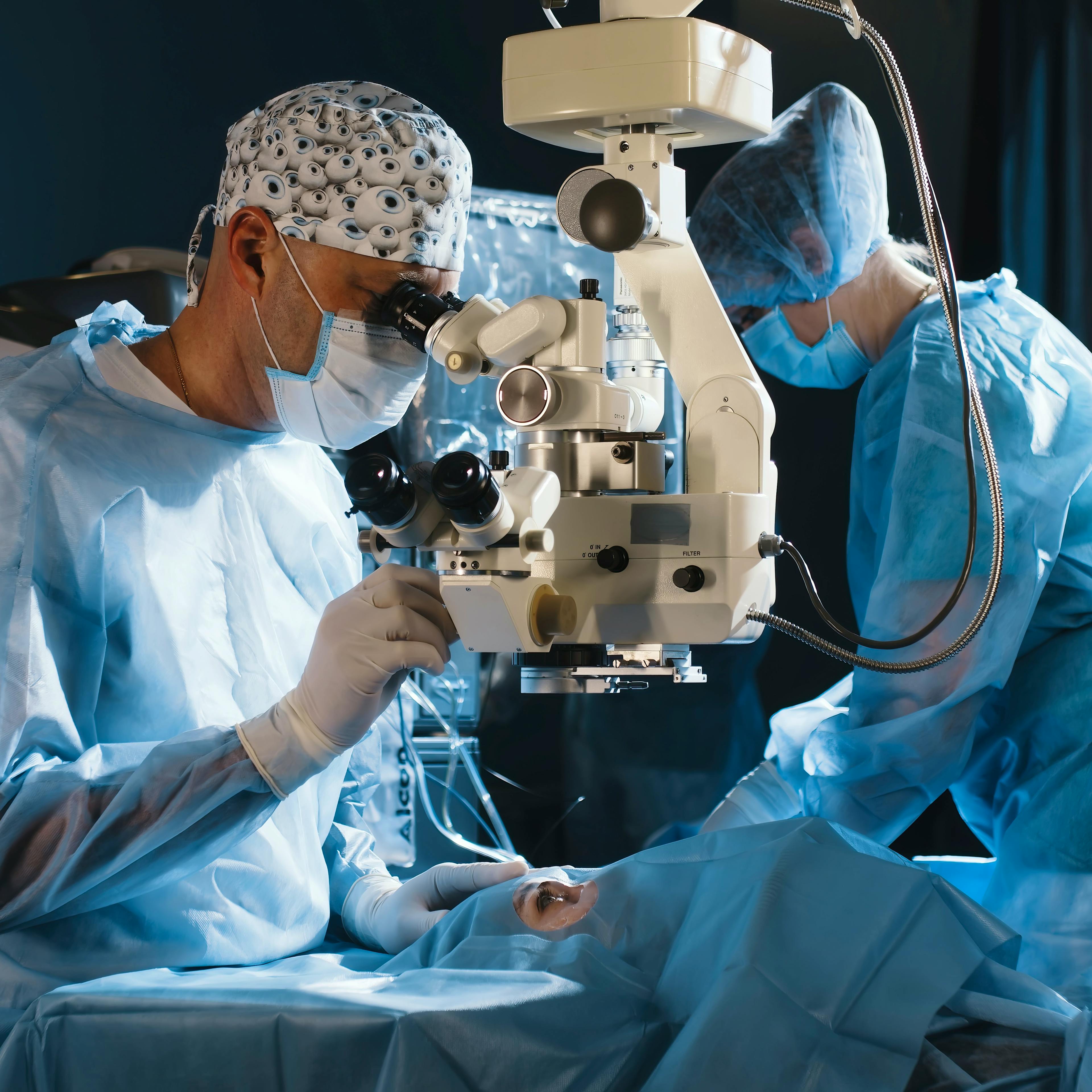

Refractive Lens Exchange for Adults Seeking Long-Term Vision Correction
Refractive Lens Exchange, or RLE, is a vision correction procedure that replaces the eye’s natural lens with an artificial intraocular lens. For adults over 40 in the Houston-Clear Lake area, RLE may be an option for presbyopia, high prescriptions, thin corneas, or those who may not qualify for LASIK.
What Is Refractive Lens Exchange?
Refractive Lens Exchange (RLE) removes your eye’s natural lens and replaces it with a customized IOL. Unlike LASIK or PRK, which reshape the cornea, RLE corrects vision from inside the eye.
RLE is nearly identical to cataract surgery—the main difference is timing. Cataract surgery is performed when the natural lens becomes cloudy. RLE is elective and performed earlier to improve vision and reduce dependence on glasses.
RLE is often recommended for:
- Presbyopia (age-related near vision loss)
- High farsighted or nearsighted prescriptions
- People with thin or irregular corneas
- Adults who want a long-term alternative to LASIK
Who Is a Candidate for RLE?
You may be a good candidate if you:
- Are age 40+, especially with presbyopia
- Have a high prescription that LASIK cannot correct
- Have thin or irregular corneas
- Want a long-lasting option to reduce reliance on glasses or contacts
RLE may not be recommended if you have:
- Uncontrolled diabetes
- Active eye infections
- Significant retinal conditions
- Other eye or health issues that affect healing
A complete eye exam determines whether RLE is right for you.
Not sure whether RLE is right for you?
A comprehensive eye exam can help determine whether refractive lens exchange, LASIK, PRK, or cataract surgery is the best fit for your vision, eye health, and lifestyle.
Schedule an RLE consultation at CLS Health Eye Care Center — Clear Lake.
Benefits of RLE Surgery
RLE offers several advantages that cornea-based surgeries may not:
Vision & Lifestyle Benefits
- Comprehensive correction of nearsightedness, farsightedness, presbyopia, and astigmatism
- Long-term stable results with less regression
- Not dependent on corneal thickness, opening candidacy to more patients
Health & Aging Benefits
- Because RLE removes the natural lens, a cataract cannot later form in that lens.
- Less likely to worsen dry eye than flap-based laser procedures
Procedure Flexibility
- Lens exchange is possible if medically appropriate
- Multiple IOL types available (monofocal, multifocal, toric)
Multifocal lenses can reduce or eliminate the need for reading glasses, while toric lenses correct astigmatism.
RLE Procedure: What to Expect
RLE is an outpatient procedure performed one eye at a time and usually takes 15–30 minutes per eye.
- Procedure time: Usually 15–30 minutes per eye
- Anesthesia: Numbing drops, often with light sedation
- Setting: Outpatient
- Return home: Same day
- Follow-up: Scheduled after surgery to monitor healing
Step-by-Step
1. Consultation
Your surgeon performs comprehensive testing, including prescription stability, corneal shape, and detailed lens measurements, to customize your IOL.
2. Anesthesia & Preparation
Numbing drops and light sedation keep you comfortable and relaxed throughout the procedure.
3. Lens Removal
The surgeon makes a tiny incision and gently removes the natural lens.
4. IOL Placement
A folded artificial lens is inserted, unfolds into place, and is precisely positioned inside the eye.
5. Same-Day Discharge
You’ll go home the same day with a protective shield over the eye to support healing.
Recovery After RLE Surgery
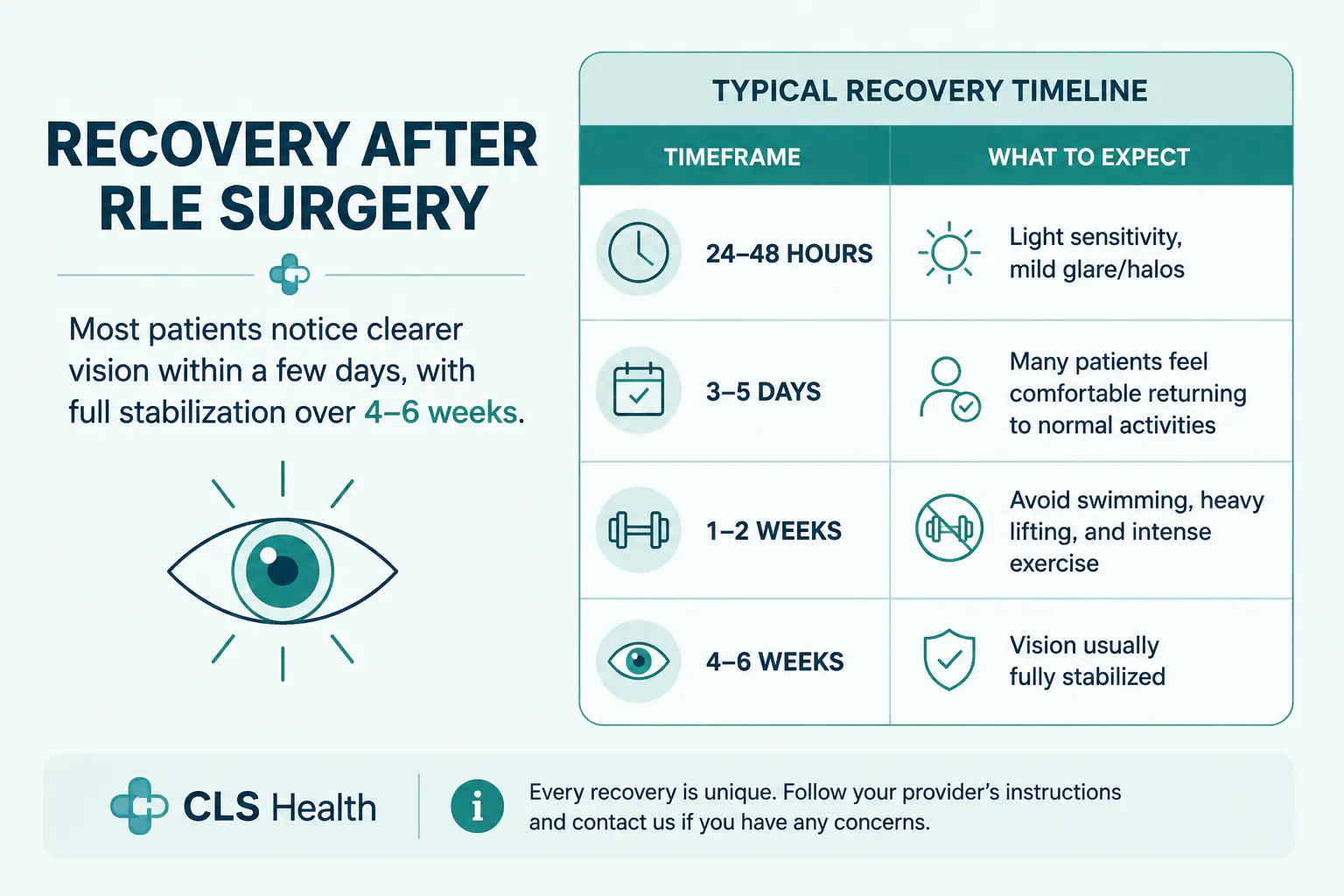
During recovery, you may have mild light sensitivity, blurry vision, or halos as the eye adjusts to the new lens. Your surgeon will provide eye drops and specific aftercare instructions.
- First 24–48 hours: Blurry vision, mild irritation, and light sensitivity are common.
- First week: Vision may begin to stabilize. Use eye drops exactly as directed.
- Several weeks: Halos, glare, or dryness may continue improving as the eye heals.
- Follow-up visits: Your surgeon checks healing, vision changes, and IOL position.
Regular follow-up visits allow your surgeon to monitor healing and make sure the IOL is positioned and functioning properly.
Risks and Side Effects of RLE
RLE is generally safe for appropriate candidates, but it is still an intraocular surgery. Your ophthalmologist will review your eye health, prescription, retina, cornea, and overall medical history before recommending treatment.
Most temporary side effects may include:
- Glare or halos
- Mild dry eye
- Light sensitivity
- Blurry or fluctuating vision during early healing
Rare potential risks
- Infection
- Inflammation
- Retinal detachment
- Posterior capsule opacification (PCO), a common and treatable clouding behind the lens implant that may require a quick in-office laser procedure
- Need for glasses, contacts, or an enhancement procedure after surgery
Your eye surgeon will discuss your individual risks and closely monitor your recovery.
How Much Does RLE Cost in Houston?
RLE typically costs several thousand dollars per eye. Pricing depends on several factors, including:
- IOL type, such as monofocal, multifocal, or toric lenses
- Whether one or both eyes are treated
- Diagnostic testing and lens measurements
- Technology used during the procedure
- Surgeon and facility fees
- Available financing options
Because RLE is typically elective, insurance often does not cover the full cost. During your consultation, the team can review your lens options, estimated pricing, and available payment or financing choices.
RLE vs. LASIK
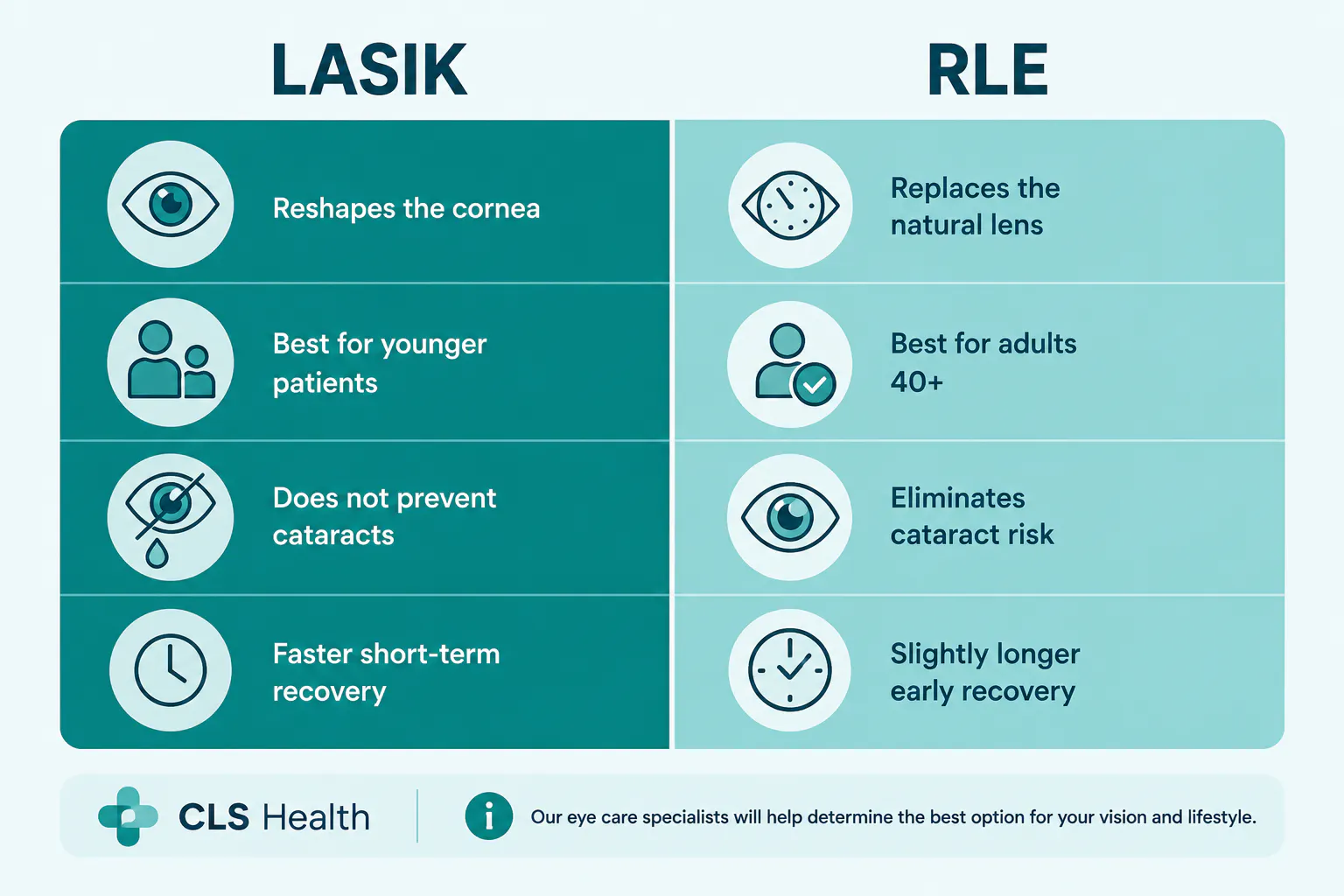
In general:
- Younger adults (usually under 40) often choose LASIK because it corrects distance vision but does not treat age-related near vision loss (presbyopia).
- Adults 40+ or those with higher prescriptions or thin corneas often choose RLE, since it corrects distance and near vision and also prevents future cataracts.
RLE vs. Cataract Surgery
RLE and cataract surgery use similar surgical techniques. The difference is why the procedure is performed.
- RLE: Elective vision correction performed before cataracts significantly affect vision
- Cataract surgery: Performed when the natural lens becomes cloudy enough to interfere with daily life
Because RLE removes the natural lens, a cataract cannot later form in that lens. However, some patients may develop posterior capsule opacification (PCO), a treatable clouding behind the lens implant.
For more information about the differences between RLE and cataract procedures, please consult with an eye care specialist.
RLE Consultation in Houston-Clear Lake
CLS Health Eye Care Center — Clear Lake serves patients from Houston-Clear Lake, Webster, League City, Friendswood, Seabrook, Nassau Bay, and surrounding Bay Area communities. Our ophthalmology team can evaluate whether RLE, LASIK, PRK, cataract surgery, or another option is best suited to your vision goals and eye health.
RLE Surgery FAQs
You may be a good candidate for RLE if you’re in your 40s–60s, have presbyopia (age-related near vision loss), or your prescription is too high for LASIK or PRK. RLE is also an option if you were told you’re not a LASIK candidate due to thin corneas, dry eye, or significant farsightedness. Your eye doctor will evaluate your eye health, lens clarity, and prescription to confirm eligibility.
Most patients notice clearer vision within a few days, with mild glare or halos as the eyes adjust. Many return to normal activities shortly after surgery, while full visual stabilization can take several weeks. Your surgeon will provide specific recovery guidelines based on your eyes and procedure.
RLE is usually an elective procedure and is not covered by insurance. Costs vary based on the intraocular lens selected and the surgical technology used. Your surgeon will review pricing, financing options, and whether you can use FSA or HSA funds for eligible expenses.
RLE is not automatically better than LASIK. LASIK may be a better option for younger adults with stable prescriptions and healthy corneas. RLE may be considered for adults over 40, people with presbyopia, high prescriptions, thin corneas, or those who are not LASIK candidates. An eye exam helps determine which procedure is safer and more appropriate for your vision goals.
RLE and cataract surgery use similar surgical techniques, but they are performed for different reasons. RLE is elective vision correction before cataracts significantly affect vision. Cataract surgery is performed when the natural lens becomes cloudy enough to interfere with daily activities.
Because RLE removes the eye’s natural lens, a cataract cannot later form in that lens. Some patients may develop posterior capsule opacification, or PCO, which is a treatable clouding behind the lens implant. Your surgeon will monitor for this during follow-up care.
Schedule an RLE Consultation
RLE (Refractive Lens Exchange) offers a long-lasting solution for adults seeking clearer vision—especially those in their 40s and beyond who may not qualify for LASIK or other corneal procedures.
If you're exploring vision-correction options to reduce your dependence on glasses or contacts, our ophthalmologists at CLS Health Eye Care Center — Clear Lake can help determine whether RLE is the right fit for you.
Schedule your consultation today with a eye specialist in Houston–Clear Lake and take the next step toward sharper, more dependable vision.
Note: This page is for educational purposes only and does not replace a consultation with an ophthalmologist. Individual results, risks, costs, and candidacy vary.
Book with Dr. Khan

Cornea and External Diseases, Ophthalmology