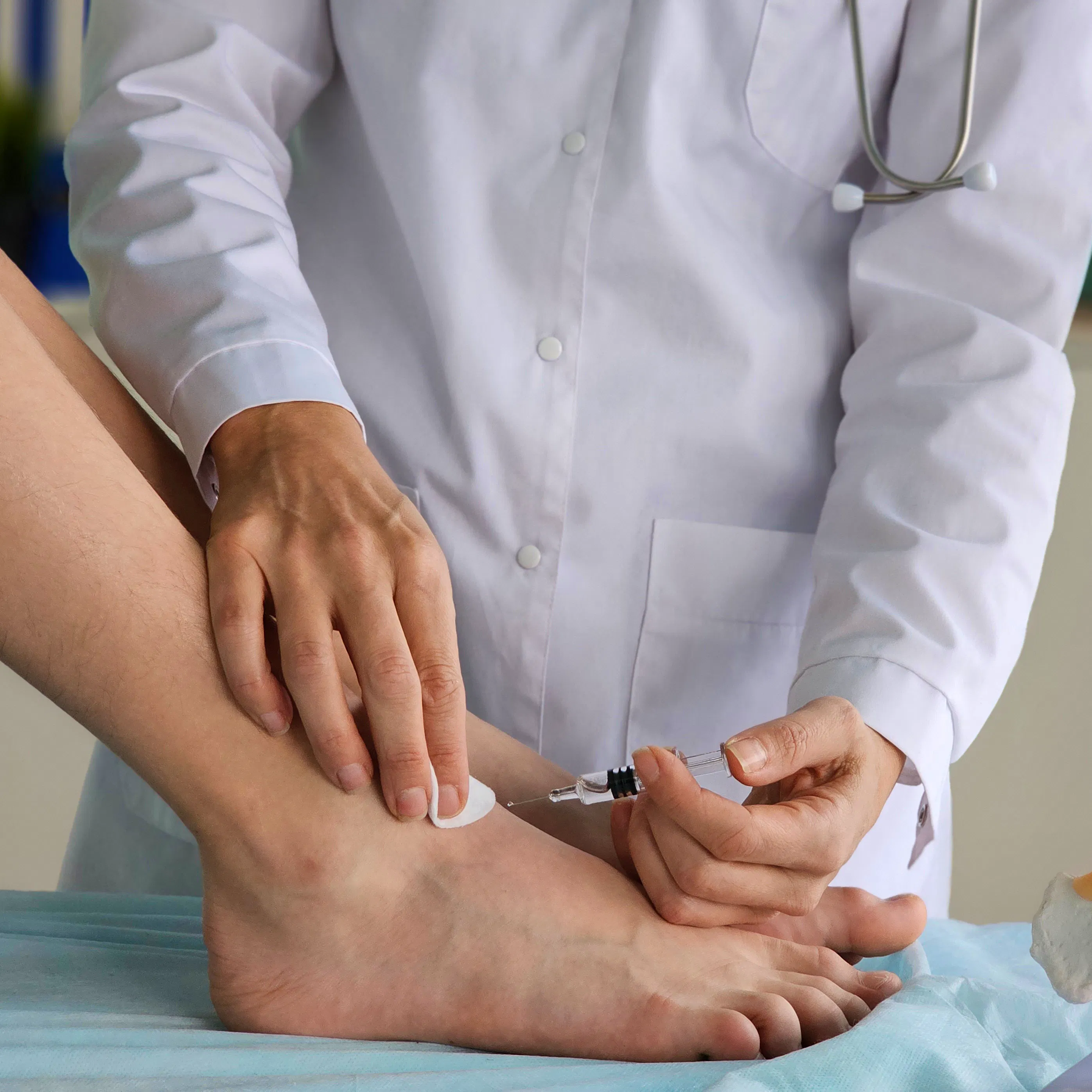

If joint pain, tendon pain, arthritis, or a sports injury is keeping you from moving comfortably, you may be looking for treatment options that do not involve surgery. At CLS Health, our orthopedic specialists evaluate the source of your pain and recommend a personalized care plan based on your condition, goals, and treatment history.
For some patients, this may include PRP injections or other biologic injection therapies as part of a broader non-surgical treatment plan. These treatments are not right for everyone, but they may be considered when conservative options such as physical therapy, medications, bracing, or activity modification have not provided enough relief.
What Are PRP and Regenerative Injections?
PRP and regenerative injections are orthopedic treatment options that use platelet-rich plasma or other biologic materials to support the body’s natural healing response. These treatments are sometimes considered for joint pain, tendon injuries, mild to moderate knee arthritis, or sports-related overuse injuries.
They are usually not the first treatment option. Your orthopedic specialist may first recommend physical therapy, medication, bracing, imaging, or activity changes before considering an injection-based treatment plan.
Is PRP or Regenerative Injection Therapy Right for Me?
You may be evaluated for PRP or biologic injection therapy if you:
- Have joint or tendon pain that has lasted several weeks or months
- Have knee arthritis, chronic tendon pain, or a sports-related overuse injury
- Have not improved enough with physical therapy, medications, bracing, or activity changes
- Want to explore non-surgical treatment options
- Are trying to stay active or delay surgery when appropriate
These treatments are not right for every patient or every condition. Your provider will review your symptoms, diagnosis, imaging findings, previous treatments, medical history, and goals before recommending a treatment plan.
Conditions PRP and Orthopedic Injections May Be Used For
PRP and other orthopedic injections may be considered for certain joint, tendon, and soft tissue conditions when symptoms continue despite conservative care. A thorough evaluation is needed to determine whether injection therapy is appropriate for your diagnosis, symptoms, imaging findings, and treatment goals.
Knee Pain and Knee Arthritis
PRP injections may be considered for some patients with knee osteoarthritis or persistent knee pain, particularly when symptoms continue despite conservative treatment. Whether PRP is appropriate depends on factors such as the severity of arthritis, symptoms, imaging findings, and previous treatments. Research suggests PRP may benefit some patients with mild to moderate knee osteoarthritis, although results vary.
Tendon Pain and Tendinitis
PRP or other orthopedic injections may be considered for certain chronic tendon injuries and overuse conditions, including tennis elbow, rotator cuff-related pain, and Achilles tendinitis. These treatments are typically considered when symptoms persist despite options such as rest, activity modification, medication, or physical therapy.
Sports Injuries and Overuse Pain
For athletes and active adults with persistent sports injuries or overuse pain, injection therapy may be incorporated into a broader non-surgical treatment plan. Depending on the injury, care may also include physical therapy, strengthening, mobility exercises, and modifications to activity or training.
Shoulder, Hip, and Elbow Pain
Patients with ongoing shoulder, hip, or elbow pain may be evaluated for non-surgical treatments when symptoms interfere with movement, exercise, work, or everyday activities. The appropriate treatment depends on the underlying cause of the pain and may include rehabilitation, medication, or injection-based therapies.
PRP Injections vs. Cortisone Shots vs. Other Joint Pain Treatments
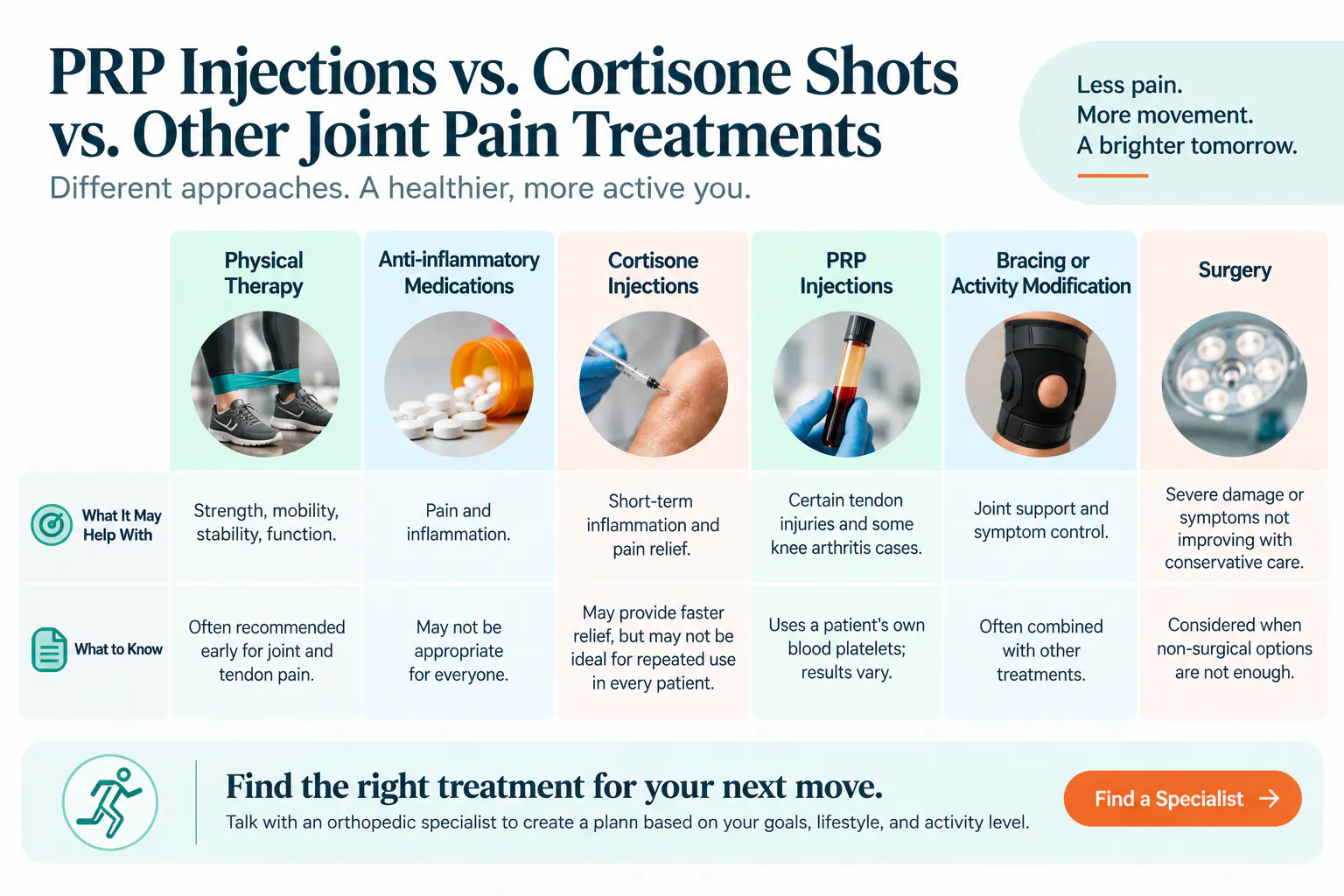
PRP and Other Biologic Injection Therapies Used in Orthopedics
Platelet-Rich Plasma (PRP)
Platelet-rich plasma (PRP) therapy involves drawing a small sample of the patient’s blood and concentrating the platelets. Platelets contain proteins that may support tissue repair and healing processes. The prepared solution is then injected into the targeted area.
Other Biologic Injection Therapies
In addition to PRP, some orthopedic specialists may discuss other biologic injection options depending on the patient’s condition, medical history, and treatment goals. These products vary widely, and not all biologic therapies are FDA-approved for orthopedic uses.
Your provider should explain what product is being considered, why it may be appropriate, what evidence supports its use, what risks are involved, and what alternatives are available.
How Biologic Injection Therapy Fits into Orthopedic Care
Regenerative injection therapy is typically not the first step in treatment. Most patients are first guided through conservative approaches, such as:
- Physical therapy
- Medication management
- Activity modification
If symptoms persist despite these efforts, biologic injections may be considered as part of a stepwise, personalized treatment strategy. The goal is to improve function and manage symptoms while avoiding or delaying surgical intervention when appropriate.
What to Expect: Evaluation and Treatment Process
- Consultation: Your provider reviews your symptoms, medical history, previous treatments, and activity goals.
- Imaging, if needed: X-rays, MRI, or other imaging may be used to better understand the source of your pain.
- Treatment planning: Your specialist explains whether PRP, another injection, physical therapy, medication, or another option may be appropriate.
- Injection procedure: If recommended, the injection is performed in-office.
- Recovery and follow-up: Mild soreness can happen after injection. Recovery timelines vary, and some patients may need follow-up visits or additional treatments.
Benefits, Risks, and Limitations
Potential Benefits
- May help reduce pain
- May support improved function
- May be part of a non-surgical treatment plan
- May help some patients stay active or delay surgery when appropriate
Risks and Considerations
- Temporary soreness or swelling may occur after injection
- Infection, bleeding, or other complications are possible, though uncommon
- Results vary by patient, diagnosis, and severity of condition
- Not all patients are candidates
- Some patients may need more than one treatment
- Insurance coverage may be limited or unavailable for some biologic therapies
Important Information About Biologic Therapies
Biologic therapies vary widely, and not all are FDA-approved for every orthopedic use. Product selection depends on your diagnosis, medical history, treatment goals, and provider judgment.
Before treatment, your provider should explain the specific therapy being considered, including potential benefits, risks, limitations, alternatives, expected recovery, and whether the product is FDA-approved for the intended use. Outcomes differ between individuals, so it is important to discuss your options with a qualified orthopedic specialist.
PRP Injections and Joint Pain Treatment in Houston
CLS Health offers evaluation for joint pain, tendon pain, arthritis, and sports-related injuries at convenient locations in the Greater Houston area. Our orthopedic team can help determine whether PRP injections, other orthopedic injections, physical therapy, imaging, medication management, or surgical referral may be appropriate.
This page should also include the specific locations/providers offering this service, if available. Without provider/location specificity, it will struggle against local competitors.
Why Choose CLS Health for Non-Surgical Orthopedic Care?
At CLS Health, patients receive care from board-certified orthopedic specialists who evaluate joint pain, tendon pain, arthritis, and sports-related injuries with an individualized, evidence-informed approach.
Your care plan may include imaging, physical therapy recommendations, medication management, orthopedic injections, PRP therapy, or surgical referral when appropriate. With integrated services, on-site imaging, and convenient locations across the Greater Houston area, CLS Health makes it easier to get a clear diagnosis and explore treatment options based on your symptoms and goals.
FAQs
PRP injections may be considered for certain joint, tendon, and soft tissue conditions, including knee osteoarthritis, chronic tendon pain, tennis elbow, rotator cuff-related pain, Achilles tendinitis, and some sports-related overuse injuries. An orthopedic evaluation can help determine whether PRP is appropriate for your condition and treatment goals.
PRP injections may help some patients with mild to moderate knee osteoarthritis, particularly when symptoms continue despite conservative treatment. Results vary, and PRP is not a cure for arthritis. Your provider can review your symptoms, imaging, and treatment history to determine whether PRP may be appropriate.
No. PRP and stem cell therapy are different. PRP, or platelet-rich plasma, is prepared from a sample of your own blood and concentrated before being injected into the targeted area. Stem cell therapies involve different cellular products and have different evidence, risks, and regulatory considerations.
PRP is not intended to provide immediate pain relief. Some patients may notice improvement within a few weeks, while others may take several weeks to a few months. The timeline varies depending on the condition being treated, symptom severity, and individual response.
In some cases, PRP or other regenerative injections may be part of a non-surgical treatment plan to manage pain and improve function. However, they cannot replace surgery for every condition. Advanced arthritis, severe joint damage, or certain injuries may still require surgical treatment.
Insurance coverage for PRP and other regenerative injections is often limited and varies by plan, diagnosis, and treatment. Some patients may need to pay out of pocket. Check with your insurance company and the clinic before treatment to understand coverage and estimated costs.
Explore Non-Surgical Options for Joint or Tendon Pain
Joint and tendon pain can make everyday movement harder, but surgery is not always the first or only option. An orthopedic evaluation can help identify the source of your symptoms and guide the right care plan.
At CLS Health, our orthopedic specialists offer personalized treatment plans that may include physical therapy, imaging, medication management, orthopedic injections, PRP therapy, or other options based on your condition and goals.
Book with Dr. Rios

Non-Operative Orthopedics, Sports Medicine, Regenerative Medicine