
Quick Facts: Achilles Tendon Pain
Achilles tendon pain often begins as stiffness or soreness in the back of the heel.
Common symptoms include swelling, morning stiffness, and pain during walking, running, or climbing stairs.
If pain lasts longer than 1–2 weeks or occurs after a sudden injury, medical evaluation is recommended.
Achilles tendon pain often begins as mild stiffness or soreness in the back of the heel but can gradually worsen if the tendon continues to be stressed. What starts as minor irritation can develop into tendon inflammation, chronic degeneration, or even a tendon rupture. Understanding how Achilles tendon conditions develop—and recognizing symptoms early—can help patients seek treatment before more serious injury occurs.
Understanding the Achilles Tendon
The Achilles tendon is the largest and strongest tendon in the body. It connects the calf muscles — the gastrocnemius and soleus — to the heel bone (calcaneus).
This tendon allows the foot to push off the ground during movement and plays an essential role in:
- Walking
- Running
- Jumping
- Climbing stairs
- Standing on tiptoe
During high-impact activities like running or jumping, the Achilles tendon may experience forces up to 8–10 times body weight, making it particularly vulnerable to overuse injuries.
Where Is Achilles Tendon Pain Felt?
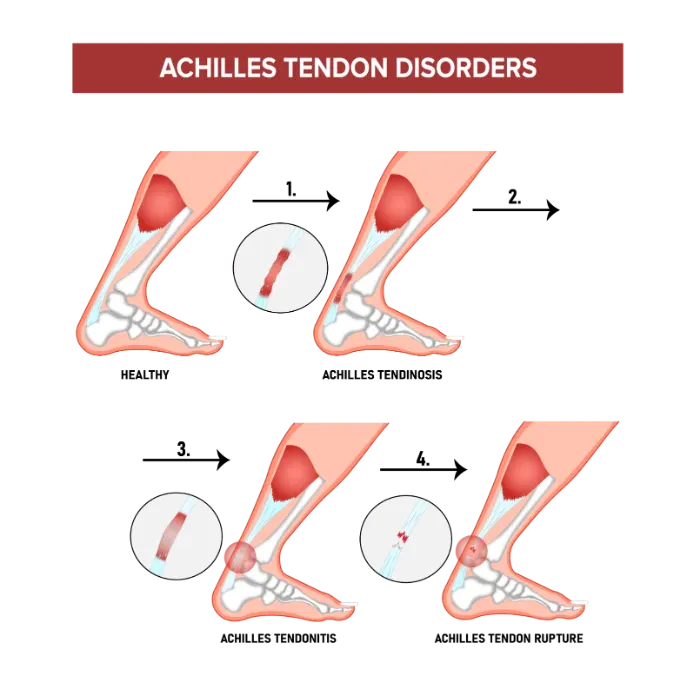
Achilles tendon pain typically develops in the back of the ankle or heel.
Pain may occur:
- Along the back of the ankle
- About 2–6 cm above the heel bone (non-insertional region)
- At the point where the tendon attaches to the heel (insertional region)
- During push-off movements like walking or climbing stairs
Early symptoms may appear only after exercise but can progress to persistent discomfort during normal daily activities.
Symptoms of Achilles Tendon Problems
Achilles tendon injuries often develop gradually due to repetitive strain.
Common symptoms include:
- Pain in the back of the heel or ankle
- Morning stiffness or stiffness after rest
- Swelling along the tendon
- Tenderness when touching the tendon
- Pain during walking, running, or exercise
- Difficulty pushing off the foot
- Tight calf muscles
Without treatment, symptoms may worsen and begin interfering with normal movement.
Types of Achilles Tendon Injuries
Achilles tendon injuries can occur in different areas of the tendon. The two most common types include insertional tendinopathy and non-insertional (mid-portion) tendinopathy. These two types can have different causes, symptoms, and treatment approaches, which is why accurate diagnosis is important.
Insertional Achilles Tendinopathy
Insertional tendinopathy occurs where the tendon attaches to the heel bone.
It is often associated with:
- Heel bone spurs (Haglund’s deformity)
- Chronic pressure from footwear
- Degenerative tendon changes
Patients with this condition typically experience pain directly at the back of the heel, especially during walking, standing, or when wearing certain shoes.
Non-Insertional (Mid-Portion) Achilles Tendinopathy
This injury occurs 2–6 cm above the heel bone, where the tendon experiences the greatest mechanical stress.
It is commonly seen in:
- Runners
- Athletes
- Individuals who rapidly increase training intensity
- People with high arches
- People with tight Achilles tendons
Repeated stress can cause small microtears within the tendon, which may lead to pain and gradual degeneration over time.
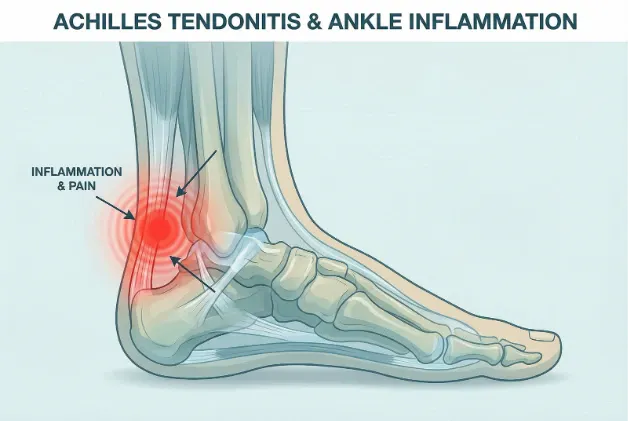
How Achilles Pain Develops Over Time
Achilles tendon injuries often develop gradually as stress on the tendon increases.
Common stages include:
- Early tendon irritation
- Achilles tendonitis (inflammation)
- Tendinosis (chronic degeneration)
- Partial tear or complete rupture
Recognizing symptoms early can help prevent progression to more severe injuries.
Stage 1: Early Tendon Irritation
Early irritation occurs when the tendon becomes overloaded but has not yet developed significant structural damage.
Symptoms may include:
- Morning stiffness
- Mild soreness during activity
- Tight calf muscles
- Tenderness along the tendon
Common causes include sudden increases in physical activity, running hills or stairs, improper footwear, and tight calf muscles.
Early treatment often includes rest, activity modification, stretching, and supportive footwear.
Stage 2: Achilles Tendonitis
Achilles tendonitis occurs when repetitive stress causes inflammation of the tendon.
Symptoms may include:
- Swelling along the tendon
- Warmth around the injury
- Pain during walking or running
- Stiffness after periods of rest
Treatment often focuses on reducing inflammation and allowing the tendon to recover through activity modification, physical therapy, and supportive devices such as orthotics or heel lifts.
Stage 3: Achilles Tendinosis
If tendonitis continues without treatment, the tendon may develop tendinosis, a condition involving degeneration of tendon fibers.
Symptoms may include:
- Thickening of the tendon
- Persistent pain
- Reduced calf strength
- Pain during everyday activities
Treatment often includes structured physical therapy, activity modification, bracing, and regenerative treatments designed to support tendon healing.
Tendonitis vs Tendinosis

Treatment Approaches
Treatment may involve:
- Structured physical therapy
- Regenerative treatments
- Activity modification
- Bracing or supportive devices
Stage 4: Achilles Tendon Tear or Rupture
In severe cases, the Achilles tendon may partially tear or rupture completely.
This injury often occurs suddenly during sports involving jumping or rapid direction changes.
Symptoms may include:
- Sudden sharp pain in the back of the ankle
- A popping or snapping sensation
- Difficulty pushing off the foot
- Inability to stand on the toes
- Swelling or bruising
Severe injuries may require immobilization, orthopedic evaluation, or surgical repair.
Causes and Risk Factors for Achilles Tendon Injuries
Achilles tendon pain can develop from multiple factors that increase stress on the tendon.
Common causes and risk factors include:
- Overuse from running or sports
- Sudden increases in activity levels
- Tight calf muscles
- Improper or rigid footwear
- Aging-related tendon degeneration
- Flat feet or biomechanical problems
- Obesity
- Diabetes
- Certain antibiotics such as fluoroquinolones
These factors can weaken the tendon over time and increase the likelihood of injury.
How Achilles Tendon Conditions Are Diagnosed
Achilles tendon injuries are usually diagnosed through a physical examination and medical history.
During evaluation, physicians assess:
- Tenderness along the tendon
- Tendon thickness
- Ankle range of motion
- Calf muscle strength
Imaging may be used in some cases, including:
- Ultrasound to evaluate tendon structure
- MRI to detect severe injury or rupture
Accurate diagnosis helps guide appropriate treatment.
Treatment Options for Achilles Tendon Pain
Treatment depends on the severity of the tendon injury.
Common treatments include:
- Rest and activity modification
- Physical therapy
- Orthotics or supportive footwear
- Regenerative therapies
- Temporary immobilization
- Surgical repair for severe tendon tears
Early treatment often helps patients recover faster and avoid long-term tendon damage.
Preventing Achilles Tendon Injuries
Preventive strategies can reduce stress on the tendon and lower the risk of injury.
Helpful prevention strategies include:
- Gradually increasing exercise intensity
- Wearing supportive athletic footwear
- Maintaining calf flexibility
- Strengthening lower leg muscles
- Warming up before physical activity
These steps help protect the tendon from excessive strain.
When to See a Doctor for Achilles Tendon Pain
Medical evaluation is recommended if you experience:
- Pain lasting longer than 1–2 weeks
- Increasing swelling
- Difficulty walking
- Sudden injury during sports
- Symptoms that repeatedly return
Early evaluation can prevent more serious tendon damage.
What Kind of Doctor Treats Achilles Tendon Injuries?
Achilles tendon conditions are commonly treated by specialists experienced in musculoskeletal injuries, including:
These providers evaluate tendon injuries and recommend appropriate treatment options.
FAQs
Achilles tendon pain is commonly caused by overuse, repetitive stress from sports or running, tight calf muscles, improper footwear, or age-related degeneration.
Recovery varies depending on the severity of the injury. Mild cases may improve within a few weeks, while more significant tendon injuries may take several months to heal.
Most cases improve with conservative treatment such as rest, physical therapy, and activity modification. Surgery is typically reserved for severe tendon damage or rupture.
Orthopedic specialists, sports medicine physicians, and foot and ankle specialists commonly treat Achilles tendon injuries.
You should seek medical evaluation if pain lasts longer than one to two weeks, swelling worsens, walking becomes difficult, or symptoms occur after a sudden injury.