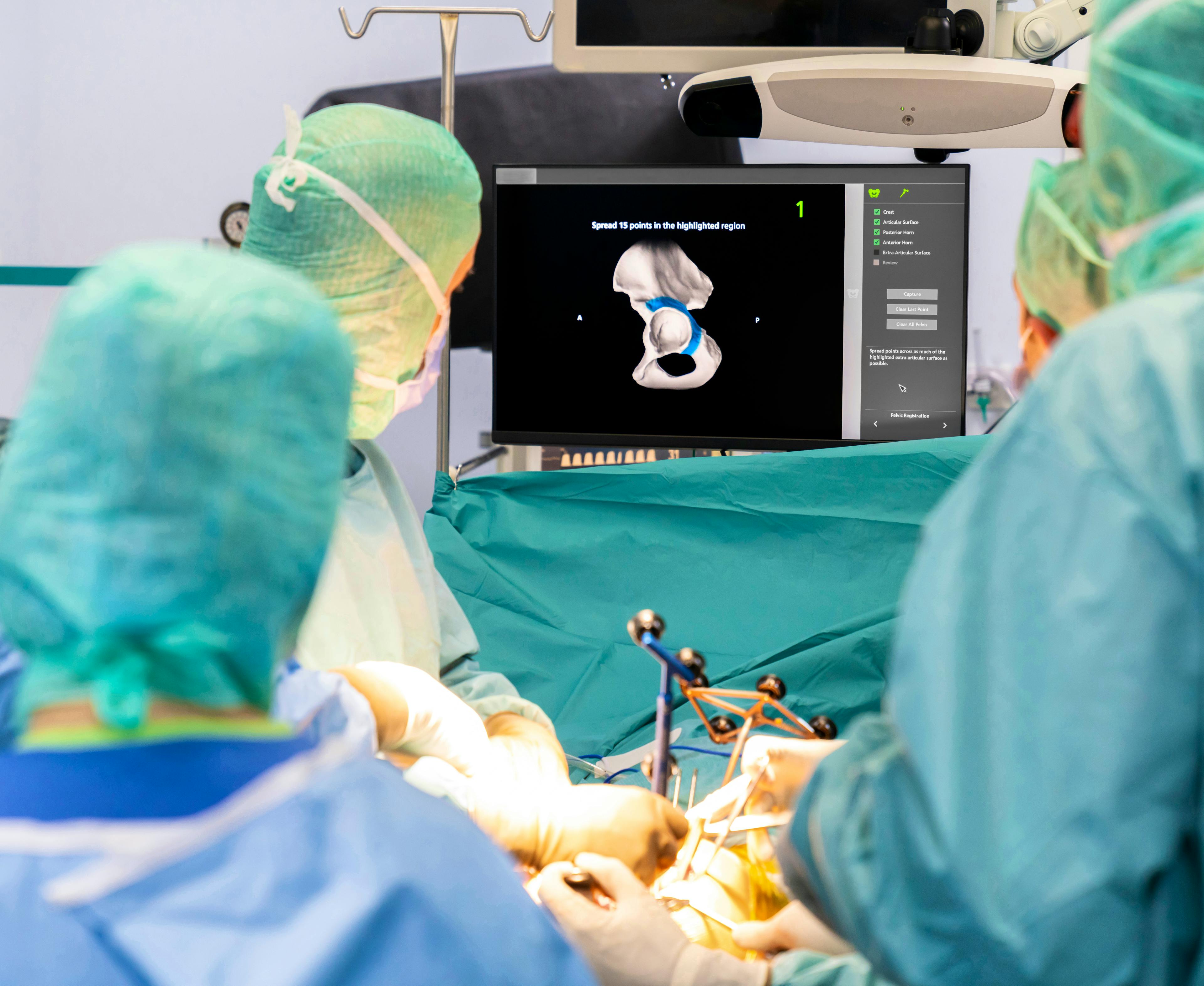

CLS Health provides robotic-assisted hip replacement in the Houston area for patients with advanced hip damage who may benefit from joint replacement surgery. Robotic technology combines detailed preoperative planning with computer-guided assistance to help your orthopedic surgeon plan and position the hip implant based on your individual anatomy.
Hip replacement may be considered when conditions such as osteoarthritis or other significant joint damage cause persistent pain, stiffness, or mobility limitations that no longer respond adequately to nonsurgical treatment. Your orthopedic surgeon can determine whether robotic-assisted or traditional hip replacement may be appropriate for you.
What Is Robotic Hip Replacement?
Robotic hip replacement combines traditional surgical expertise with computer-guided planning. Before surgery, a CT scan creates a 3D model of your hip. This allows your surgeon to map out the ideal implant placement based on your exact anatomy.
During surgery, the robotic system assists the surgeon by reinforcing the preoperative plan and supporting accurate implant alignment. The robot doesn’t operate on its own—the surgeon performs the entire procedure, while the system helps maintain accuracy and alignment. This approach gives patients a more personalized experience than traditional hip replacement alone.
Symptoms That May Lead to Hip Replacement
Hip replacement is often considered when everyday activities become difficult. People commonly seek evaluation when they experience:
- Ongoing groin or hip pain
- Stiffness and limited range of motion
- Trouble walking, standing, or climbing stairs
- Pain that affects sleep
- Symptoms that no longer improve with conservative treatments
If hip pain is limiting your lifestyle, a specialist can help determine whether replacement is the next step.
Conditions That May Be Treated with Hip Replacement
Many conditions can cause significant hip damage, including:
- Osteoarthritis
- Rheumatoid arthritis
- Post-traumatic arthritis
- Hip dysplasia
- Avascular necrosis (AVN)
- Severe cartilage loss
Potential Benefits of Robotic-Assisted Hip Replacement
Robotic technology provides additional planning and intraoperative information that can help your surgeon personalize the procedure to your anatomy.
- Detailed 3D planning before surgery
- Guidance to support precise implant positioning and alignment
- Information that can help the surgeon assess leg length and implant positioning
- A surgical plan customized to the patient's anatomy
Robotic assistance is not necessary or appropriate for every patient. Your orthopedic surgeon can recommend the surgical technique and approach best suited to your needs.
Robotic Hip Replacement vs. Traditional Hip Replacement
- Traditional hip replacement is highly effective and remains widely used. Surgeons rely on imaging, experience, and direct visualization to place the implant.
- Robotic hip replacement adds advanced planning tools and real-time guidance to those same principles. This added layer of information may be especially helpful for patients with unique anatomy, alignment concerns, or specific activity goals.
After determining whether robotic assistance or traditional methods are appropriate, your surgeon will also choose the surgical approach that offers the best access to your hip.
Surgical Approach for Hip Replacement
Surgeons select the hip replacement approach that provides the safest and most effective access to the joint.
- Anterior approach:
Uses an incision at the front of the hip and works between muscles. Some patients experience earlier mobility with this method. - Posterior approach:
One of the most common and versatile techniques. It offers excellent visibility and works well for many anatomies, including complex cases. - Lateral and anterolateral approaches:
Offer a good balance between surgical exposure and hip function. May be recommended when other approaches are not ideal based on body structure or underlying health conditions. - Bilateral hip replacement:
When both hips need replacement, surgery may be done in one procedure (simultaneous) or in two stages. Robotic planning helps ensure precise placement for both implants.
What to Expect During Robotic Hip Surgery
Your surgeon begins with a thorough evaluation and imaging. A CT scan creates a 3D map of your hip, allowing precise planning for implant size and placement. During surgery, the robotic system guides the surgeon through each step, supplying real-time information while the surgeon stays in full control. Safety monitoring throughout the procedure helps ensure proper alignment and balance.
Recovery After Hip Replacement
Recovery after hip replacement varies based on your health, surgical approach, mobility before surgery, and rehabilitation needs. Many patients begin standing and walking with assistance soon after surgery, as directed by their care team.
- Early recovery: Focuses on safe movement, managing swelling and discomfort, and beginning recommended exercises.
- Following weeks: Walking, mobility, and strength generally improve gradually.
- Following months: Patients may continue progressing toward daily activities and appropriate low-impact exercise.
Your surgeon and rehabilitation team will provide individualized guidance for activity and recovery.
How Long Do Hip Replacements Last?
Modern hip replacements are designed for long-term durability, and many continue functioning well for decades. Implant longevity varies based on factors such as age, activity level, implant characteristics, bone health, and other individual factors.
Robotic Hip Replacement Locations in the Houston Area
Clear Lake / Webster
CLS Health Orthopedics & Sports Medicine Associates — Clear Lake
905 West Medical Center Boulevard, Suite 201
Webster, TX 77598
Sugar Land
CLS Health Orthopedics & Sports Medicine Associates — Sugar Land
14100 Southwest Freeway, Suite 500
Sugar Land, TX 77478
Robotic hip replacement availability may vary by surgeon and location. Schedule an evaluation to discuss your treatment options.
FAQs
Robotic-assisted hip replacement is a surgical technique that uses advanced imaging and computer-guided robotic technology to help surgeons plan and place hip implants with greater precision. This approach can enhance accuracy and may support improved outcomes compared to manual techniques.
Both robotic-assisted and traditional hip replacement can be effective. Robotic technology provides additional planning and guidance that can help with precise implant positioning, but the best approach depends on your anatomy, health, and surgical needs.
Most patients resume everyday activities within 4–6 weeks, though full recovery may take several months. Factors such as overall health, surgical approach, and participation in physical therapy all influence recovery time.
Mild to moderate soreness, swelling, and stiffness are common during the first few weeks. Pain should gradually improve over time. Severe or worsening pain is not typical and should be evaluated by your surgeon.
Modern hip implants typically last 15–20 years or longer. Advancements in materials and surgical techniques continue to improve implant longevity.
Talk With a Hip Specialist in the Houston Area
When hip pain starts to interfere with daily life, a specialist evaluation can provide clarity. Our orthopedic surgeons serve patients across Webster, Sugar Land, and Pasadena with expert diagnosis and personalized hip replacement care.
Schedule a consultation today to learn which treatment options may be right for you.
Book with Dr. Brooks

Orthopedic Sports Medicine, Hip and Knee Orthopedic Surgery, Shoulder Orthopedic Surgery