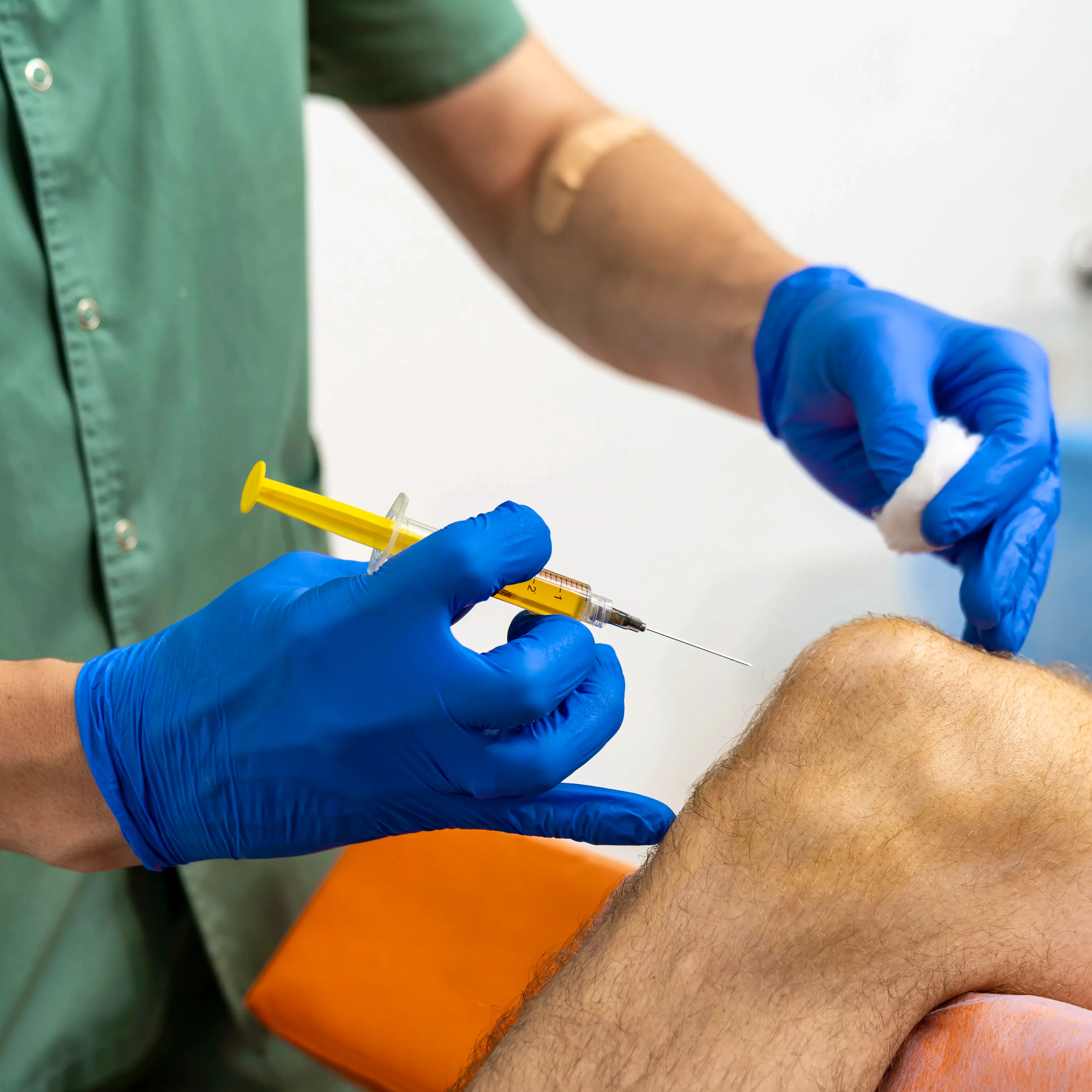

If joint pain, tendon injuries, or sports-related pain are limiting your daily activities, PRP therapy may be a non-surgical treatment option to discuss with your provider. PRP uses concentrated platelets from your own blood to help support the body’s natural healing response.
Quick Facts: PRP Therapy
PRP therapy is a minimally invasive treatment that uses platelets from your own blood.
Platelets contain natural growth factors that may support the body’s healing response in certain musculoskeletal conditions.
PRP may be considered for joint pain, tendon injuries, sports-related injuries, certain spine or musculoskeletal pain conditions, and patients exploring non-surgical treatment options.
A medical evaluation is needed to determine whether PRP is appropriate for your symptoms, diagnosis, and health history.
What Is PRP Therapy?
PRP stands for platelet-rich plasma. Plasma is the liquid part of your blood, and platelets are blood cells involved in the body’s natural response to injury and inflammation.
During PRP treatment, a small amount of blood is drawn and placed in a centrifuge, where platelets are separated from red blood cells. The platelet-rich portion is then injected into a targeted area, such as a painful joint, tendon, or soft tissue injury.
PRP injections are sometimes discussed as a regenerative or non-surgical treatment option for certain joint and tendon conditions. PRP is used to support the body’s natural healing response. It is not a guaranteed cure, and it is not a replacement for surgery in every case. Your provider will determine whether PRP may fit into your overall care plan.
Conditions PRP May Be Used For
PRP may be considered for certain orthopedic, sports medicine, pain management, and rehabilitation-related conditions. Its use depends on the cause of your pain, the severity of the condition, your medical history, and your treatment goals.
Knee Pain
PRP injections may be considered for certain types of knee pain, including tendon injuries, joint irritation, or early degenerative changes. Your specialist can help determine whether PRP or another treatment option may be appropriate.
Shoulder Pain
PRP may be considered as part of a non-surgical treatment plan for select shoulder tendon injuries and sports-related conditions.
Tendon Injuries
PRP may be considered for certain tendon injuries that have not improved enough with rest, medication, physical therapy, or other conservative treatments.
Tennis Elbow or Golfer’s Elbow
Providers may discuss PRP injections for persistent elbow tendon pain when symptoms continue despite conservative care.
Plantar Fasciitis
For ongoing heel pain related to plantar fasciitis, some patients may explore PRP therapy after other non-surgical treatments have not provided enough relief.
Hip Pain
PRP may be considered for select hip tendon, soft tissue, or joint-related pain conditions.
Sports-Related Injuries
Athletes and active individuals may consider PRP for certain tendons, ligaments, joints, or soft tissue sports injuries when appropriate.
Select Spine or Disc-Related Pain Cases
In some cases, PRP may be considered as part of a broader non-surgical pain management plan for certain spine or disc-related pain conditions.
PRP Across CLS Health Specialties
At CLS Health, PRP therapy may be evaluated through several coordinated specialties depending on your symptoms and diagnosis.
Pain Management
PRP may be used as part of a broader non-surgical pain treatment plan for select musculoskeletal or spine-related conditions. PRP may be one option among several treatments designed to reduce pain and improve function.
Orthopedics & Sports Medicine
PRP may be considered for certain joint, tendon, and sports-related injuries after a full evaluation. This may include reviewing your symptoms, physical exam findings, imaging results, and prior treatments.
Physical Medicine & Rehabilitation
PRP may support functional recovery plans when combined with rehabilitation, movement strategies, and follow-up care when clinically appropriate.
PRP vs. Other Non-Surgical Treatments
PRP is one of several non-surgical options that may be considered for joint, tendon, or musculoskeletal pain. The right treatment depends on your diagnosis, symptoms, and goals.
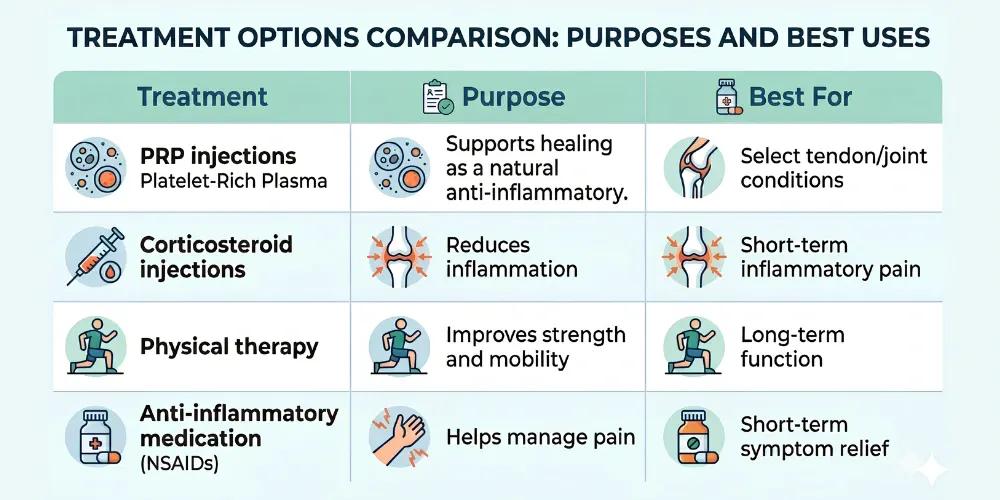
Your provider may recommend PRP alone or as part of a larger care plan that includes physical therapy, medication, activity modification, or other treatments.
What to Expect During PRP Treatment
PRP therapy typically involves multiple sessions, with the number and frequency of treatments determined by the provider based on each patient’s individual needs and response to care.
1. Consultation and Exam
Your visit begins with a medical evaluation. Your provider will review your symptoms, medical history, prior treatments, and any imaging studies, such as X-rays, ultrasound, or MRI, if available.
2. Blood Draw
A small amount of blood is drawn from your arm, similar to a routine lab test.
3. PRP Preparation
Your blood is processed using specialized equipment to concentrate the platelets.
4. Targeted Injection
The PRP is injected into the treatment area. In some cases, image guidance may be used to help place the injection accurately.
5. Recovery Instructions
Mild soreness or increased discomfort can occur temporarily after PRP injections and often improves within several days. You will receive instructions about activity, soreness, medications, and when to resume normal routines.
6. Follow-Up Plan
Your provider may schedule follow-up visits to monitor your progress and adjust your treatment plan as needed.
Who May Be a Candidate for PRP?
PRP may be considered for patients who:
- Have persistent joint, tendon, or soft tissue pain
- Want to explore non-surgical treatment options
- Have not improved enough with conservative care
- Are medically appropriate after evaluation
- Have realistic expectations about results and recovery
Not every patient is a candidate for PRP. Certain medical conditions, medications, or injury types may affect whether PRP is recommended.
Benefits and Limitations of PRP
Potential Benefits
PRP therapy may offer several potential benefits for select patients:
- Uses components from your own blood
- Is minimally invasive
- May help support pain management and function in select patients
- Can be part of a non-surgical treatment plan
- May be combined with rehabilitation and follow-up care
Limitations
PRP is not right for every condition or patient. Important limitations include:
- Results vary from person to person
- PRP may not provide immediate pain relief
- It may not be appropriate for severe injuries or advanced joint damage
- Insurance coverage may vary
- Research is still evolving for some PRP uses
Your specialist can help you understand whether PRP is a reasonable option for your specific condition.
Understanding PRP Results
The effectiveness of PRP may vary depending on the condition being treated, the severity of injury, and individual patient factors. Research supporting PRP is stronger for some musculoskeletal conditions than others.
Is PRP Covered by Insurance?
Insurance coverage for PRP therapy varies. Some PRP treatments may be considered self-pay, depending on your insurance plan, diagnosis, and treatment location.
Before treatment, the CLS Health team can help review payment expectations and answer questions about cost, insurance coverage, and next steps. To verify your benefits and coverage information, please call (281) 724-1860.
PRP Therapy at CLS Health
At CLS Health, PRP therapy is evaluated through a personalized care model. Depending on your symptoms and diagnosis, your care may involve specialists in orthopedics, sports medicine, pain management, or physical medicine and rehabilitation.
Your provider will help determine whether PRP, another non-surgical treatment, or a different care plan is most appropriate for your needs.
Considering PRP Therapy?
A CLS Health specialist can evaluate your condition and determine whether PRP injections or another non-surgical option may be appropriate.
FAQs About PRP Therapy
No. PRP uses platelets from your own blood. It is not the same as stem cell therapy and involves different types of biologic materials and clinical uses.
PRP may be considered for certain types of knee pain, including some tendon or joint-related conditions. Results vary depending on the underlying cause of pain and individual factors.
Some patients notice improvement within a few weeks, while others may take several weeks to a few months. PRP is generally associated with gradual improvement rather than immediate pain relief.
Most patients tolerate PRP injections. You may feel pressure during the procedure and temporary soreness afterward, which usually improves within a few days.
Yes. A medical evaluation is needed to determine whether PRP or another treatment option is appropriate based on your condition and health history.
In some cases, PRP may be considered as part of a non-surgical treatment plan. While it is not appropriate for every condition, some patients use PRP to manage symptoms and improve their function before considering surgery.
In many cases, PRP therapy is combined with rehabilitation or physical therapy to help support mobility, function, and rehabilitation goals.
The number of PRP treatments varies depending on the condition being treated, symptom severity, and individual response to therapy. Some patients may benefit from a single injection, while others may require multiple treatments as part of a broader care plan.
Important Information About PRP Therapy
PRP therapy may not be appropriate for every patient or condition, and results can vary. Your provider will review potential risks, benefits, alternatives, and whether PRP may be a reasonable option for your specific symptoms and treatment goals.
Schedule a PRP Consultation at CLS Health
If you’re exploring non-surgical options for joint, tendon, spine, or sports-related pain, PRP may be one treatment option to discuss with a specialist.
Living with joint, tendon, or sports-related pain can affect your mobility and quality of life. CLS Health specialists can help determine whether PRP therapy or another non-surgical treatment may fit your care plan.