

Discogenic pain is a type of chronic low back pain that originates from damage or degeneration within a spinal disc. Unlike herniated discs, it does not always involve nerve compression but can still cause persistent, activity-related discomfort. Accurate diagnosis helps guide the most appropriate treatment approach.
Quick Facts: Discogenic Back Pain
Discogenic pain comes from damage or degeneration within a spinal disc, not from a pinched nerve.
Pain is usually localized to the lower back and often worsens with sitting, bending, or lifting.
Diagnosis is based on symptoms and clinical evaluation, as MRI findings may be subtle or not fully explain the pain.
What Is Discogenic Pain?
Discogenic pain refers to back pain originating from a spinal disc rather than from nearby nerves or joints. The intervertebral discs act as cushions between the bones of the spine, helping absorb shock and support movement.
In discogenic pain, the disc may become a source of discomfort due to:
- Internal disc disruption (structural breakdown within the disc)
- Annular tears (small tears in the outer layer of the disc)
- Degeneration without a visible herniation
Unlike conditions that primarily compress spinal nerves, discogenic pain is often axial, meaning it is centered in the lower back. However, it can also occur alongside nerve-related pain, which may radiate into the arms or legs in some cases.
What Causes Discogenic Back Pain?
Discogenic pain often develops gradually as the discs lose strength and flexibility over time. Several factors can contribute to this process, including:
- Age-related disc degeneration
- Repetitive stress or microtrauma from daily activities or physical work
- Annular tears in the outer disc layer
- Prolonged sitting, especially with poor posture
- Mechanical strain from bending, lifting, or twisting movements
These changes can make the disc more sensitive to pressure and movement, leading to chronic discomfort even without nerve involvement.
Symptoms of Discogenic Pain
Discogenic pain can feel different from other types of back pain, particularly those involving nerve compression.
Common symptoms include:
- Deep, aching pain in the lower back
- Pain that worsens with sitting, bending, or lifting
- Discomfort with prolonged standing or activity
- Limited range of motion in the spine
- Minimal or no pain radiating into the legs
Symptoms are often activity-related and may improve with position changes or rest.
Discogenic Pain vs. Herniated Disc
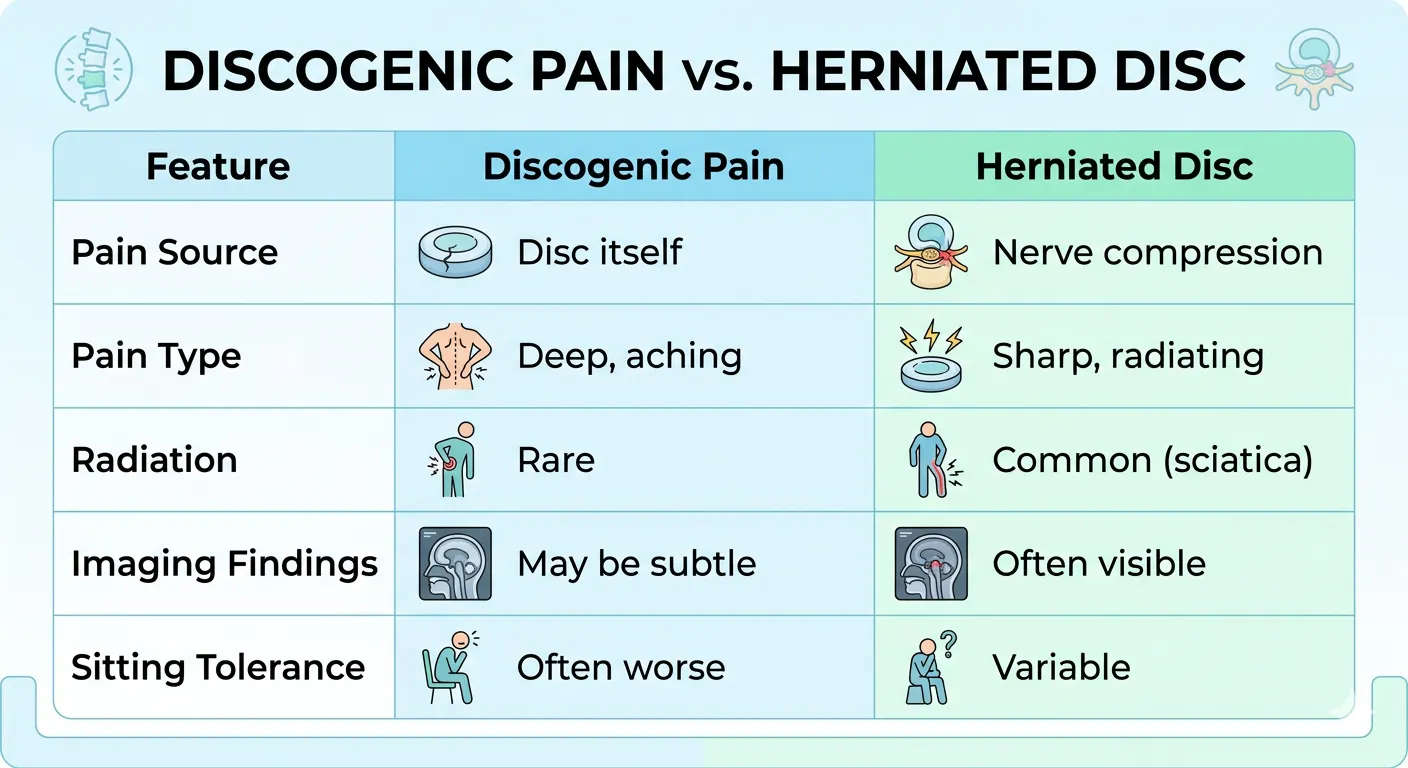
Although both conditions involve the spinal disc, they affect the body differently.
A herniated disc can cause nerve irritation, which may lead to symptoms like leg pain or numbness—but not all herniated discs result in nerve-related symptoms.
Learn more about herniated discs and treatment options.
How Discogenic Pain Is Diagnosed
Diagnosing discogenic pain can be more complex than identifying other spine conditions because imaging findings are not always definitive.
Evaluation typically includes:
- A detailed medical history and symptom review
- A focused physical examination
- MRI imaging, which may show disc changes—but not always clearly correlate with symptoms
- In some cases, diagnostic injections to help confirm the source of pain
Because discs can appear abnormal even in people without symptoms, diagnosis relies heavily on correlating imaging with clinical findings.
Non-Surgical Treatment Options
Many patients with discogenic pain improve with conservative, non-surgical care.
Common approaches include:
- Physical therapy to improve strength and flexibility
- Core stabilization exercises to support the spine
- Activity modification to reduce strain on the disc
- Anti-inflammatory strategies to manage discomfort
Image-guided injections in select cases, including:
- Epidural steroid injections
- Facet joint injections
- Platelet-Rich Plasma (PRP) injections
- Intradiscal Nucleus Pulposus (NP) injections, which use components similar to the disc’s natural inner material to support healing
These advanced injection therapies may be recommended based on the underlying cause of pain and response to initial treatment.
Explore non-surgical spine treatment options in Houston or schedule an evaluation with a spine specialist.
Treatment plans are individualized based on symptom severity, lifestyle, and overall health.
When Is Advanced Treatment Considered?
More advanced treatment options may be considered when:
- Pain persists despite conservative care
- Daily function becomes limited
- Symptoms interfere with work or quality of life
A spine specialist can help determine the most appropriate next steps based on your condition.
When to See a Spine Specialist
You may benefit from a specialist evaluation if you experience:
- Back pain lasting more than 6–8 weeks
- Difficulty sitting, standing, or performing daily activities
- Recurrent or worsening symptoms
Early evaluation can help identify the source of pain and prevent progression.
Why Choose CLS Health for Back Pain Evaluation
At CLS Health, patients receive comprehensive spine care from experienced specialists who focus on accurate diagnosis and individualized treatment.
- Board-certified interventional spine specialists
- Advanced diagnostic capabilities
- Coordinated, multi-specialty care
- Convenient locations across Greater Houston
Our goal is to identify the true source of your pain and guide you toward effective, evidence-based care.
Frequently Asked Questions
Find clear answers to common questions about discogenic back pain, including symptoms, diagnosis, and treatment options. Understanding your condition is the first step toward finding the right care and long-term relief.
Discogenic pain is back pain that originates from a spinal disc due to degeneration, internal disruption, or small tears in the disc structure.
Yes. A disc can cause pain without herniating if it becomes degenerated or develops small internal tears that make it sensitive to movement or pressure.
Discogenic pain can significantly affect quality of life, but many cases improve with non-surgical treatment and proper management.
Treatment typically begins with conservative approaches such as physical therapy, activity modification, and anti-inflammatory strategies. More advanced options may be considered if symptoms persist.
Not always. Some patients have discogenic pain even when MRI findings are subtle or unclear, which is why clinical evaluation is essential.
Schedule a Back Pain Evaluation in Houston
Back pain that doesn’t improve may be coming from the disc itself—even without a herniation. Identifying the source early can help prevent ongoing discomfort and guide the right treatment plan.
A spine specialist can evaluate your symptoms, confirm the cause of your pain, and recommend personalized, non-surgical or advanced treatment options based on your needs.
✔ Schedule your back pain evaluation
✔ Find a spine specialist near you