

Including Post-Bariatric Patients
Significant weight loss—whether through bariatric surgery, medically guided weight management, or lifestyle change—can dramatically improve health. However, many patients are left with excess skin that does not fully retract, even after reaching a stable weight.
Skin removal surgery after weight loss addresses loose, hanging skin that can cause physical discomfort, hygiene challenges, limited mobility, and difficulty exercising or finding well-fitting clothing. At CLS Health, Jacqueline Wegge, MD, board-certified plastic surgeon with Wegge Plastic Surgery, provides personalized, coordinated care for patients seeking functional relief and improved body contour after massive weight loss, including those who have undergone bariatric surgery.
Located at 600 N. Kobayashi Rd., Ste. 209, Webster, TX 77598, Wegge Plastic Surgery serves patients seeking a plastic surgeon in Webster, Clear Lake, and the Greater Houston area.
What Is Skin Removal Surgery After Weight Loss?
Skin removal surgery removes excess skin that remains after significant weight loss, helping relieve problems such as rashes, skin irritation, hygiene difficulties, and limited mobility. Depending on your needs, treatment may include a panniculectomy, tummy tuck, body lift, or other body contouring procedures once your weight has stabilized.
How Does Skin Removal Surgery Work?
Skin removal surgery—often referred to as post-bariatric plastic surgery—focuses on removing excess skin that remains after major or rapid weight loss. While bariatric surgery is a common pathway, you do not need to have had bariatric surgery to be considered for skin removal procedures.
It's important to distinguish between medical skin removal and cosmetic body contouring:
- Panniculectomy removes hanging abdominal skin (the pannus) and may be reviewed for medical necessity when functional problems are present.
- Cosmetic body contouring procedures, such as abdominoplasty (tummy tuck), body lifts, or contouring surgeries, focus on shaping and tightening. Coverage varies by insurance plan, and some procedures may be reviewed for coverage when medical-necessity criteria are met.
These procedures are performed after weight loss has stabilized and are not intended for further weight reduction. At CLS Health, Dr. Wegge collaborates closely with bariatric surgery, weight management, and nutrition services to support safe, well-timed skin removal and body contouring care after weight loss.
Common Problems Excess Skin Can Cause After Weight Loss
Excess skin after major weight loss is more than a cosmetic concern. Patients may experience:
- Recurrent rashes, skin infections, or irritation in skin folds
- Difficulty maintaining hygiene or skin dryness
- Discomfort with walking, exercise, or daily movement
- Chafing or skin breakdown during activity
- Trouble fitting into clothing or compression garments
- Ongoing physical reminders of prior obesity despite weight loss
These challenges often persist even with excellent nutrition, exercise, and skincare and may worsen over time without intervention.
Who Is a Candidate for Skin Removal Surgery After Weight Loss?
General, non-diagnostic factors that may be considered include:
- Stable weight for several months
- Completion of bariatric or medical weight-loss recovery
- Excess skin causing rashes, discomfort, mobility limits, or hygiene concerns
- Overall good health and ability to heal safely
- Realistic expectations about outcomes and scarring
Some function-based procedures may be reviewed for insurance coverage, while cosmetic procedures are typically self-pay. Final candidacy is determined during a consultation with a plastic surgeon.
Ready to Find Out if You're a Candidate?
If excess skin is causing discomfort, skin irritation, or limiting your daily activities after weight loss, Dr. Jacqueline Wegge can evaluate your concerns and recommend a personalized surgical plan based on your health, goals, and recovery timeline.
FAQs
Some skin removal procedures may qualify for insurance review when excess skin causes documented medical problems such as chronic rashes, infections, hygiene difficulties, or functional limitations.
Coverage depends on your insurance plan and medical-necessity requirements, and cosmetic body contouring procedures are generally not covered.
Sometimes. In certain cases, procedures can be combined, but staging surgeries may be safer to support healing and reduce risk.
Recovery time varies by procedure and individual healing. Your surgeon will review expected downtime during your consultation.
Scarring is expected, but incisions are carefully planned to be as discreet as possible and improve over time.
Most patients are advised to wait until their weight has been stable for several months before surgery.
Yes. Many patients pursue skin removal surgery after losing a significant amount of weight through medically supervised weight-loss programs, GLP-1 medications, or lifestyle changes. The most important factor is that your weight has stabilized and you are healthy enough for surgery.
Common Areas Treated After Weight Loss
Skin removal surgery can address excess skin affecting several areas of the body, including:
- Abdomen
- Upper arms
- Breasts
- Thighs
- Back
- Buttocks
- Face and neck
Types of Skin Removal & Body Contouring Procedures
Panniculectomy (Abdominal Skin Removal)
- Addresses: Hanging abdominal skin (pannus) after weight loss
- Common concerns: Rashes, infections, hygiene difficulty, skin breakdown
- Focus: Functional skin removal; does not tighten muscles or contour
- Insurance note: May be reviewed for medical necessity in some cases
Tummy Tuck (Abdominoplasty)
- Addresses: Excess skin, fat, and weakened abdominal muscles
- Best for: Patients seeking contouring in addition to skin removal
- Insurance note: While often considered cosmetic, abdominoplasty may be reviewed for insurance coverage depending on plan criteria, documented symptoms, and functional impairment.
Arm Lift (Brachioplasty)
- Addresses: Loose or hanging upper-arm skin
- Common concerns: Chafing, clothing fit, skin movement during activity
- Goal: Improved contour and comfort
Thigh Lift
- Addresses: Inner or outer thigh skin laxity
- Common concerns: Friction, irritation, difficulty with walking or exercise
- Benefit: Reduced chafing and improved leg contour
Lower Body Lift / Belt Lipectomy
- Addresses: Abdomen, hips, outer thighs, and buttocks
- Best for: Patients with circumferential skin laxity after massive weight loss
- Approach: Often performed as part of a staged plan
Back Lift / Upper Body Lift
- Addresses: Excess skin of the upper or mid-back
- Common concerns: Bra-line rolls or loose skin after weight loss
Breast Procedures (Lift, Augmentation, or Reduction)
- Addresses: Volume loss, sagging, or discomfort after weight loss
- Goal: Restore proportion, comfort, and support
Face & Neck Contouring After Weight Loss
- Addresses: Facial and neck skin laxity following major weight change
- Consideration: Often staged separately from body procedures
Staged or Combination Procedures
- Approach: Procedures may be combined or staged to prioritize safety, healing, and results
- Planning: Based on health, skin quality, and recovery tolerance
When Is the Right Time for Skin Removal Surgery After Weight Loss?
Timing is critical for safe outcomes. Skin removal surgery is typically considered after weight has stabilized, not immediately after weight loss.
Insurance providers often require documented weight stability for 6–12 months before approving skin removal or body contouring procedures.
In many cases, patients benefit from:
- Initial consultation once weight is near goal
- Continued nutritional optimization
- Planning procedures once weight stability is confirmed
Early evaluation can still be helpful—even if surgery is not yet appropriate—to plan next steps and set realistic expectations.
Medical vs Cosmetic Skin Removal: Insurance Considerations
Some skin removal procedures may be reviewed for insurance coverage when there is documented medical necessity, such as:
- Chronic rashes or infections
- Functional impairment
- Hygiene difficulties despite conservative treatment
Insurance providers often require documentation showing that symptoms such as chronic rashes, infections, or functional limitations have not improved with conservative treatment before considering coverage. CLS Health assists with documentation, insurance review, cost estimates, and financing options when applicable. Coverage is not guaranteed and varies by plan.
Benefits of Skin Removal Surgery
While results vary for every patient, skin removal surgery after weight loss may provide several functional and aesthetic benefits, including:
- Improved comfort and mobility
- Reduced skin irritation, rashes, and hygiene challenges
- Easier personal hygiene and skin care
- Improved ability to exercise comfortably
- Reduced skin-fold irritation and chafing
- Better clothing fit and activity tolerance
- Enhanced body contour after significant weight loss
- Support for maintaining an active lifestyle and long-term weight-loss success
Risks & Considerations
All surgery carries risks, including infection, bleeding, scarring, and recovery time. Some patients may require staged procedures. Outcomes vary based on skin quality, age, and overall health. Choosing a board-certified plastic surgeon is essential.
Your Skin Removal Surgery Journey at CLS Health
1. Consultation
Review of medical history, goals, physical exam, and photography. Insurance documentation when applicable.
2. Preparing for Surgery
Guidance on stable weight, nutrition, smoking cessation, and medication review.
3. Surgery Day
Most procedures are performed in an outpatient surgical setting, with rare exceptions based on medical need or procedure complexity.
4. Recovery Process
Expected downtime, compression garments, activity modification, and follow-up care.
5. Long-Term Support
Coordination with bariatrics, nutrition, and primary care, plus general scar-care guidance.
Before & After Expectations
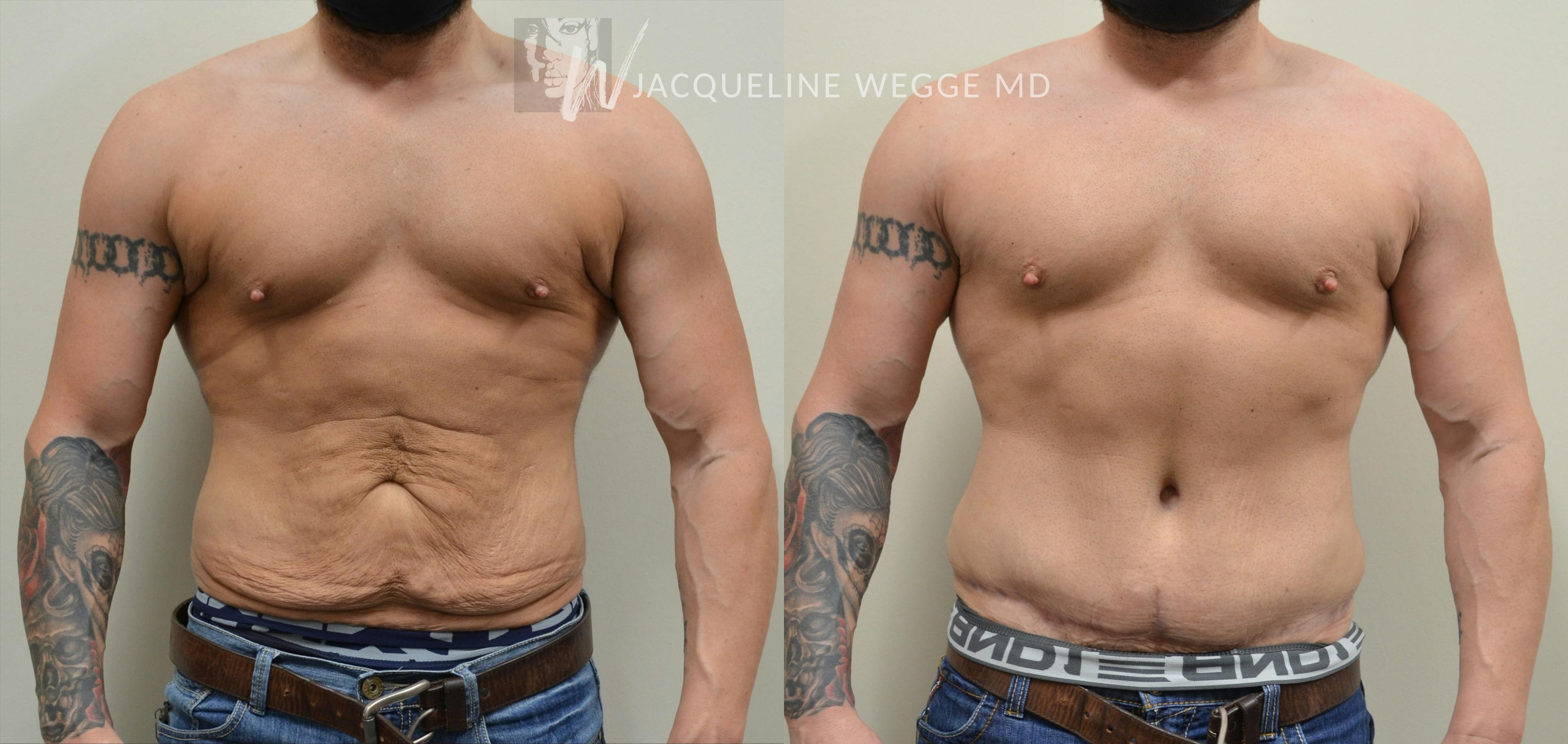
Body contour changes occur gradually over several months. Before-and-after photos shown are from a patient of CLS Health plastic surgeon Jacqueline Wegge, MD, and are provided for educational purposes only. Individual results vary.
Why Choose CLS Health for Skin Removal Surgery After Weight Loss?
CLS Health offers expert skin removal surgery in Houston through Wegge Plastic Surgery, led by Dr. Jacqueline Wegge, a board-certified plastic surgeon experienced in post–weight loss body contouring. Our multidisciplinary team—including bariatric specialists, nutrition, primary care, and wound support—delivers coordinated, patient-centered care in Webster, serving Clear Lake and the Greater Houston area.
Schedule a Consultation for Post-Weight Loss Plastic Surgery
Take the next step toward feeling more comfortable and confident in your body.
Dr. Jacqueline Wegge, a board-certified plastic surgeon in Webster, TX, offers personalized consultations to discuss skin removal and body contouring options after weight loss.
Book with Dr. Wegge

General Surgery, Breast Surgery, Plastic Surgery