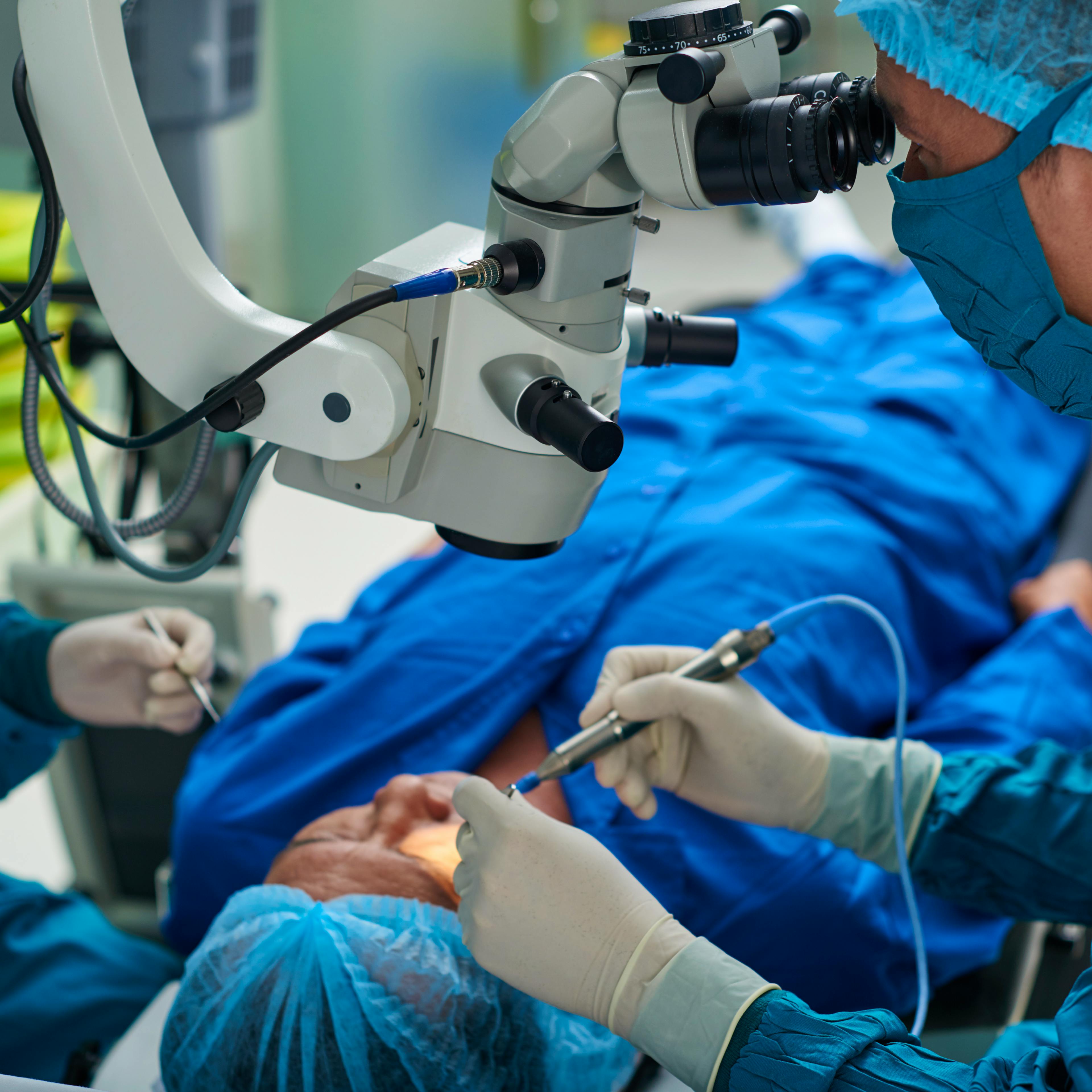

For many people seeking freedom from glasses or contact lenses, LASIK is the most familiar option. But not everyone is a candidate for flap-based laser surgery. EVO ICL (Implantable Collamer Lens) is an advanced vision correction procedure designed for patients who may not qualify for LASIK due to thin corneas, higher prescriptions, or mild to moderate dry eye.
This guide covers what EVO ICL is, how it differs from LASIK, what the procedure involves, recovery, cost, and candidacy.
What Is EVO ICL?
EVO ICL stands for Implantable Collamer Lens—a clear, flexible lens made from a biocompatible material. Instead of reshaping the cornea like LASIK, the surgeon places the lens inside the eye, just in front of your natural lens. It works like a permanent internal contact lens, but without daily maintenance.
The procedure is FDA-approved and has been performed safely worldwide for decades. Because EVO ICL does not remove corneal tissue, it is often recommended for people with thin corneas or prescriptions outside the safe treatment range for LASIK.
Benefits of EVO ICL
Patients choose EVO ICL for several advantages:
- Sharp, high-definition vision similar to or better than glasses and contacts
- Does not increase dry-eye risk the way corneal flap procedures can
- Broader candidacy, especially for thin corneas or higher prescriptions
- Reversible and removable for long-term flexibility
- Fast recovery, often with clearer vision within days
EVO ICL vs. LASIK Eye Surgery
While both procedures correct nearsightedness and astigmatism, they work differently:
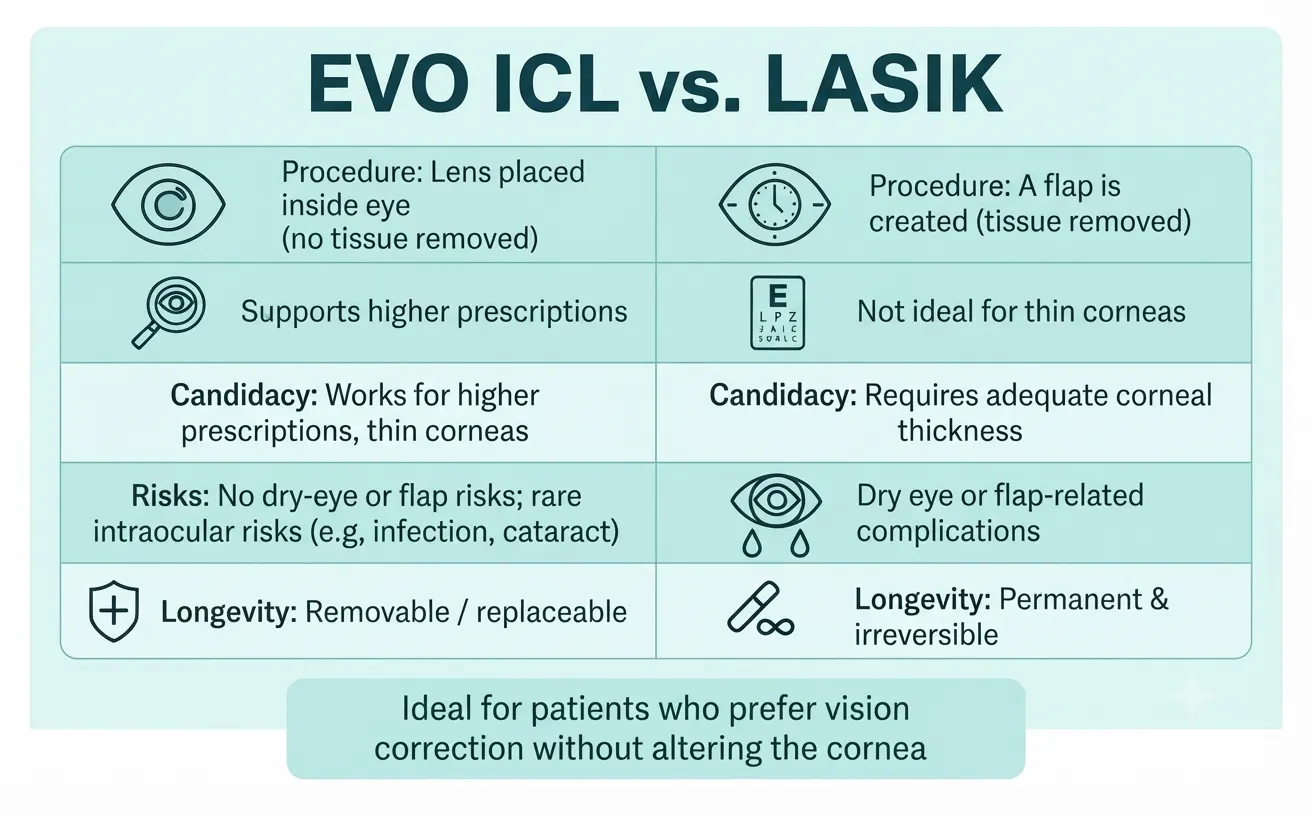
- Procedure: LASIK reshapes the cornea using a flap; EVO ICL places a lens inside the eye without removing tissue
- Candidacy: LASIK depends on corneal thickness and prescription range; EVO ICL supports higher prescriptions
- Risks: LASIK may cause dry eye or flap complications; EVO ICL avoids these but carries rare risks associated with intraocular surgery, such as infection or cataract
- Longevity: LASIK is permanent but irreversible; EVO ICL can be removed or replaced if your vision needs change
For patients who prefer vision correction without altering the cornea, EVO ICL may be the better option.
EVO ICL Procedure
EVO ICL is performed in an outpatient setting:
1. Consultation & Exam
Your eye evaluation includes measurements of your prescription, corneal health, and overall candidacy.
2. Surgery
Numbing drops are applied. A small incision is made, and the foldable lens is placed behind the iris and in front of the natural lens.
3. Recovery
The incision heals naturally without stitches. Most patients notice clearer vision within 24–48 hours.
The procedure usually takes 10–15 minutes per eye, and patients return home the same day.
EVO ICL Risks & Side Effects
EVO ICL is considered safe, with temporary effects such as:
- Mild irritation
- Light sensitivity
- Halos or glare during the first few days
Rare risks include infection, increased eye pressure, or cataract formation—a risk significantly reduced by the modern EVO lens design. Your ophthalmologist will review these risks and determine whether the procedure is appropriate for your eyes.
Special Situations
EVO ICL for Astigmatism
Toric EVO ICL lenses are specially designed to correct both nearsightedness and astigmatism, helping reduce blurred or distorted vision. This option is especially helpful for patients whose astigmatism is too high for LASIK or who prefer a solution that doesn’t involve reshaping the cornea.
EVO ICL for Keratoconus
EVO ICL is not a cure for keratoconus, but it can provide excellent visual rehabilitation for carefully selected patients with stable, mild-to-moderate keratoconus, often following corneal cross-linking. Because EVO ICL does not reshape the cornea, it may improve vision without removing additional corneal tissue. A thorough evaluation is required to confirm that the keratoconus is stable and that the procedure is safe and appropriate.
How Long Does EVO ICL Last?
EVO ICL lenses are designed to last indefinitely. Because the cornea remains untouched, the procedure offers long-term stability and allows the lens to be removed or exchanged if needed later in life.
Who Is a Candidate for EVO ICL?
Ideal candidates include people who:
- Are 21–45 with a stable prescription
- Have moderate to severe nearsightedness or astigmatism
- Have thin corneas or dry eye that limits LASIK candidacy
Patients who may not qualify include those with significant eye disease, uncontrolled medical conditions, or unstable vision. A full exam is required.
Cost of EVO ICL
EVO ICL typically costs several thousand dollars per eye. Pricing depends on:
- Prescription complexity
- Surgeon expertise
- Surgical technology and facility
- Lens implant cost
Since the procedure is elective, it is generally not covered by insurance. Financing options are often available. EVO ICL may cost more than LASIK due to the implantable lens technology.
Wondering If EVO ICL Is Right for You?
The best way to know whether you're a candidate for EVO ICL is through a comprehensive eye exam. Our ophthalmologists evaluate your prescription, corneal thickness, overall eye health, and vision goals to recommend the safest and most effective vision correction option for you.
FAQs
No. Numbing eye drops prevent pain during the procedure. You may feel mild pressure or experience temporary light sensitivity afterward, but most patients find the procedure very comfortable.
The procedure usually takes 10–15 minutes per eye, and most patients go home the same day.
Yes. Unlike LASIK, EVO ICL is reversible and replaceable, which offers long-term flexibility if your vision needs change.
Both procedures are considered very safe. EVO ICL avoids dry-eye and flap-related complications seen in corneal procedures, but—because it is performed inside the eye—it has its own rare risks such as infection or increased pressure.
People with severe eye disease, uncontrolled medical conditions, active infections, or unstable prescriptions may not qualify. A comprehensive eye exam is required to determine candidacy.
Why Choose CLS Health for EVO ICL
At CLS Health, our ophthalmologists specialize in advanced vision correction—including EVO ICL, LASIK, and SMILE—and use the latest diagnostic and surgical technology to deliver safe, precise, personalized care.
Schedule an EVO ICL Consultation in Houston–Clear Lake
EVO ICL offers a long-lasting, tissue-preserving alternative to LASIK for patients with thin corneas, higher prescriptions, or chronic dry eye. If you’re ready to explore your vision correction options. At CLS Health Eye Care Center — Clear Lake, our ophthalmologists can help determine whether EVO ICL is the right fit for your eyes and lifestyle.
Book your consultation today with an ophthalmologist in Webster and take the next step toward sharper, clearer vision.
Book with Dr. Khan

Cornea and External Diseases, Ophthalmology