

Key Takeaways
Seasonal affective disorder is a form of depression that follows a recurring seasonal pattern.
Symptoms can occur in winter or summer and may affect sleep, appetite, energy, and mood differently.
A psychiatric evaluation can help identify seasonal depression and guide treatment based on your symptoms, medical history, and individual needs.
Changes in the seasons can affect more than just the weather. For some people, shorter days or shifts in daylight bring lasting changes in mood, energy, and motivation. When these symptoms return around the same time each year, they may be signs of seasonal affective disorder (SAD), also known as seasonal depression.
Seasonal depression can make everyday activities feel overwhelming, but treatment can help. A psychiatric evaluation can identify patterns in your symptoms, rule out other possible causes, and help determine the right approach to care.
What Is Seasonal Affective Disorder?
Seasonal affective disorder (SAD) is a type of depression characterized by symptoms that appear during certain times of the year. It is not considered a separate diagnosis but rather a seasonal pattern of major depressive disorder or, in some cases, bipolar disorder.
SAD most commonly begins in the fall or winter and improves during spring or summer. However, some people experience depressive episodes during warmer months.
Unlike occasional winter blues or holiday stress, seasonal depression involves persistent symptoms that can interfere with daily life. These symptoms often return during the same season each year.
To learn more about different forms of depression, visit our Types of Depression page.
Signs and Symptoms of Seasonal Depression
Seasonal affective disorder shares many symptoms with other forms of depression. Symptoms can range from mild to severe and may include:
- Persistent sadness, hopelessness, or low mood
- Loss of interest in activities you usually enjoy
- Low energy or ongoing fatigue
- Difficulty concentrating or making decisions
- Changes in sleep, appetite, or weight
- Withdrawal from friends, family, or social activities
Although symptoms vary from person to person, certain patterns are more common depending on the season.
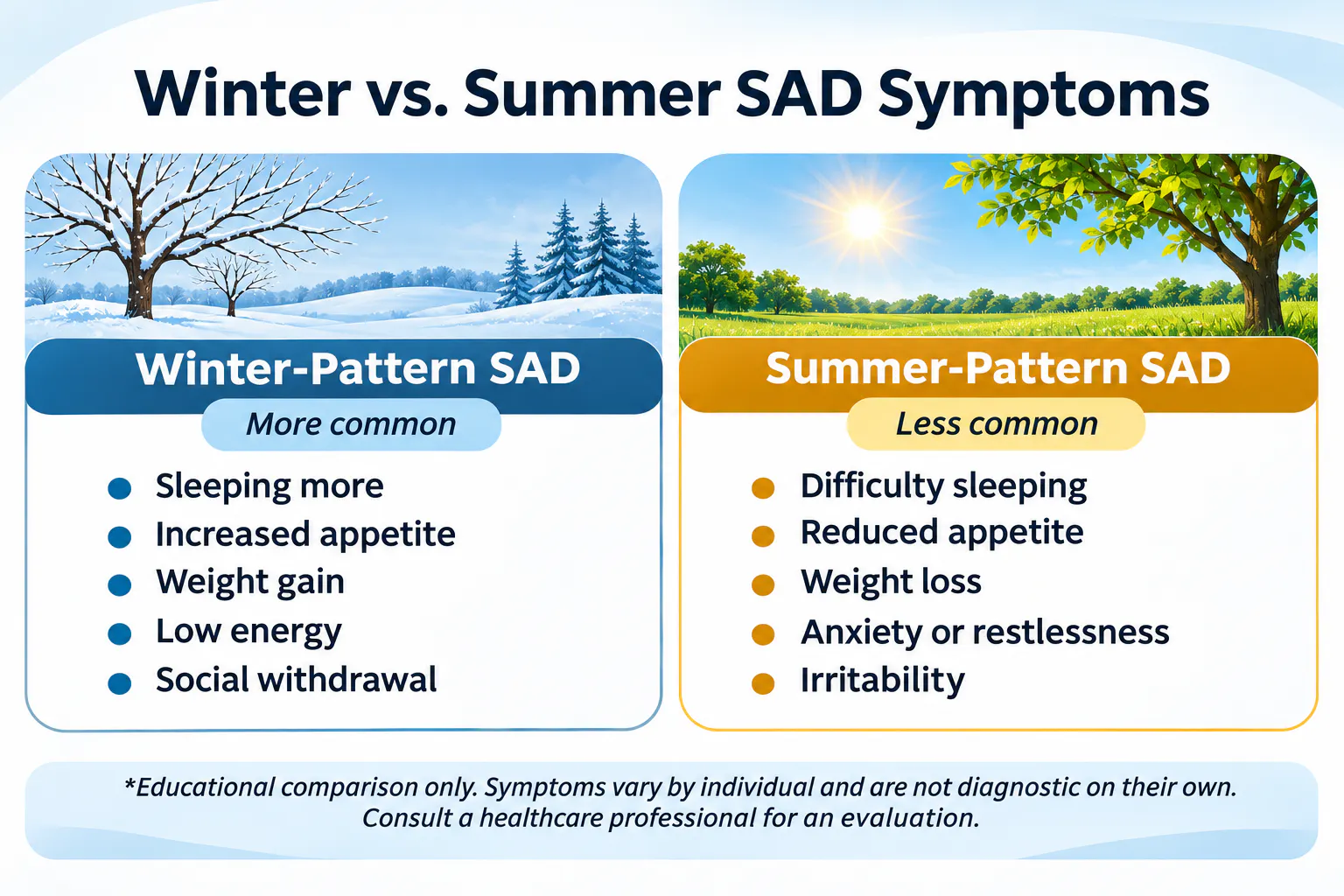
Winter-Pattern Symptoms
Winter-pattern SAD typically begins in the fall or early winter as daylight hours decrease.
Common symptoms include:
- Sleeping more than usual
- Increased appetite, especially cravings for carbohydrates
- Weight gain
- Low energy and difficulty getting out of bed
- Social withdrawal or feeling like staying home
Summer-Pattern Symptoms
Summer-pattern SAD is less common and generally begins in late spring or early summer.
Symptoms may include:
- Difficulty falling or staying asleep
- Reduced appetite or weight loss
- Increased anxiety or restlessness
- Irritability or agitation
Both patterns can affect emotional well-being, relationships, and daily responsibilities.
What Causes Seasonal Affective Disorder?
The exact causes of seasonal affective disorder are not fully understood. Researchers believe several biological and environmental factors may contribute to seasonal mood changes.
Possible contributing factors include:
- Changes in daylight: Reduced sunlight during winter may disrupt the body's internal clock, which helps regulate sleep and mood.
- Serotonin levels: Seasonal changes may affect serotonin, a brain chemical involved in mood regulation.
- Melatonin production: Changes in daylight can influence melatonin, a hormone that helps regulate sleep.
- Personal or family history: People with a history of depression, bipolar disorder, or a family history of mood disorders may have a higher risk.
Not everyone responds to seasonal changes in the same way. A psychiatric evaluation can help determine whether your symptoms are related to seasonal depression or another condition.
How Is Seasonal Affective Disorder Diagnosed?
There is no single test for seasonal affective disorder. Diagnosis involves reviewing your symptoms, medical history, and how your mood changes throughout the year.
During a psychiatric evaluation, your clinician may discuss:
- When your depressive symptoms begin and improve
- Whether symptoms have occurred during the same season in previous years
- How symptoms affect your sleep, relationships, work, and daily activities
- Your personal and family mental health history
- Other medical or mental health conditions that may explain your symptoms
A seasonal pattern is generally identified when depressive episodes occur during a particular season for at least two consecutive years, with seasonal episodes substantially outnumbering nonseasonal episodes over time.
Your clinician may also evaluate conditions such as bipolar disorder, thyroid disorders, or other causes of depressive symptoms.
You do not need to wait two years to seek help. If changes in your mood or energy are affecting your daily life, an evaluation can help you understand what's happening and explore treatment options.
Can You Have Seasonal Depression in Houston?
Yes. Although Houston has relatively mild winters, seasonal affective disorder can still affect people living in warmer climates.
Seasonal depression is associated with changes in daylight and other biological factors, not simply cold temperatures. Even in Houston, shorter winter days can influence sleep patterns, energy levels, and mood.
Some people may also experience summer-pattern depression, which can involve sleep difficulties, anxiety, and changes in appetite.
Feeling frustrated by hot weather or shorter days does not necessarily mean you have seasonal depression. The key difference is whether depressive symptoms repeatedly occur during a particular season and interfere with everyday life.
If you notice recurring changes in your mood, a psychiatric evaluation can help identify possible causes.
Seasonal Affective Disorder Treatment Options
Treatment for seasonal affective disorder depends on your symptoms, medical history, and whether you experience winter- or summer-pattern depression.
Common treatment approaches include light therapy, medication, psychotherapy, and supportive lifestyle changes. For certain patients with major depressive disorder, additional treatments such as TMS therapy may be considered.
Light Therapy
Light therapy is commonly used for winter-pattern seasonal depression. It involves sitting near a specially designed light box that provides bright light intended to help regulate the body's sleep-wake cycle.
Light therapy is not appropriate for everyone. Certain eye conditions, medications, and mental health conditions, including bipolar disorder, may require additional precautions.
Talk with a qualified clinician before starting light therapy to determine whether it is appropriate for you.
Medication Management
Antidepressant medications may help manage seasonal depression by addressing symptoms such as persistent low mood, reduced motivation, and energy changes.
Medication selection depends on several factors, including your symptoms, medical history, other medications, and previous treatment response.
A psychiatric clinician can discuss potential benefits and side effects, monitor your progress, and adjust treatment when appropriate.
Psychotherapy
Psychotherapy, or talk therapy, can help patients manage thoughts and behaviors associated with seasonal depression.
Cognitive behavioral therapy (CBT) is an evidence-based approach that helps patients develop coping strategies and manage negative thought patterns.
A form of CBT specifically adapted for seasonal affective disorder, known as CBT-SAD, focuses on managing seasonal mood changes and maintaining meaningful activities throughout the year.
Transcranial Magnetic Stimulation (TMS) Therapy
Transcranial magnetic stimulation (TMS) is a noninvasive treatment that uses magnetic pulses to stimulate areas of the brain involved in mood regulation.
Although TMS is not specifically FDA-cleared for seasonal affective disorder, it may be considered for certain patients with major depressive disorder who have not responded adequately to other treatments.
A psychiatrist can evaluate your symptoms and treatment history to determine whether TMS therapy may be appropriate for you.
Lifestyle Changes and Self-Care
Healthy daily habits can support emotional well-being and complement professional treatment.
Helpful strategies may include:
- Maintaining a consistent sleep schedule
- Staying physically active
- Spending time outdoors during daylight hours when appropriate
- Staying connected with friends and family
- Keeping a routine and participating in enjoyable activities
While these habits can help support your mental health, self-care alone may not be enough to manage seasonal depression. Professional treatment may be necessary when symptoms persist or interfere with daily life.
When Should You Seek Care for Seasonal Depression?
You don't have to wait until symptoms become severe to ask for help.
Consider scheduling a psychiatric evaluation if:
- Feelings of sadness, fatigue, or low motivation interfere with work, relationships, or daily activities.
- Depressive symptoms return around the same time each year.
- Changes to your routine and self-care habits haven't provided enough relief.
- Existing depression symptoms become worse during certain seasons.
- You notice significant changes in sleep, appetite, or interest in activities.
Early evaluation can help you better understand your symptoms and explore treatment options before they become more disruptive.
If you or someone you know is experiencing thoughts of suicide or self-harm, call or text 988 to reach the Suicide & Crisis Lifeline. If there is immediate danger, call 911 or go to the nearest emergency department.
Seasonal Depression Care at CLS Health
At CLS Health, our psychiatry team helps patients understand and manage depression and other mental health concerns through individualized care.
Depending on your needs and available services, care may include:
- Psychiatric evaluation: Reviewing your symptoms, medical history, and seasonal mood patterns to help identify an appropriate diagnosis.
- Personalized treatment planning: Developing a care plan based on your symptoms, goals, and overall health.
- Medication management: Evaluating medication options, monitoring your response, and adjusting when appropriate.
- Therapy recommendations: Discussing psychotherapy and coordinating referrals when you need additional support.
- Ongoing follow-up: Monitoring symptoms and adjusting your care plan as your needs change.
Patients seeking psychiatric care can explore CLS Health locations serving the Houston Galleria area and Webster–Clear Lake.
CLS Health Psychiatry Clinics:
FAQs
Yes. Seasonal affective disorder (SAD) is a recognized pattern of depression that occurs during specific seasons. It can affect mood, sleep, energy, and daily functioning. A psychiatric evaluation can help determine whether your symptoms meet the criteria for depression with a seasonal pattern.
Yes. Although winter-pattern SAD is more common, some people experience seasonal depression during spring or summer. Summer-pattern symptoms may include insomnia, reduced appetite, anxiety, and agitation.
Seasonal depression cannot always be prevented, but recognizing early symptoms can help you prepare for recurring episodes. A clinician may recommend treatment or supportive strategies before symptoms typically begin.
Seasonal depression often lasts several months. Winter-pattern symptoms typically begin in fall or winter and improve in spring, while summer-pattern symptoms occur during warmer months. The timing and severity vary by person.
There is no single medication that works best for everyone. Antidepressants, including selective serotonin reuptake inhibitors (SSRIs), may help treat seasonal depression. Bupropion XL is also FDA-approved to prevent seasonal major depressive episodes in certain adults. A psychiatric clinician can recommend treatment based on your symptoms and medical history.
Find Support for Seasonal Depression in Houston & Clear Lake
If seasonal changes are affecting your mood, energy, or daily life, you don't have to manage them alone. CLS Health offers psychiatric care in Houston and Webster–Clear Lake, helping patients understand their symptoms and explore personalized treatment options for seasonal depression.
Take the first step toward feeling better, no matter what the season is.
Book with Dr. Albaba

Psychiatry