

What Is a Psychiatric Evaluation?
A psychiatric evaluation is a comprehensive assessment of your mental health, symptoms, medical history, medications, and other factors that may affect your well-being.
During your evaluation, a psychiatrist works with you to better understand what you are experiencing and how your symptoms are affecting your daily life. The evaluation can help clarify a diagnosis and guide recommendations for treatment.
Depending on your needs, your care plan may include medication management, therapy recommendations, additional testing or referrals, lifestyle support, or ongoing psychiatric care.
When Should You Get a Psychiatric Evaluation?
You do not have to wait until mental health symptoms become severe to talk with a psychiatrist. Consider scheduling a psychiatric evaluation if symptoms are persistent, worsening, difficult to manage, or interfering with your everyday life.
A psychiatric evaluation may be helpful if you are experiencing:
- Anxiety, panic attacks, or constant worry
- Depression, low mood, or loss of interest
- Trouble sleeping or insomnia
- Difficulty focusing or possible ADHD
- Mood swings or emotional changes
- Substance use concerns
- Postpartum or perinatal mood symptoms
- Trauma-related symptoms
- OCD symptoms
- Medication concerns or side effects
- Symptoms affecting work, school, relationships, or daily activities
If you are experiencing suicidal thoughts or a mental health crisis, call or text 988 to reach the 988 Suicide & Crisis Lifeline. If there is immediate danger or a life-threatening emergency, call 911 or seek emergency medical care.
Mental Health Concerns We Evaluate
CLS Health Psychiatry evaluates and treats a range of mental health and substance use concerns, including:
- Anxiety disorders
- Depression
- ADD/ADHD
- Insomnia
- Panic disorder
- Obsessive-compulsive disorder (OCD)
- Post-traumatic stress disorder (PTSD)
- Substance use disorders
- Alcohol use disorder
- Opioid use disorder
- Co-occurring mental health and substance use disorders
- Perinatal and postpartum mood disorders
Because symptoms can overlap between conditions, a psychiatric evaluation can help your psychiatrist understand the full picture before recommending treatment.
What to Expect During a Psychiatric Evaluation
Your psychiatric evaluation is an opportunity to talk openly about what you have been experiencing. Your psychiatrist may ask about your symptoms, mental health history, medical conditions, family history, current or recent medications, supplements, allergies, sleep, stress, substance use, relationships, previous treatment, and treatment goals.
Your evaluation may include:
- Review of your current symptoms
- Mental health and medical history
- Medication and supplement review
- Discussion of previous therapy or treatment
- Screening for anxiety, depression, ADHD, or other concerns
- Diagnosis and personalized treatment recommendations
- A medication management plan, when appropriate
- Referrals for therapy, testing, or specialty care when needed
The goal is to understand your concerns, identify factors that may affect diagnosis or treatment planning, and work with you to develop a treatment plan that supports your individual needs.
Psychiatric Evaluation vs. Psychological Testing
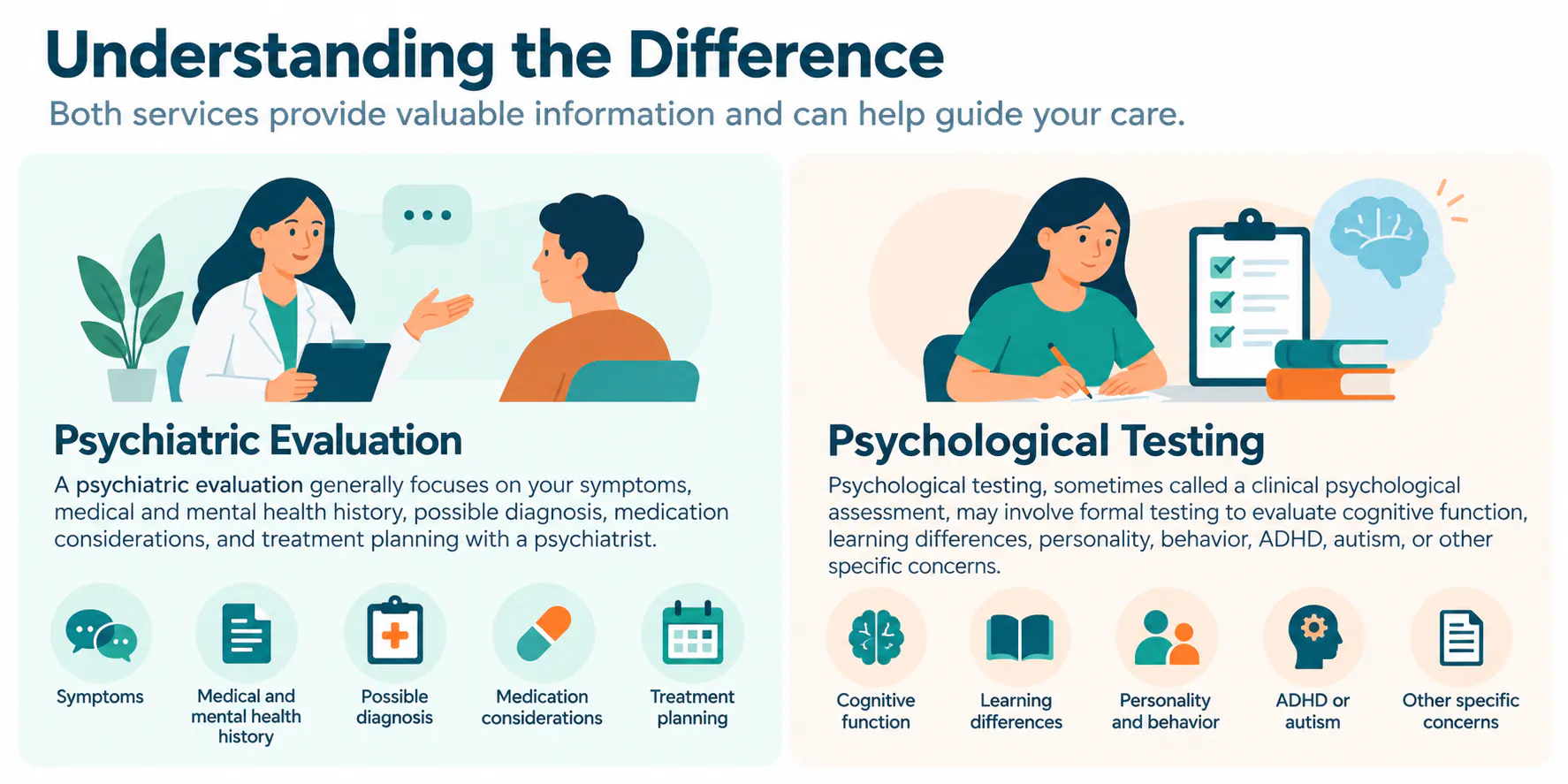
A psychiatric evaluation and psychological testing can both be used to better understand mental health concerns, but they serve different purposes.
- A psychiatric evaluation generally focuses on your symptoms, medical and mental health history, possible diagnosis, medication considerations, and treatment planning with a psychiatrist.
- Psychological testing, sometimes called a clinical psychological assessment, may involve formal testing to evaluate cognitive function, learning differences, personality, behavior, ADHD, autism, or other specific concerns.
Not every patient needs formal psychological testing. If additional testing may be helpful, your psychiatrist can discuss whether a referral is appropriate.
Treatment Options After Your Evaluation
After your psychiatric evaluation, your psychiatrist will discuss findings with you and recommend next steps based on your symptoms, diagnosis, health history, previous treatment, and goals.
Your personalized care plan may include:
- Medication management
- Therapy or counseling referrals
- Lifestyle and sleep recommendations
- Addiction psychiatry support
- Medication-assisted treatment when appropriate
- Perinatal or postpartum mental health support
- TMS therapy for eligible patients with depression
- Follow-up psychiatric care
Treatment plans can change over time. Follow-up appointments allow your psychiatrist to monitor symptoms, discuss your response to treatment, address side effects, and make adjustments when appropriate.
Featured Treatment: TMS Therapy for Depression
For some patients with depression that has not improved enough with medication or therapy, transcranial magnetic stimulation, or TMS therapy, may be an option.
TMS is a non-invasive treatment that uses targeted magnetic pulses to stimulate areas of the brain involved in mood regulation. Your psychiatrist can determine whether TMS may be appropriate based on your diagnosis, symptoms, treatment history, and health needs.
Meet Our Psychiatrists

Psychiatry

Psychiatry
Psychiatric Evaluation Locations in Houston and Webster
CLS Health Psychiatry serves patients throughout the Greater Houston area, with psychiatric care available at convenient locations in Houston and Webster.


Why Choose CLS Health for Psychiatric Evaluation?
Mental and physical health are often connected. CLS Health provides psychiatric care within a physician-led, multispecialty organization, helping patients access additional medical care when mental health concerns overlap with sleep, women’s health, chronic conditions, primary care, or other health needs.
Patients have access to:
- Board-certified psychiatrists
- Psychiatric evaluation and medication management
- Addiction psychiatry expertise
- Perinatal and postpartum mental health care
- Coordinated care with other CLS Health specialties when needed
- Convenient Houston and Webster locations
Our goal is to help you better understand what you are experiencing and identify a treatment plan that supports your mental health and overall well-being.
FAQs
During a psychiatric evaluation, your psychiatrist will ask about your symptoms, medical and mental health history, medications, sleep, stress, substance use, previous treatment, and treatment goals. Based on the evaluation, they may discuss a diagnosis and recommend treatment options tailored to your needs.
Consider a psychiatric evaluation if anxiety, depression, difficulty focusing, insomnia, mood changes, substance use concerns, or other mental health symptoms are persistent, worsening, or affecting daily life. A psychiatrist can also help if you have questions about a previous diagnosis, medication side effects, or a treatment plan that is not providing enough relief.
No. A psychiatric evaluation usually focuses on symptoms, diagnosis, medications, and treatment planning with a psychiatrist. Psychological testing uses formal assessments for specific cognitive, learning, behavioral, or diagnostic concerns. If testing may be helpful, your psychiatrist can discuss whether a referral is appropriate.
Yes. When appropriate, a psychiatrist can prescribe medication as part of your treatment plan. They may also recommend therapy, lifestyle changes, follow-up care, or other treatment options based on your needs.
The length of a psychiatric evaluation can vary based on your symptoms, health history, and the complexity of your concerns. Your care team can explain what to expect when scheduling your appointment.
Bring a current medication list, previous mental health treatment information, relevant medical history, and any questions you want to discuss. If you have records from prior psychiatric care, therapy, testing, or medication treatment, ask whether they would be helpful for your visit.
Schedule a Psychiatric Evaluation in Greater Houston
You do not have to figure out mental health symptoms or treatment options on your own. A psychiatric evaluation can help you better understand what you are experiencing and identify treatment options based on your individual needs.
CLS Health Psychiatry provides compassionate, personalized psychiatric care for patients throughout the Greater Houston area.