
Key Takeaways
Depression can take several forms, including major depression, persistent depressive disorder, seasonal depression, perinatal or postpartum depression, and treatment-resistant depression.
Symptoms and treatment can vary depending on the type of depression, severity, medical history, and previous treatment response.
A psychiatric evaluation can help clarify your diagnosis and guide treatment options, which may include therapy, medication management, supportive care, or TMS therapy for eligible patients.
What Is Depression?
Depression is a mental health condition that can affect your mood, thoughts, energy, sleep, appetite, motivation, and daily functioning. It is more than occasional sadness or stress. Symptoms may last for weeks or longer and can interfere with work, school, relationships, and self-care.
Depression can also look different from person to person. Some people feel sad or hopeless, while others may feel numb, irritable, exhausted, anxious, or disconnected from activities they used to enjoy.
Common Symptoms of Depression
Depression symptoms may include:
- Persistent sadness, emptiness, or hopelessness
- Loss of interest in activities
- Fatigue or low energy
- Sleep problems, including insomnia or sleeping too much
- Appetite or weight changes
- Trouble concentrating
- Feelings of guilt or worthlessness
- Irritability or restlessness
- Slowed movements or speech
- Physical symptoms, such as headaches or stomach discomfort
- Thoughts of death, self-harm, or suicide
If you or someone you know is experiencing suicidal thoughts or a mental health crisis, call or text 988 to reach the 988 Suicide & Crisis Lifeline. If there is immediate danger or a life-threatening emergency, call 911 or seek emergency medical care.
Common Types of Depression
Major Depressive Disorder
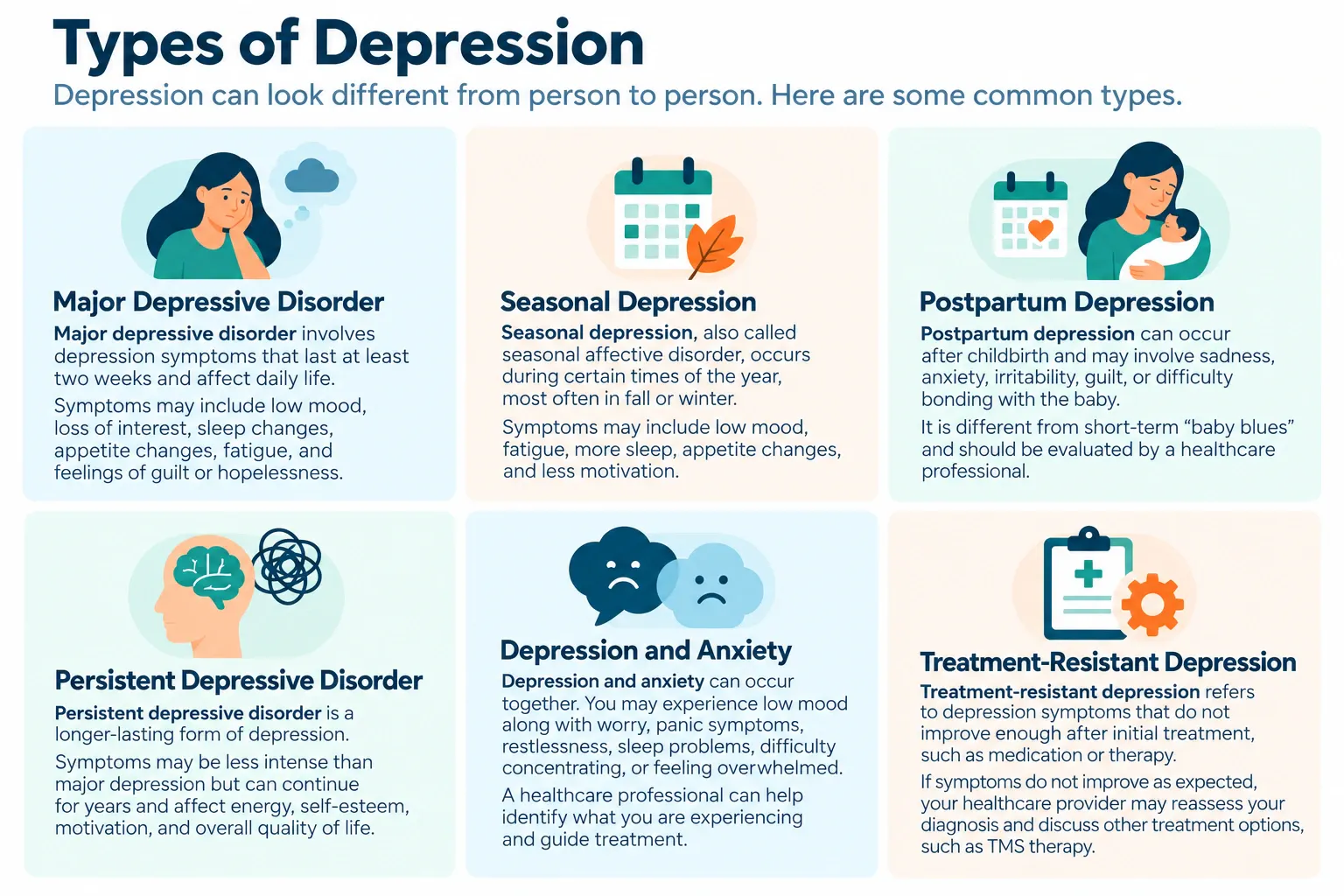
Major depressive disorders, sometimes called clinical depression, involve depression symptoms that last for at least two weeks and affect daily life. Symptoms may include low mood, loss of interest, sleep changes, appetite changes, fatigue, trouble concentrating, and feelings of guilt or hopelessness.
Persistent Depressive Disorder
Persistent depressive disorder is a longer-lasting form of depression. Symptoms may be less intense than major depression but can continue for years and affect energy, self-esteem, motivation, and overall quality of life.
Seasonal Depression
Seasonal depression, also called seasonal affective disorder, occurs during certain times of the year, most often in fall or winter. Symptoms may include low mood, fatigue, increased sleep, appetite changes, and loss of motivation.
Postpartum Depression
Postpartum depression can occur after childbirth and may involve sadness, anxiety, irritability, guilt, difficulty bonding with the baby, sleep changes, or intrusive thoughts. It is different from the short-term “baby blues” and should be evaluated by an obstetrician-gynecologist.
Depression and Anxiety
Depression and anxiety can occur together. You may experience low mood along with worry, panic symptoms, restlessness, sleep problems, difficulty concentrating, or feeling overwhelmed.
Because symptoms can overlap, a psychiatric evaluation can help identify what you are experiencing and guide to an appropriate treatment plan.
Treatment-Resistant Depression
Treatment-resistant depression refers to depression symptoms that do not improve enough after initial treatment, such as medication or therapy.
If depression has not improved as expected, your psychiatrist may reassess your diagnosis, medications, therapy plan, and other factors that could be affecting your symptoms. Advanced treatment options such as TMS therapy may also be considered when appropriate.
Depression Related to Substance Use or Medical Conditions
Depression symptoms can sometimes be connected to substance use, medications, hormonal changes, thyroid disease, chronic illness, pain, sleep problems, or other medical conditions.
Identifying these factors can help your care team develop a treatment plan based on your individual health needs.
Why the Type of Depression Matters
Identifying the type of depression and understanding your individual symptoms can help guide treatment.
Your psychiatrist may consider:
- Your symptoms and how long they have been present
- Symptom severity
- Your medical and mental health history
- Current medications and previous treatments
- Sleep and stress
- Substance use
- Lifestyle factors
- Your response to previous treatment
These factors can help your psychiatrist understand what may be contributing to your symptoms and which treatment options may fit your needs.
How Depression Is Diagnosed
Depression is typically diagnosed through a clinical evaluation. Your psychiatrist may ask about your mood, sleep, appetite, energy, concentration, medical history, family history, substance use, medications, and any thoughts of self-harm.
Depending on your symptoms and medical history, additional evaluation may be recommended to identify health conditions or other factors that can contribute to depression-like symptoms.
The goal is to understand not only what symptoms you are experiencing but also what may be contributing to them, so your treatment plan can be personalized to your needs.
Depression Treatment Options
Treatment for depression depends on the type of depression, symptom severity, health history, previous treatment response, and personal goals. Your care plan may include one or more approaches.
Therapy or Counseling
Therapy can help you understand patterns, develop coping strategies, process stress or trauma, and build healthier ways to manage symptoms.
Your psychiatrist may recommend therapy as part of your treatment plan or coordinate therapy recommendations based on your needs.
Medication Management
A psychiatrist may recommend antidepressants or other medications when appropriate.
Medication management involves more than prescribing medication. Your psychiatrist can monitor how you respond to treatment, discuss side effects, adjust medications or dosages when appropriate, and determine whether changes to your treatment plan are needed.
Lifestyle and Supportive Care
Sleeping, nutrition, physical activity, stress management, social support, and treatment of related medical conditions can support your overall mental health.
These strategies may be incorporated into a broader treatment plan based on your symptoms and individual needs.
TMS Therapy
Transcranial magnetic stimulation, or TMS therapy, may be an option for some patients with depression who have not found enough relief from medication or traditional therapy alone.
TMS is a non-invasive treatment that uses targeted magnetic pulses to stimulate areas of the brain involved in mood regulation. A psychiatrist can determine whether TMS may be appropriate based on your diagnosis, symptoms, treatment history, and other health considerations.
When to See a Psychiatrist for Depression
Consider seeing a psychiatrist if depression symptoms are persistent, worsening, interfering with your daily life, or not improving with initial treatment.
A psychiatric evaluation may be especially helpful if you have:
- Severe or persistent depression symptoms
- Depression with anxiety or other mental health concerns
- Postpartum or perinatal mood symptoms
- Medication side effects
- Multiple medication trials without enough improvement
- Questions about your diagnosis
- Symptoms that interfere with work, relationships, sleep, or daily activities
- Interest in TMS therapy or other treatment options
If you are experiencing thoughts of suicide or self-harm, call or text 988 for crisis support. Call 911 or seek emergency medical care if there is immediate danger or a life-threatening emergency.
Depression Treatment in Greater Houston
CLS Health Psychiatry provides psychiatric evaluation and treatment planning for patients in the Greater Houston area, with locations in Houston and Webster. Our psychiatry team can help evaluate symptoms, clarify a diagnosis, review medication options, coordinate therapy recommendations, and discuss next steps based on your needs.
Featured Treatment: TMS Therapy for Depression
If depression has not improved enough with medication or traditional therapy, TMS may be another treatment option.
TMS is a non-invasive treatment that uses targeted magnetic pulses to stimulate areas of the brain involved in mood regulation. Your psychiatrist can determine whether TMS may be appropriate based on your diagnosis, symptoms, treatment history, and health needs.
Not sure whether TMS may be right for you? Start with our preliminary TMS screening to help determine whether a consultation may be an appropriate next step.
The screening does not guarantee clinical eligibility or insurance coverage.
FAQs
Common types of depression include major depressive disorder, persistent depressive disorder, seasonal depression, postpartum depression, and treatment-resistant depression. Depression may also occur with anxiety or be related to substance use, medications, or medical conditions.
Clinical depression commonly refers to depression that meets diagnostic criteria and significantly affects daily life. It is different from temporary sadness or stress. A psychiatric evaluation can help determine whether your symptoms meet the criteria for a depressive disorder.
A psychiatric evaluation can help identify the type of depression you may be experiencing. Your psychiatrist will review your symptoms, how long they have been present, your health history, medications, previous treatments, and other factors that may be contributing to your symptoms.
Yes. Depression treatment may include therapy, medication management, supportive care, treatment of related health conditions, or advanced options such as TMS therapy for eligible patients. The right approach depends on your diagnosis, symptoms, health history, treatment response, and individual needs.
Consider seeing a psychiatrist if depression symptoms are persistent, worsening, affecting daily life, or not improving with initial treatment. Seek immediate help if you are experiencing suicidal thoughts or are in crisis.
Call or text 988 for the 988 Suicide & Crisis Lifeline, or call 911 for immediate or life-threatening emergencies.
Schedule a Psychiatric Evaluation in Greater Houston
Depression can take many forms, but you do not have to navigate symptoms and treatment options on your own. A psychiatric evaluation can help clarify your diagnosis and determine which treatment options may be appropriate for you.
CLS Health Psychiatry provides personalized depression care for patients throughout the Greater Houston area, including psychiatric evaluation, medication management, treatment planning, and TMS therapy for eligible patients.