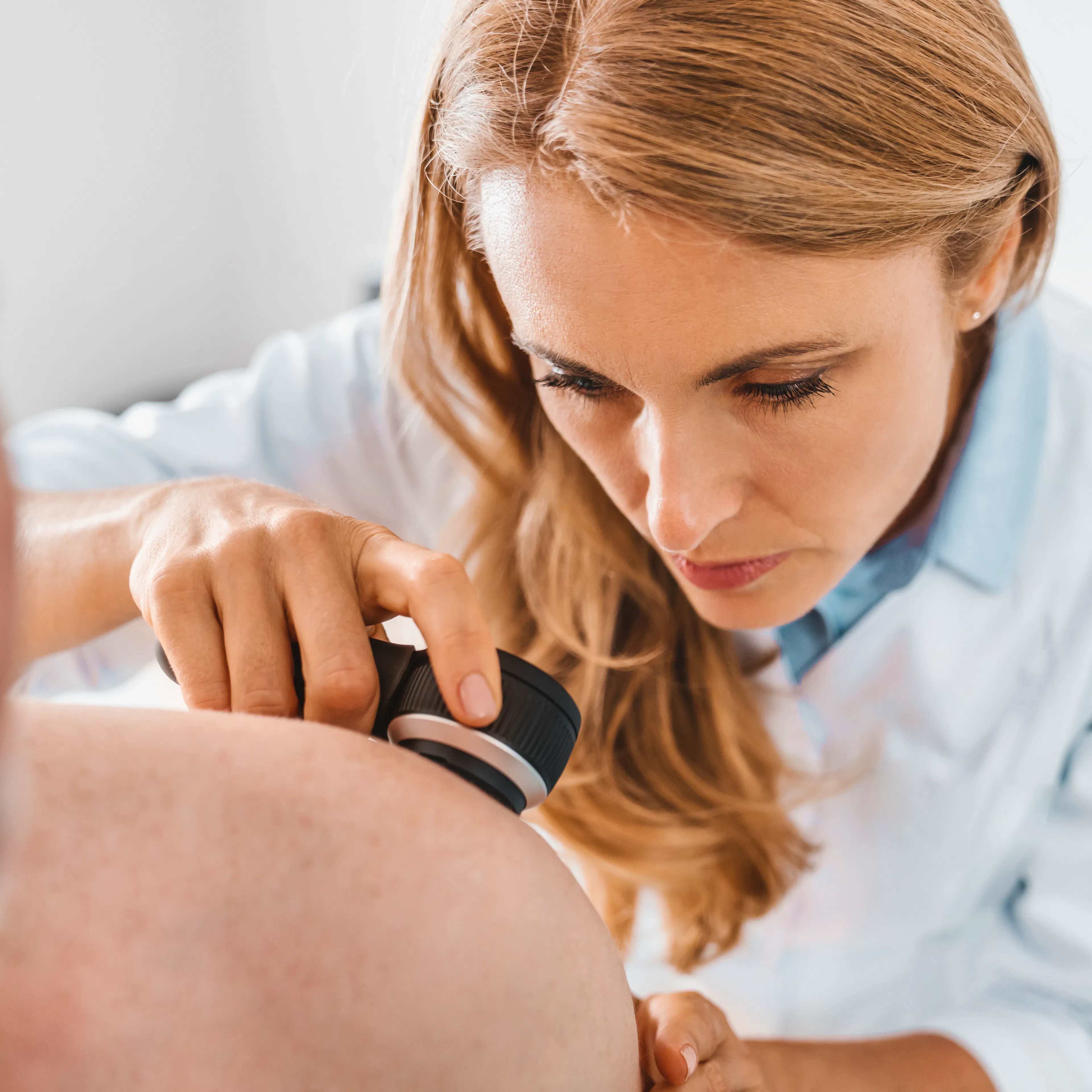

CLS Health dermatology specialists provide skin cancer screenings and professional skin checks in Houston to evaluate suspicious moles, lesions, and other skin changes that may require further evaluation. Depending on your needs and risk factors, your visit may focus on a specific mole or concern or include a more comprehensive skin examination.
Regular skin exams can be particularly important for people with a history of significant sun exposure, sunburns, atypical moles, or skin cancer. With Houston's year-round sun exposure, staying aware of changes in your skin can be an important part of preventive dermatology care.
Quick Facts: Skin Cancer Screenings
Skin cancer screenings are painless, non-invasive skin exams performed by a dermatologist
Early detection can help identify skin cancer before it progresses
Most skin checks take approximately 10–20 minutes
What Is a Skin Cancer Screening?
A skin cancer screening, sometimes called a skin check or skin cancer exam, is a visual examination of the skin performed by a dermatology specialist to look for suspicious moles, lesions, or other skin changes that may require further evaluation.
Screenings are non-invasive, typically painless, and may include:
- A full-body skin exam
- Evaluation of specific spots or moles
- Use of a dermatoscope to closely examine the skin
- Discussion of any recent skin changes or concerns
Routine screenings can help identify skin cancer at earlier stages, when treatment options are often more effective.
Who Should Get a Skin Cancer Screening?
Skin cancer screenings may be appropriate for adults who have an increased risk of skin cancer or who have noticed concerning changes in their skin.
You may benefit from a skin cancer screening if you:
- Spend significant time outdoors
- Have a history of frequent sunburns
- Use or previously used tanning beds
- Have fair skin, light eyes, or light hair
- Have a family or personal history of skin cancer
- Have many moles or atypical moles
- Notice new, changing, itching, or bleeding skin spots
In Houston, year-round sun exposure, outdoor activities, and high UV levels can increase the risk of sun-related skin damage. Skin cancer can affect people of all skin tones, although risk factors and appearance may vary. Regular skin checks can play an important role in preventive dermatology care.
Signs of Skin Cancer to Watch For
Skin cancer can appear in different ways depending on the type and stage of the skin cancer. Common warning signs include:
- New or changing moles
- Irregular borders or uneven coloring
- Lesions that itch, bleed, or crust over
- Non-healing sores
- Raised or painful spots
- Changes in the size, shape, or texture of a mole
The ABCDE Rule for Moles
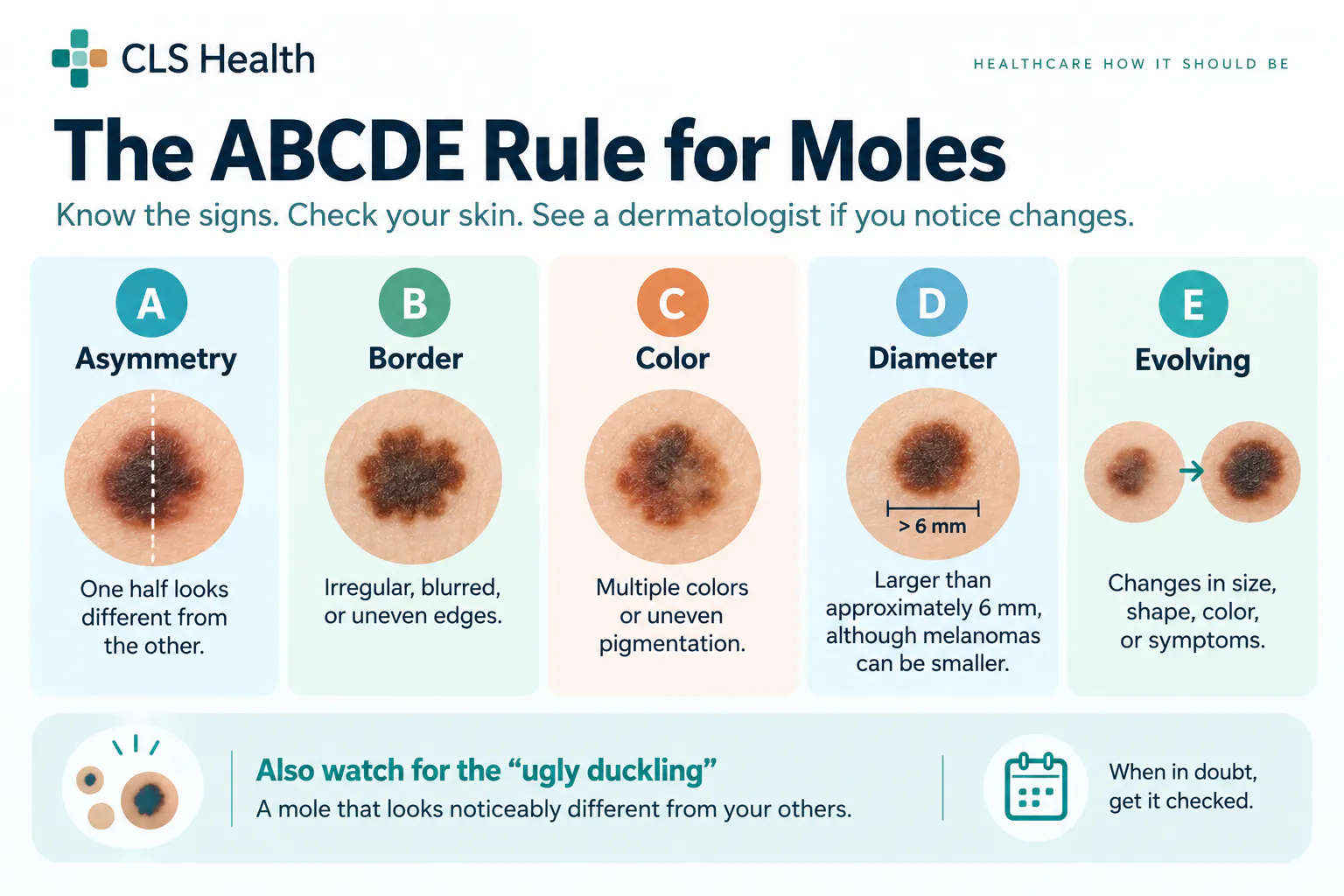
During a skin check, dermatologists may use the ABCDE rule and other clinical features to evaluate moles that could be suspicious for melanoma:
- A – Asymmetry: One half of the mole does not match the other
- B – Border: Edges appear uneven, blurred, or irregular
- C – Color: Multiple colors or uneven pigmentation
- D – Diameter: Larger than approximately 6 millimeters
- E – Evolving: Changes in size, shape, color, or symptoms over time
Dermatologists also look for the “ugly duckling sign,” meaning a mole that looks noticeably different from your other moles. If you notice any of these changes, it may be time to schedule a skin exam.
What Happens During a Skin Cancer Screening?
During a skin cancer screening, a dermatology specialist visually examines your skin for suspicious moles, lesions, or growths. A dermatoscope may be used to examine certain areas more closely. There isn't a single screening test that can confirm skin cancer; if an area appears suspicious, a skin biopsy may be needed to determine whether cancer is present.
Most screenings:
- Are painless
- Take approximately 10–20 minutes
- Do not require recovery time
- Focus on prevention and early detection
Types of Skin Cancer
There are several types of skin cancer, each with different characteristics and levels of risk.
1. Basal Cell Carcinoma
Basal cell carcinoma is the most common type of skin cancer. It typically grows slowly and often appears as a pearly bump, pink patch, or sore that does not heal.
2. Squamous Cell Carcinoma
Squamous cell carcinoma may appear as a scaly patch, wart-like growth, or sore that crusts or bleeds. If left untreated, it can spread deeper into the skin or nearby tissue.
3. Melanoma
Melanoma is less common than basal cell and squamous cell carcinoma but can be more aggressive. It may develop as a new skin lesion or as a change in an existing mole and can spread to other parts of the body if not identified and treated.
Learn more about common types of skin cancer and treatment options from the American Cancer Society Skin Cancer page.
Precancerous Skin Changes
Some skin changes are considered precancerous. One common example is actinic keratosis, which often appears as a rough, dry, or scaly patch caused by long-term sun exposure. Some actinic keratoses may develop into squamous cell carcinoma over time.
These lesions are more common on frequently sun-exposed areas such as the face, scalp, ears, arms, and hands.
Early evaluation and treatment of precancerous lesions may help reduce the risk of progression.
Why Early Detection Matters
Early detection plays an important role in identifying skin cancer before it progresses. Many forms of skin cancer are highly treatable when detected early, which is why routine skin exams are important.
Scheduling regular screenings can also help provide peace of mind and establish a baseline for monitoring future skin changes.
What Happens If Suspicious Skin Changes Are Found?
If a dermatologist identifies a suspicious mole or lesion during your screening, additional evaluation may be recommended. This may include:
- Monitoring the area over time
- Performing a skin biopsy
- Referral for treatment if necessary
Treatment options vary depending on the diagnosis and may include:
- Surgical excision
- Mohs surgery
- Cryotherapy
- Topical medications
- Photodynamic therapy
Your dermatologist will discuss the most appropriate next steps based on your condition and individual needs.
When to Schedule a Dermatologist Mole Check
Consider scheduling a dermatologist mole check if you notice a new mole or changes in an existing mole. A dermatologist can also evaluate unusual growths, sores, or other skin changes that concern you, including:
- A mole changing in size, shape, or color
- Persistent itching or irritation
- Bleeding or crusting lesions
- New skin growths
- A sore that does not heal
Routine skin exams may also help identify suspicious skin changes that aren't causing noticeable symptoms.
Why Choose CLS Health for Skin Cancer Screening?
Skin cancer screening should account for your skin, medical history, individual risk factors, and any changes you've noticed. CLS Health provides physician-led, patient-centered dermatology care focused on early evaluation and appropriate follow-up.
Patients choose CLS Health for:
- Board-certified dermatology care
- Focused or comprehensive skin examinations based on individual needs
- Evaluation of suspicious moles, lesions, and other skin changes
- Biopsy and additional evaluation when appropriate
- Care for precancerous and cancerous skin conditions
- Convenient dermatology care in the Greater Houston area
Meet Our Dermatology Specialist
Rashid M. Rashid, MD
Dr. Rashid M. Rashid is a board-certified dermatologist with more than a decade of experience providing comprehensive dermatologic care. His clinical interests include skin cancer, atypical moles, actinic keratoses, precancerous skin changes, and sun damage. Dr. Rashid provides patient-focused care tailored to each patient's individual skin health needs.
Skin Cancer Screenings Near You
CLS Health offers professional skin checks and dermatology care at our Upper Kirby location in Houston, TX.
Dermatology Clinic in Upper Kirby, Houston
CLS Health Dermatology — Upper Kirby
2211 Norfolk Street, Suite 405, Houston, TX 77098
Conveniently serving patients from Upper Kirby, River Oaks, Montrose, West University Place, Greenway Plaza, and surrounding central Houston communities.
FAQs
How often you need a professional skin check depends on your personal risk factors, medical history, and previous skin findings. People with a history of skin cancer, atypical moles, significant sun exposure, or other risk factors may need more frequent exams. Your dermatologist can recommend a screening schedule based on your individual risk.
A skin cancer screening may include a full-body skin exam or focus on specific areas of concern, depending on your risk factors and reason for the visit. For a full-body exam, you may be asked to change into a gown so areas that are difficult to see on your own can be evaluated.
A dermatologist can identify features that make a mole or lesion suspicious for skin cancer, sometimes using a dermatoscope for a closer look. However, visual examination alone cannot always confirm cancer. If a spot is concerning, a skin biopsy may be needed for diagnosis.
You may benefit from a skin cancer screening even without symptoms, particularly if you have risk factors such as significant sun exposure, a history of sunburns, atypical moles, or a personal or family history of skin cancer. A dermatologist can help determine whether routine skin checks are appropriate for you.
Insurance coverage varies by plan and the reason for your visit. Coverage may differ between a preventive skin screening and evaluation of a specific suspicious mole or skin change. Contact your insurance provider or CLS Health before your appointment to confirm your benefits and any out-of-pocket costs.
Referral requirements depend on your insurance plan. Some plans allow you to schedule directly with a dermatology specialist, while others may require a referral from your primary care provider. Check with your insurance provider or CLS Health before scheduling if you're unsure.
Schedule a Skin Cancer Screening in Houston
Regular skin checks can help identify concerning skin changes early—especially in areas with high UV exposure like Houston. If you’ve noticed a changing mole, unusual skin spot, or simply want peace of mind, schedule a professional skin cancer screening with CLS Health.
Whether you need a preventive skin exam or evaluation of a specific concern, our dermatology team is here to help.
Book with Dr. Rashid

Dermatology