FDA-Approved Migraine Prevention from Experienced Specialists
Botox® is an FDA-approved treatment for adults with chronic migraines. It can help reduce the number of headache days each month and is typically considered for people who have headaches on 15 or more days per month. At CLS Health, Botox treatment for chronic migraines is available through experienced neurologists and other specialists when clinically appropriate.
What Is Botox for Chronic Migraine?
Botox® is a prescription treatment used to help prevent headaches in adults with chronic migraines. Chronic migraine is generally defined as headaches occurring on 15 or more days per month, with migraine features on at least 8 of those days.
Unlike cosmetic Botox, which is used to soften facial lines, Botox for chronic migraine follows a medical injection pattern across specific areas of the head, neck, and shoulders. The goal is not a cosmetic change. The goal is prevention.
Botox is also different from medications used during an active migraine attack. Rescue medications are taken when symptoms begin. Botox is given a regular schedule to help reduce how often migraine attacks occur over time.
Related care at CLS Health may include:
- Migraine evaluation
- Chronic migraine treatment
- Neurology care
- Headache management
Who Is a Candidate for Botox?
Botox may be appropriate for adults who experience frequent headache days and meet criteria for chronic migraines. You may be a candidate if you:
- Have headaches on 15 or more days per month
- Have migraine symptoms on at least 8 days per month
- Have been diagnosed with chronic migraine
- Have not had enough relief from preventive medications
- Cannot tolerate side effects from certain migraine medications
Candidacy is determined during medical evaluation. Your specialist will review your symptoms, headache history, medication use, medical conditions, and prior treatment response before recommending Botox.
Could Botox Help Prevent Your Migraines?
If you’re experiencing chronic migraines or frequent headache days each month, our specialists can determine whether Botox® may be an appropriate treatment and create a personalized care plan.
How Botox Helps Prevent Migraines
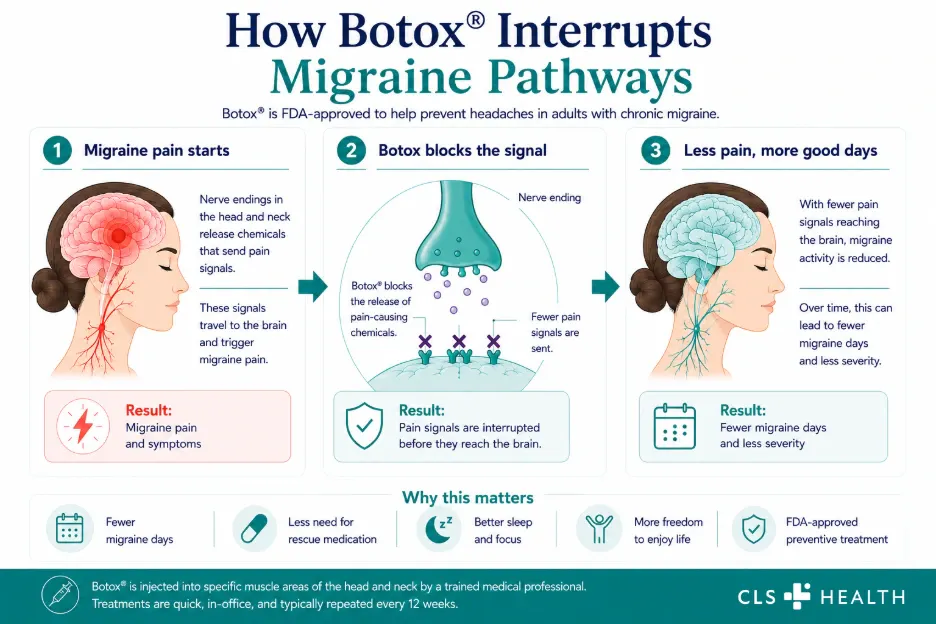
Botox helps prevent chronic migraines by reducing the activation of pain pathways involved in migraine attacks. After injection, Botox works near nerve endings to help interrupt pain signaling before it becomes a full migraine episode.
For many patients, the goal is fewer migraine days, less severe headaches, and reduced need for rescue medications. Botox is a preventive treatment. It does not provide immediate relief for a migraine that is already happening.
What to Expect During Your Appointment
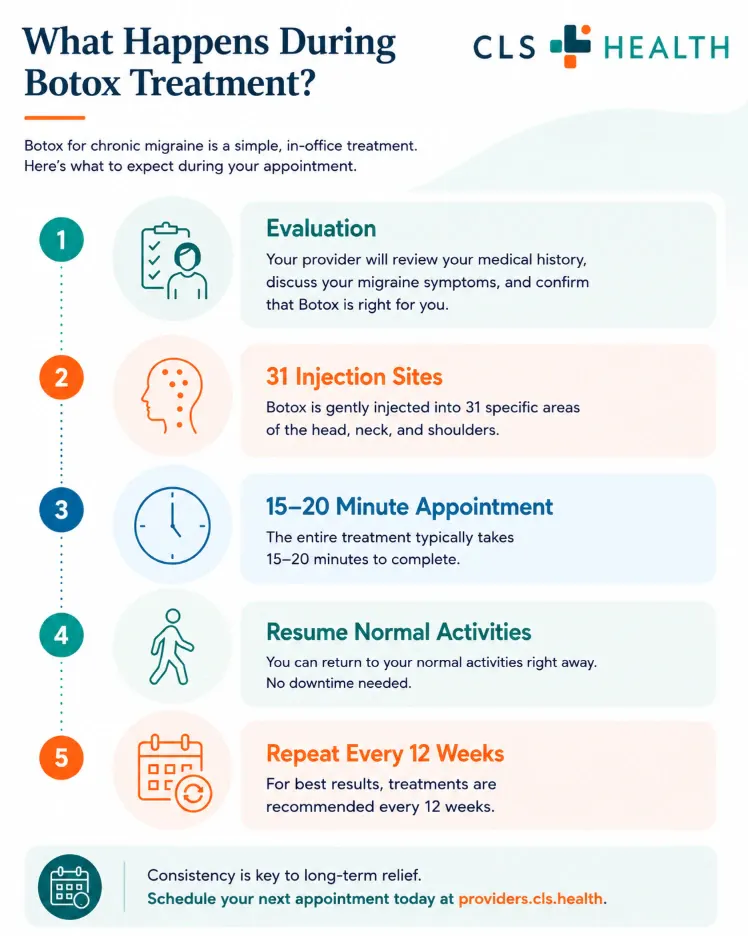
Initial Evaluation
Your visit begins with a detailed medical evaluation. Your specialist may review:
- Your medical history
- Your headache and migraine pattern
- Current and past medications
- Triggers, symptoms, and disability level
- Whether your symptoms meet criteria for chronic migraine
This helps your provider confirm the diagnosis and determine whether Botox is the right option for your care plan.
Treatment Session
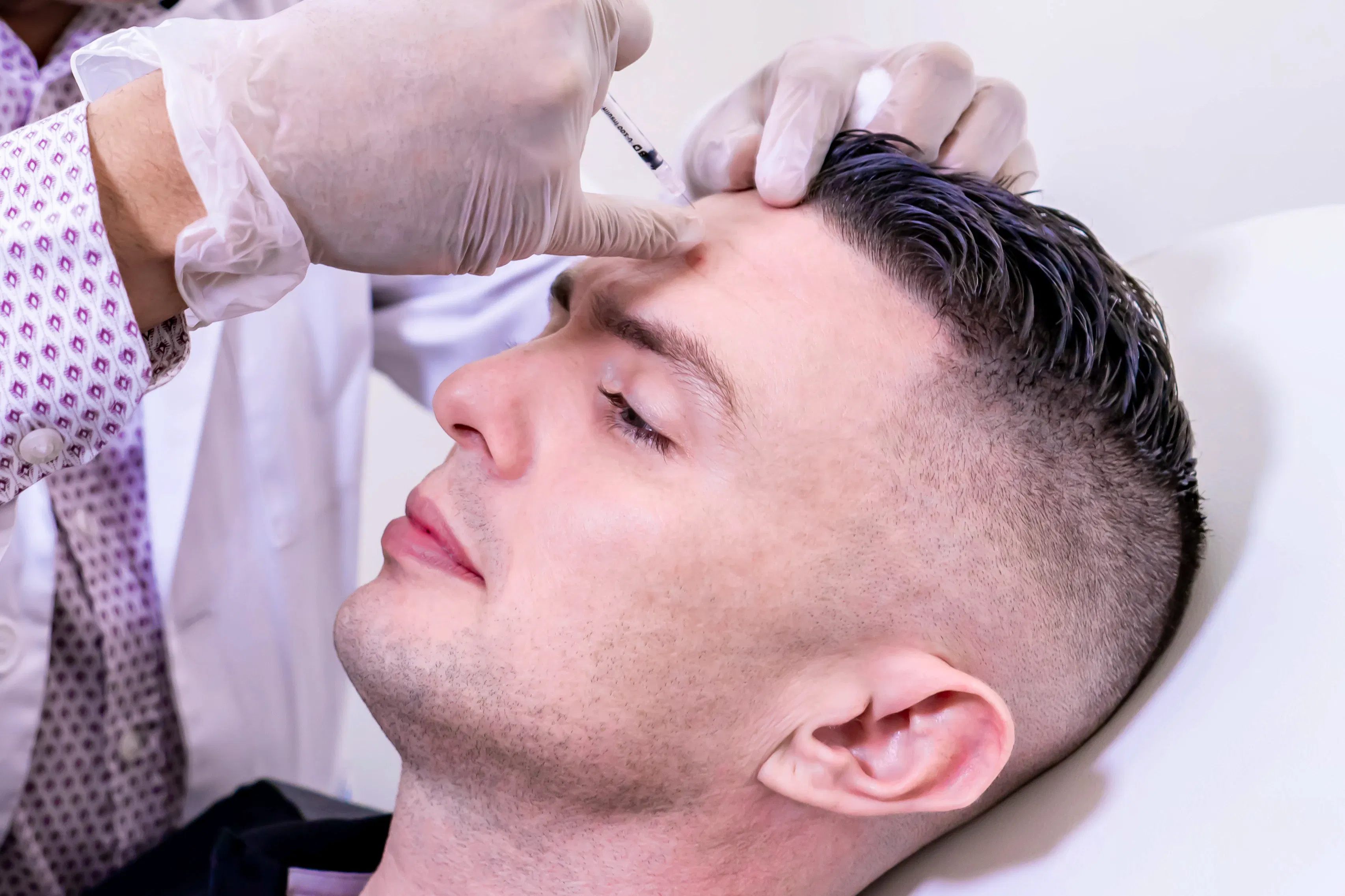
Botox treatment is performed in the office. Your provider uses a small needle to place injections in specific areas of the head and neck.
A typical chronic migraine Botox session includes about 31 small injections and usually takes about 15 to 20 minutes. Most patients do not need sedation.
After Treatment
Most people return to normal activities after the appointment. Mild soreness, tenderness, or redness at the injection sites can happen and usually improve on its own.
Your provider will explain what to expect, when to follow up, and how to track your headache days after treatment.
What Happens During Botox Treatment?
Where Is Botox Injected for Migraines?
Botox for chronic migraine is injected into specific muscle areas involved in migraine pain pathways. The treatment pattern is different from cosmetic Botox and is based on a medical protocol for chronic migraine prevention.
Common injection areas include:
- Forehead
- Temples
- Back of the head
- Neck
- Upper shoulders
Your provider will explain the injection sites before treatment and answer any questions about comfort, safety, and expected results.
When Will I Notice Results?
Some patients begin to notice improvement within 2 to 4 weeks after treatment. For others, the full benefit may take more time.
Many patients need 2 to 3 treatment cycles before they understand how well Botox works for them. Treatment is typically repeated every 12 weeks when appropriate.
Keeping a headache diary can help your provider track changes in headache frequency, severity, and medication use.
Benefits of Botox for Chronic Migraine
Botox may help patients with chronic migraine experience:
- Fewer migraine days
- Reduced headache severity
- Less reliance on rescue medications
- FDA-approved migraine prevention
- Convenient in-office treatment
- No daily pill requirement
Results vary by patient. Your specialist will help determine whether Botox fits your diagnosis, treatment history, and long-term migraine goals.
Risks and Side Effects
Botox is generally well tolerated when administered by trained medical professionals, but side effects can occur.
Common or possible side effects include:
- Neck pain
- Injection-site discomfort
- Temporary headache
- Muscle soreness
- Eyelid drooping, which is uncommon and usually temporary
Rare but serious side effects may include:
- Difficulty swallowing
- Breathing problems
- Allergic reaction
- Spread of toxin effect beyond the injection area
A medical evaluation is required before treatment. Tell your provider about all medical conditions, medications, allergies, prior Botox use, and whether you are pregnant, planning pregnancy, or breastfeeding.
Botox vs. Other Migraine Treatments
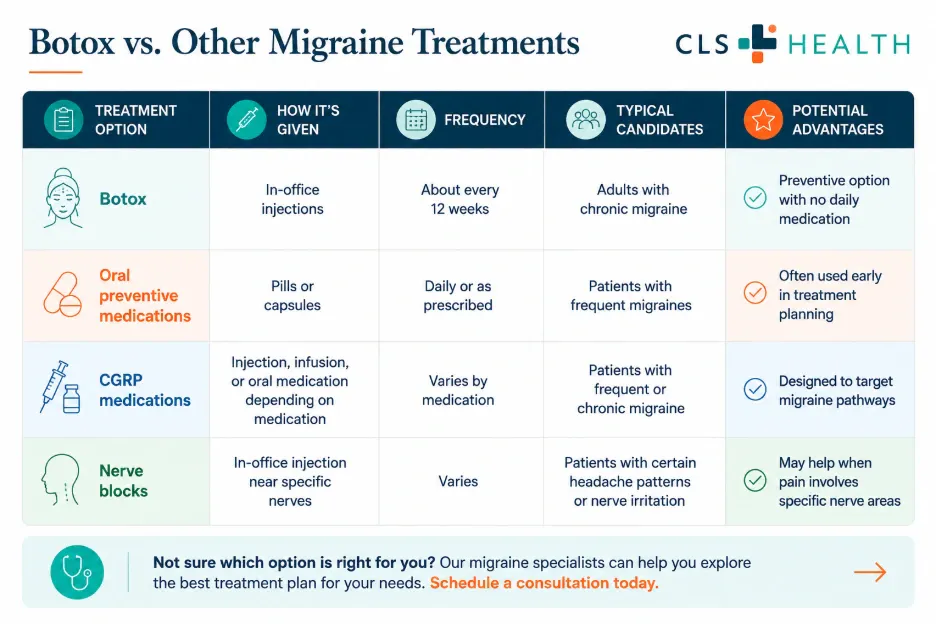
Your provider may recommend one treatment or a combination of therapies based on your diagnosis, symptoms, medication history, and overall health.
Specialties That Offer Botox for Chronic Migraine
At CLS Health, chronic migraine care may involve more than one specialty. This team-based approach helps patients receive care that fits their symptoms and medical needs.
Neurology
Neurology is the primary specialty for migraine diagnosis and long-term headache management. A neurologist can evaluate your migraine pattern, confirm whether you meet criteria for chronic migraine, review prior treatments, and recommend preventive options such as Botox when appropriate.
Pain Management
Pain management may be helpful when migraine overlaps with other pain conditions, such as:
- Neck pain
- Chronic pain syndromes
- Occipital neuralgia
- Headache patterns involving nerve irritation
A pain specialist can help evaluate whether migraine treatment should be coordinated with other pain-focused therapies.
Physical Medicine & Rehabilitation
Physical Medicine & Rehabilitation, also called PM&R or physiatry, may be appropriate for selected patients when migraine occurs alongside:
- Cervical muscle dysfunction
- Myofascial pain
- Functional impairment
- Neck or shoulder-related movement limitations
A PM&R physician can help assess how muscle, nerve, and movement issues may contribute to symptoms.
Why Choose CLS Health?
Patients choose CLS Health for chronic migraine care because we offer:
- Board-certified physicians
- Multiple specialties under one care network
- FDA-approved Botox treatment when appropriate
- Personalized treatment plans
- Convenient Houston-area locations
- Coordinated care across neurology, pain management, and PM&R
Our goal is to help patients reduce migraine disruption and improve quality of life with evidence-based, patient-centered care.
Botox for Migraines Near Houston
CLS Health serves patients throughout the greater Houston area. Depending on provider availability and procedure location, Botox for chronic migraine may be available for patients near:
- Houston
- Sugar Land
- Cypress
- Webster
- League City
- Pasadena
Please confirm availability when scheduling, as procedures may only be offered at select locations by trained providers.
FAQs
Yes. Botox® is FDA approved to help prevent headaches in adults with chronic migraines. It is not used as an immediate treatment for an active migraine attack.
Botox is typically considered for adults who have headaches on 15 or more days per month, with migraine features on at least 8 days per month. Your provider will confirm whether you meet criteria during an evaluation.
Botox for chronic migraine is typically repeated every 12 weeks when clinically appropriate. Your provider will create a schedule based on your response and treatment plan.
Possible side effects include neck pain, injection-site discomfort, temporary headache, soreness, and, less commonly, eyelid drooping. Rare but serious side effects can occur, so treatment should be performed by a trained medical professional.
Insurance coverage varies by plan. Many insurers require documentation of chronic migraine and prior treatment attempts before approving Botox. CLS Health can help patients understand the next steps for insurance verification.
Ready to Find Out if Botox May Help Your Chronic Migraines?
If chronic migraines are interfering with your work, family life, or daily activities, Botox may be an effective preventive treatment. Our specialists will evaluate your symptoms, confirm whether you’re a candidate, and develop a personalized migraine treatment plan.
Book with Dr. Rashid

Epilepsy Neurology, Neurology