

You’re not ignoring it.
You’re managing it.
At least, that’s what you’ve been telling yourself.
Sleep hasn’t been great for months. The energy that used to be there isn’t there anymore. The back pain shows up every time you move. The thing you noticed but haven’t really addressed because, honestly, you’re still functioning. Still showing up. Still getting things done.
That’s not denial. That’s how many men are wired — handling what’s in front of them, pushing through discomfort, and planning to deal with the rest later.
The problem isn’t the mindset. It’s what the body may be doing while you’re busy managing symptoms.
Why Many Men Delay Preventive Care
Many men are used to pushing through discomfort and prioritizing responsibilities over their own health. If symptoms seem manageable, it can feel easier to “deal with it later.”
The challenge is that many common men’s health conditions develop gradually. Symptoms that seem minor at first can become more difficult to manage over time if left unaddressed.
Delaying care doesn’t always come from denial. Often, it comes from being busy, minimizing symptoms, or assuming certain changes are simply part of aging.
However, functioning and feeling healthy are not always the same thing.
Your Body Doesn’t Treat Symptoms Separately
The body works as a connected system. Sleep, stress, hormones, heart health, metabolism, and mobility all influence one another.
For example:
- Poor sleep may affect energy, concentration, mood, and weight regulation
- Chronic stress can affect sleep, blood pressure, energy levels, and overall health
- Persistent pain may reduce physical activity, affecting cardiovascular and metabolic health
- Hormonal changes can influence sleep quality, motivation, muscle mass, and mood
Because the body adapts well, symptoms may gradually become normalized, both physically and mentally — even when something underlying should be evaluated.
Common Men’s Health Symptoms You Shouldn’t Ignore
Ongoing Fatigue or Low Energy
Feeling consistently tired may be related to poor sleep, stress, low testosterone, thyroid issues, sleep apnea, or other underlying medical conditions.
If fatigue is interfering with work, exercise, motivation, or daily activities, it may be time for a medical evaluation.
Snoring or Poor Sleep
Loud snoring, daytime exhaustion, frequent awakenings, or feeling unrested may be signs of sleep apnea.
Sleep apnea is common in men and is associated with increased risk for:
- High blood pressure
- Heart disease
- Type 2 diabetes
- Depression
- Cognitive and memory issues
Many men do not realize they have sleep apnea until symptoms become more severe.
Weight Gain or Changes in Metabolism
Unexpected weight gain, difficulty losing weight, or reduced muscle mass can sometimes be linked to hormonal changes, stress, sleep disruption, or metabolic conditions.
Testosterone levels naturally decline with age, but significant symptoms such as low energy, reduced libido, reduced focus or “brain fog,” or decreased strength should be medically evaluated rather than ignored.
High Blood Pressure
High blood pressure is often called a “silent condition” because it may not cause obvious symptoms early on.
Over time, untreated hypertension can increase the risk of:
- Heart disease
- Stroke
- Kidney disease
- Vision problems
Routine primary care visits and preventive screenings can help detect these issues early.
Stress, Mood Changes, or Brain Fog
Mental health is an important part of men’s health.
Chronic stress, anxiety, depression, irritability, poor focus, or mental fatigue can affect relationships, sleep, physical health, and overall quality of life.
Addressing mental and emotional health is an important part of long-term wellness.
Persistent Pain or Mobility Issues
Back pain, joint pain, or reduced mobility can gradually affect exercise, sleep, energy levels, and cardiovascular health.
Pain that continues to return or interfere with daily life should not simply be managed without evaluation.
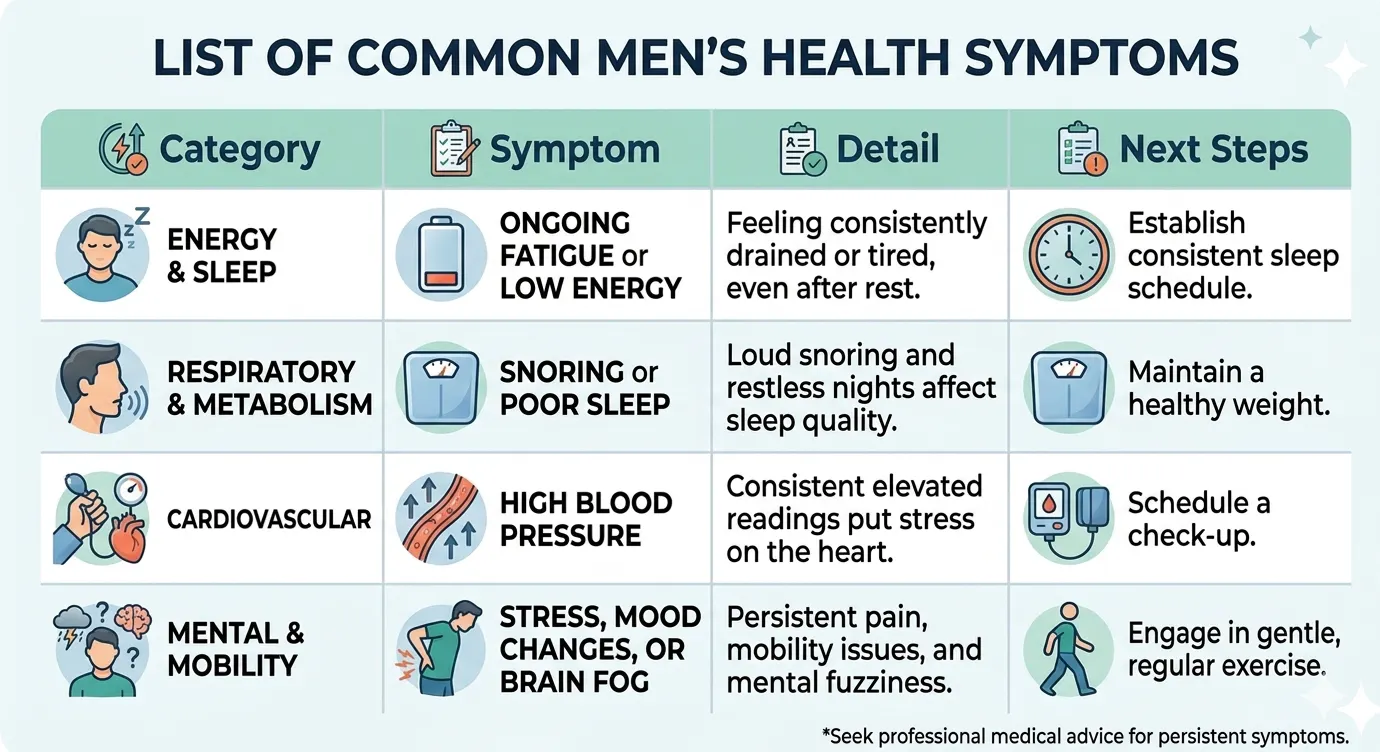
Don’t Ignore Ongoing Symptoms
Persistent fatigue, poor sleep, stress, weight changes, or chronic pain may be worth discussing with a healthcare provider — especially if symptoms have become part of daily life.
Earlier Information Often Means More Options
This isn’t about assuming the worst every time something feels off.
It’s about understanding that identifying issues earlier often provides more opportunities for treatment, lifestyle changes, and prevention before symptoms become more disruptive.
Addressing sleep problems, stress, blood pressure, hormone changes, or metabolic concerns earlier may look very different than addressing the same issue years later after symptoms have compounded over time.
That’s not fear-based thinking. It’s how long-term health typically works.
Most people wouldn’t ignore a warning light on their dashboard indefinitely and assume everything is fine. The body often works the same way.
Men’s Health Care at CLS Health
At CLS Health, we take a comprehensive approach to men’s health by connecting preventive care, hormone health, cardiovascular health, sleep medicine, weight management, urology, and primary care.
Our providers partner with patients to understand their symptoms and identify underlying causes. By approaching men’s health as an interconnected system rather than isolated issues, we design personalized treatment plans focused on long-term wellness and quality of life.
Services may include:
- Primary care and preventive screenings
- Testosterone therapy and hormone evaluation
- Sleep medicine evaluations
- Weight management support
- Cardiovascular care
- Urology and men’s sexual health services
Men’s Health Symptoms FAQs
Persistent fatigue, poor sleep, weight gain, low libido, stress, mood changes, chronic pain, or changes in urinary or sexual function should be evaluated if they continue or worsen over time.
Fatigue can occur for many reasons, including poor sleep, stress, hormone changes, sleep apnea, or underlying medical conditions. Persistent fatigue should not automatically be dismissed as aging.
Men should schedule routine preventive visits even if they feel generally healthy, especially if they have ongoing symptoms, high blood pressure, weight changes, poor sleep, or a family history of chronic disease.
Yes. Chronic stress can affect sleep, energy, blood pressure, mood, concentration, and overall health over time.
Primary care physicians often perform the initial evaluation and may coordinate care with specialists in endocrinology, urology, sleep medicine, cardiology, or men’s health, depending on the symptoms.
Take the Next Step Toward Better Men’s Health
You don’t need to wait until symptoms become disruptive to start the conversation. Early evaluation can help identify underlying issues, provide clarity, and expand your options for treatment and prevention.
CLS Health offers comprehensive men’s health services across Greater Houston, including primary care, hormone health, sleep medicine, weight management, cardiology, urology, and preventive screenings. Schedule an appointment with a CLS Health provider today.
Book with Dr. Talati

Primary Care