
Houston Hurricane Season: Quick Facts
Season: June 1 through Nov. 30
Prepare early: Organize medications, medical information, emergency contacts, and essential supplies before severe weather forecasts.
Plan for power outages: Have a plan for refrigerated medications and powered medical equipment.
Know your care options: Virtual Urgent Care may be available for certain non-emergency needs when travel is unsafe.
For emergencies: Call 911 or seek emergency medical care for life-threatening symptoms.
Hurricane season in Houston can disrupt more than your daily routine. Severe weather can close pharmacies, make roads unsafe, cause power outages, and interrupt access to medical care. Preparing early can help protect your family’s health, especially if you take daily medications, manage a chronic condition, use medical equipment, or care for children, older adults, or other vulnerable loved ones.
When Is Hurricane Season in Houston?
Hurricane season in Houston runs from June 1 through Nov. 30, the official Atlantic hurricane season.
While storms can develop throughout these months, you do not need to wait until a hurricane is in the forecast to prepare. Getting medications, medical information, emergency contacts, and essential health supplies organized ahead of time can make it easier to manage your healthcare needs if severe weather affects the Greater Houston area.
How to Prepare for Hurricane Season in Houston
A hurricane preparedness plan should cover both everyday essentials and healthcare needs. In addition to food, water, flashlights, batteries, phone chargers, important documents, and emergency contacts, make sure your family has a plan for medications, medical equipment, chronic conditions, and where to seek care if severe weather disrupts normal services.
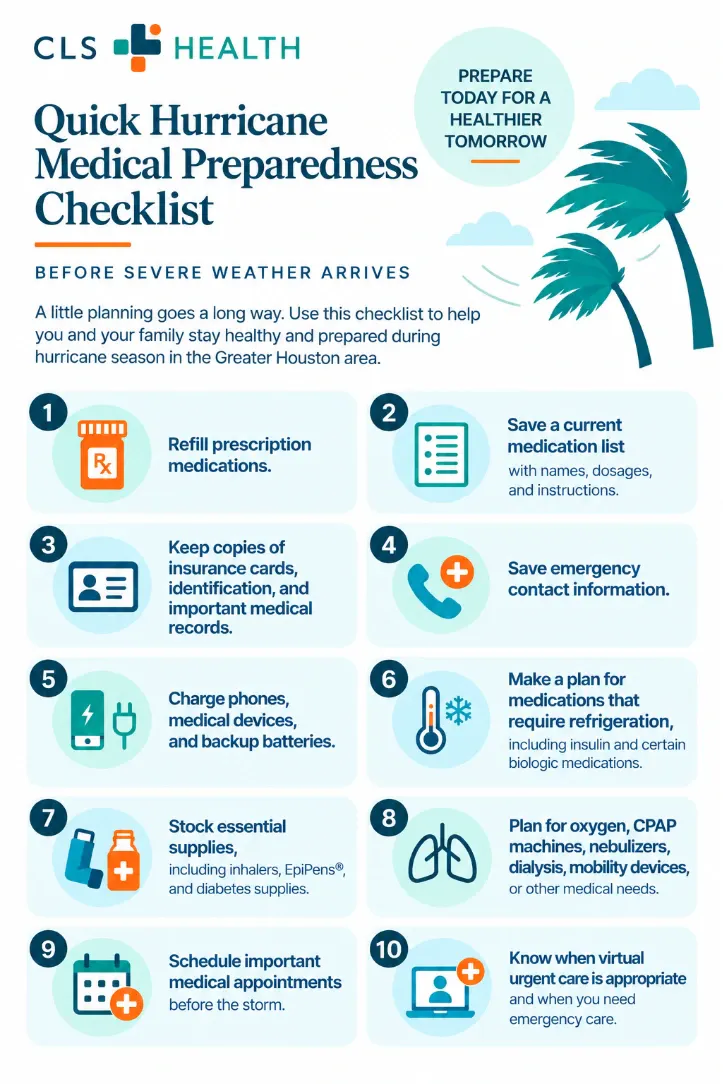
Quick Hurricane Medical Preparedness Checklist
Before severe weather arrives:
- Refill prescription medications.
- Save a current medication list with names, dosages, and instructions.
- Log in to the Healow patient portal app to review your medication list, upcoming appointments, and clinic updates.
- Keep copies of insurance cards, identification, and important medical records.
- Save emergency contact information.
- Charge phones, medical devices, and backup batteries.
- Make a plan for medications that require refrigeration, including insulin and certain biologic medications.
- Stock essential supplies, including inhalers, EpiPens®, and diabetes supplies.
- Plan for oxygen, CPAP machines, nebulizers, dialysis, mobility devices, or other medical needs.
- Schedule important medical appointments before the storm.
- Know when virtual urgent care is appropriate and when you need emergency care.
Why Medical Preparedness Matters During Hurricane Season
Severe weather can make routine healthcare harder to access. Pharmacies may close, roads may flood, appointments may be postponed, and power outages can affect refrigerated medications or medical equipment.
Preparing several days before severe weather is expected gives you more time to address medication, pharmacy, transportation, and medical supply needs.
Hurricane health tip: Do not wait until a hurricane watch or warning is issued to begin preparing your medical supplies.
Who Should Prepare Early for a Hurricane?
Everyone can benefit from a hurricane medical plan, but some people may need additional preparation.
Older Adults
Older adults may need extra planning if they take multiple daily medications, have limited mobility, use home oxygen, or manage conditions such as heart disease, diabetes, or chronic obstructive pulmonary disease (COPD).
Keep medications, medical information, mobility aids, and emergency contacts easy to access.
Families With Children
If you have children, prepare prescription medications, asthma inhalers, infant formula, vaccination records, and other essential supplies.
It can also help to keep pediatric dosing instructions available for any over-the-counter medicines you expect to use.
Pregnant Patients
Pregnant patients should keep prenatal information accessible and talk with their OB/GYN about what to do if severe weather affects access to routine or urgent care.
Know where you should go if you need pregnancy-related care during or after a storm.
People With Chronic Conditions
If you have diabetes, high blood pressure, heart disease, kidney disease, asthma, COPD, seizures, or another chronic condition, prepare early to reduce the risk of interruptions in your treatment.
Refill Prescriptions Before a Hurricane
Do not wait until the last minute to check your medications.
Review your prescriptions before severe weather is expected and contact your pharmacy or physician if you need a refill. You can also use the Healow patient portal app or web portal to review your medication list and message your CLS Health care team about refill needs or non-emergency concerns.
Keep a printed or digital medication list that includes:
- Medication names
- Dosages
- Instructions
- Prescribing physician
- Pharmacy information
Remember to check supplies in addition to medications. Depending on your health needs, this may include inhalers, insulin, EpiPens®, blood pressure medications, seizure medications, diabetes testing supplies, or other essential items.
Use the Healow Patient Portal Before a Storm
The Healow patient portal app can be a helpful place to review your medication list, check upcoming appointments, and receive general updates from your CLS Health care team before severe weather arrives.
Patients may also be able to message the clinic through the Healow web portal or mobile app to request prescription refills, ask non-emergency care questions, report issues they are having, or request a virtual appointment when appropriate.
Before hurricane season, consider logging into Healow to make sure your information is current and that you know how to contact your care team if storm conditions disrupt normal clinic access.
Don’t Wait Until a Storm Is in the Forecast
Preparing for hurricane season starts before severe weather arrives. If you need prescription refills, chronic disease management, vaccinations, or a routine checkup, scheduling an appointment ahead of time can help you prepare for potential disruptions in care.
What to Pack in a Hurricane Medical Emergency Kit
Your hurricane medical emergency kit should contain the health-related items you may need if pharmacies, medical offices, roads, or power are temporarily unavailable.
In addition to food, water, and basic storm supplies, consider including:
- A seven- to 14-day supply of prescription medications, if available
- Over-the-counter medications, such as pain relievers, allergy medicine, and stomach medicine
- A printed medication list with names, dosages, and instructions
- Copies of insurance cards and identification
- Important medical information
- Emergency contact information
- First aid supplies
- Diabetes testing supplies, insulin supplies, or glucose tablets
- Inhalers and nebulizer supplies
- Oxygen-related equipment
- CPAP supplies and backup power, if available
- Hand sanitizer
- Masks
- A thermometer
- Basic hygiene supplies
- A portable phone charger or power bank
Keep your medical kit somewhere accessible and protected from water.
How to Protect Medications During a Power Outage
Some medications, including insulin, biologics, and certain injectable medications, may require temperature-controlled storage.
Before hurricane season, ask your pharmacist or physician how your specific medication should be stored if you lose power.
Keep medications in their original containers when possible and protect them from excessive heat and floodwater. Do not use medication that appears damaged or contaminated. If you are concerned that a temperature-sensitive medication was stored incorrectly, contact your pharmacist or physician for guidance.
Plan for Medical Devices During a Power Outage
If you rely on medical equipment that uses electricity, include backup power in your hurricane preparedness plan.
This may apply to:
- CPAP machines
- Nebulizers
- Oxygen equipment
- Mobility devices
- Glucose monitoring equipment
- Other powered medical devices
Check out the manufacturer's instructions for your equipment, charge available backup batteries, and discuss your emergency plan with your healthcare team. the manufacturer's instructions for your equipment, charge available backup batteries, and discuss your emergency plan with your healthcare team.
If you depend on oxygen, dialysis, or other essential medical care, make your plan well before a storm arrives. Consider transportation, backup power, and where you will go if remaining at home is no longer safe.
Need Medical Care During Severe Weather?
Flooded roads and dangerous conditions can make traveling for medical care unsafe. For certain non-emergency health concerns, virtual care may provide another option.
CLS Health Virtual Urgent Care allows you to connect with a healthcare professional from home using a phone, tablet, or computer.
Patients may also use Healow to message their clinic team, check appointment updates, or request a virtual appointment when appropriate.
Virtual Urgent Care may be appropriate for concerns such as:
- Cold and flu symptoms
- COVID-19 symptoms
- Sore throat
- Sinus symptoms
- Pink eye
- UTI symptoms
- Allergies
- Minor skin concerns
- Medication questions
- Select prescription refills
Virtual care is not appropriate for a medical emergency. Call 911 or seek emergency care for life-threatening symptoms.
Flood Safety and Health Risks After a Houston Hurricane
Flooding can create serious health and safety risks after a hurricane or tropical storm.
Avoid walking or driving through floodwater. Floodwater can contain sewage, chemicals, sharp debris, insects, wildlife, and other hazards. Electrical hazards, including downed power lines, may also be present.
If a minor cut or scrape comes into contact with floodwater, clean it promptly and monitor the area. Redness, swelling, drainage, fever, or worsening pain may be signs that you need medical attention.
Flood-damaged homes can also contribute to mold exposure, which may trigger coughing, allergies, asthma symptoms, or other breathing problems.
Common Health Concerns After a Hurricane
After severe weather, patients may need medical care for:
- Cuts, scrapes, and wounds
- Skin infections
- Respiratory symptoms
- Mold exposure
- Asthma or COPD flare-ups
- Heat exhaustion
- Dehydration
- Medication replacement
- Stomach illness
- Stress-related symptoms
Seek medical care if your symptoms are persistent, worsening, or concerning.
What to Do If You Run Out of Medication After a Hurricane
If you run out of medication after a hurricane, contact your pharmacy, physician, or insurance plan as soon as possible.
Emergency refill options may be available in some situations, but they can depend on the medication, pharmacy access, insurance coverage, and storm conditions.
Do not stop an important prescription medication without medical guidance. This is particularly important if you take medication to manage diabetes, blood pressure, heart disease, asthma, seizures, mental health conditions, or another chronic condition.
If you are unsure what to do about a missed dose or unavailable medication, contact your physician or pharmacist. Virtual urgent care may also be appropriate for certain medication questions. Seek emergency care for serious or life-threatening symptoms.
When to See a Physician Before or After a Hurricane
Knowing when to seek care is an important part of hurricane medical preparedness.
Before the Storm
Consider scheduling care before severe weather if you need:
- Prescription refills
- Chronic disease follow-up
- Vaccinations
- Care for an illness
- Pregnancy-related guidance
- Medical device or supply planning
After the Storm
You may need medical attention after a hurricane for:
- Fever
- Signs of a wound infection
- Asthma flare-ups
- Persistent coughing
- Minor injuries
- Medication replacement
- Dehydration symptoms
- Worsening chronic condition symptoms
When to Seek Emergency Care
Call 911 or seek emergency medical care for symptoms such as:
- Chest pain
- Signs of a stroke
- Severe difficulty breathing
- Serious injuries
- Severe allergic reactions
- Confusion or fainting
- Severe dehydration
Do not delay emergency care because of weather conditions. Follow local emergency guidance and avoid driving through flooded or unsafe roads.
Healthcare Support Before and After a Houston Hurricane
CLS Health’s provider-led, patient-centered care model helps patients throughout Greater Houston access coordinated care before and after severe weather. Services may include primary care, pediatrics, same-day appointments, Virtual Urgent Care, medication management, chronic disease management, laboratory services, and care across multiple specialties.
Whether you need prescription refills before a storm, help managing a chronic condition, care for a minor illness, or guidance after severe weather, CLS Health can help you determine your next step.
CLS Health Locations Across Greater Houston
CLS Health serves communities throughout the Greater Houston area, including:
FAQs
Hurricane season in Houston runs from June 1 through Nov. 30. Preparing medications, important medical information, emergency contacts, and essential health supplies before severe weather is forecast can help reduce interruptions in care.
Review your prescriptions several days before severe weather is expected. Starting early gives you time to contact your pharmacy or physician and address potential insurance, supply, or refill issues before storm conditions affect normal operations.
Your hurricane emergency kit should include water, nonperishable food, flashlights, batteries, phone chargers, first aid supplies, medications, medical information, insurance cards, emergency contacts, and any additional supplies needed for children, older adults, pets, or family members with chronic health conditions.
Contact your pharmacy, physician, or insurance plan as soon as possible. Emergency refill options depend on the medication and circumstances. Do not stop an important medication without appropriate medical guidance.
Virtual urgent care may be an option for non-emergency concerns when travel is unsafe, including minor illnesses, allergies, sinus symptoms, pink eye, UTI symptoms, medication questions, and select prescription refills.
Call 911 or seek emergency care for life-threatening symptoms such as chest pain, stroke symptoms, severe breathing problems, serious injuries, or severe allergic reactions.
Protect Your Health Before the Next Storm
Preparing for hurricane season is about more than stocking food, water, and batteries. It also means making sure you have the medications, medical information, supplies, and care plan you need if severe weather disrupts everyday healthcare access.
Whether you need a routine checkup, medication refill, chronic disease management, same-day care, or an online doctor visit, CLS Health Primary Care is here to support you and your family before and after severe weather.
Schedule care now or start a virtual urgent care visit when you need non-emergency care from home.
Book with Nadin Farid, FNP

Primary Care