
Dealing with allergies often means managing symptoms like sneezing, itchy eyes, and a runny nose. But what about swollen lymph nodes? Can allergies be the cause of those small, swollen bumps? Let’s explore this topic and clear up some common misconceptions.
Key Takeaways
Seasonal allergies do not typically cause swollen lymph nodes, although allergies and infections can share similar symptoms.
Swollen lymph nodes in the neck are more commonly associated with infections, such as colds, sore throats, or sinus infections.
Lymph nodes that continue enlarging, feel hard or fixed, or occur with concerning symptoms should be evaluated by a healthcare provider.
How Your Body Reacts to Allergens
Allergies occur when your body overreacts to normally harmless substances, like pollen or pet dander. When you encounter these triggers, your immune system releases chemicals that cause familiar allergy symptoms. It’s your body’s way of trying to protect you.
How Your Lymphatic System Works
Your lymphatic system plays a crucial role in keeping you healthy. It’s like your body’s clean-up crew, with lymph nodes acting as little filtering stations throughout your body. These nodes help trap harmful substances and are an important part of your immune defense.
The Truth About Allergies and Swollen Lymph Nodes
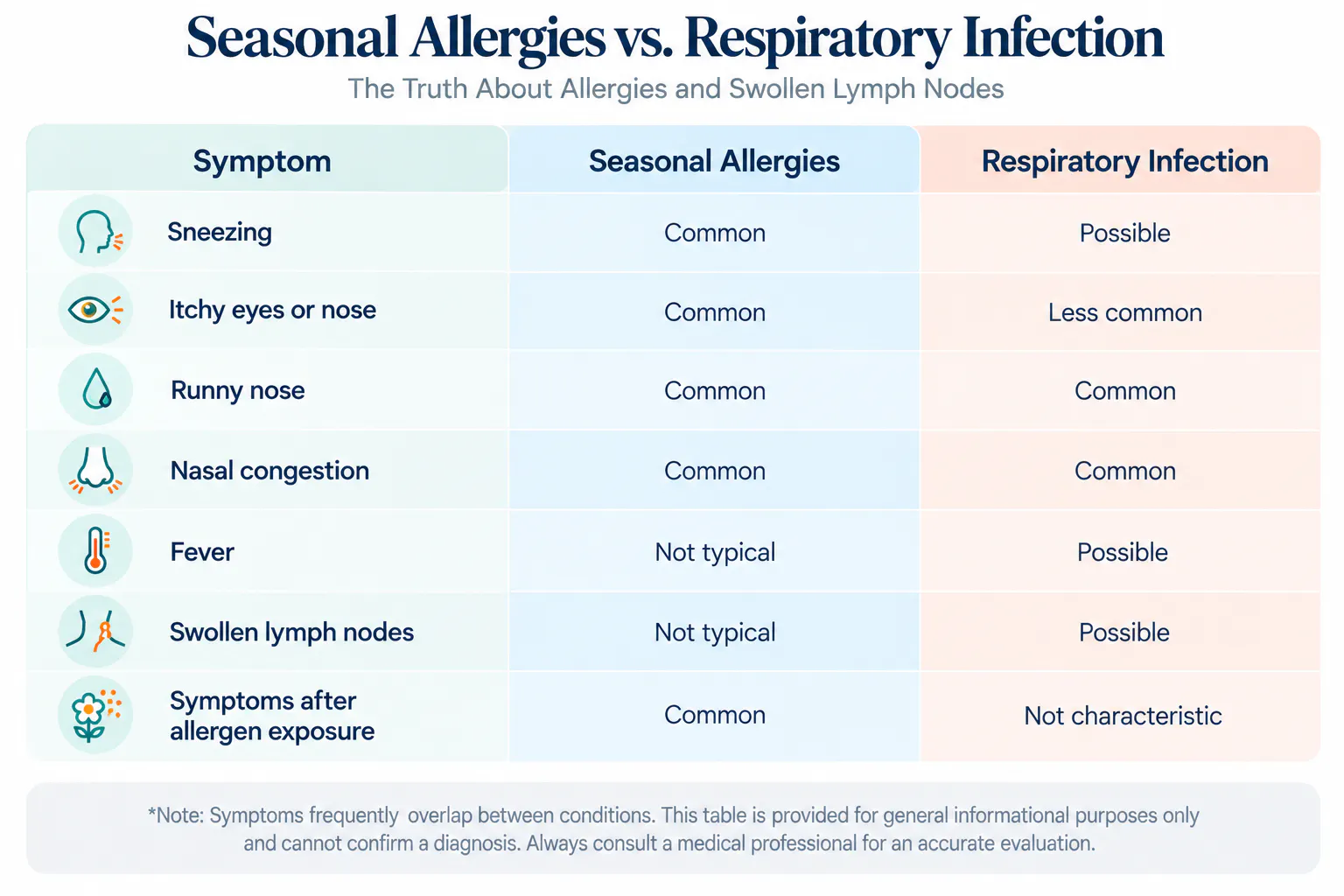
Let’s set the record straight: allergies themselves don’t typically cause swollen lymph nodes. This is a common misunderstanding. Swollen lymph nodes are often a sign that your body is responding to an infection rather than a typical allergic reaction.
So why is there confusion? It’s because allergies and infections can sometimes cause similar symptoms, like a runny nose or congestion. However, there are key differences:
- Allergy symptoms typically include sneezing, itchy eyes, runny nose, and congestion. Seasonal and environmental allergies do not typically cause fever or noticeable lymph node swelling. If these symptoms occur, another cause, such as an infection, may be responsible.
- Infection symptoms may include a runny nose and congestion but can also cause fever and swollen lymph nodes.
Can Seasonal Allergies Cause Swollen Lymph Nodes in Your Neck?
Seasonal allergies, including reactions to pollen, grass, and mold, do not typically cause swollen lymph nodes in the neck. However, allergies and certain infections can share similar symptoms, making it difficult to identify the underlying cause.
The lymph nodes in your neck, called cervical lymph nodes, help your immune system respond to infections affecting your head and neck. Conditions such as colds, sore throats, ear infections, and sinus infections can cause these lymph nodes to become enlarged or tender.
If you experience swollen lymph nodes alongside seasonal allergy symptoms, a separate infection or another medical condition may be responsible.
The Indirect Link Between Allergies and Swollen Lymph Nodes
While allergies don’t directly cause swollen lymph nodes, there is an indirect connection worth mentioning. Allergies can cause inflammation and congestion in the nasal passages, which may sometimes contribute to sinus problems. If a separate infection develops, nearby lymph nodes may swell as your immune system responds.
When to See a Doctor for Swollen Lymph Nodes
If you’re experiencing swollen lymph nodes, it’s important to pay attention to your symptoms. While swollen lymph nodes often improve as an infection resolves, certain changes may require medical evaluation.
Consider seeing a healthcare provider if you notice:
- Swollen lymph nodes that persist for more than two weeks without improvement
- Lymph nodes that feel hard, remain fixed in place, or continue growing
- Accompanying symptoms such as persistent fever, night sweats, or unexplained weight loss
- Swelling in multiple areas of your body
- Swollen lymph nodes near your collarbone
Seek emergency medical care if swelling causes difficulty breathing or significant difficulty swallowing. Rapidly worsening neck swelling, especially when accompanied by fever or severe pain, requires urgent medical evaluation.
Your primary care provider can help identify the underlying cause of swollen lymph nodes and recommend appropriate next steps.
Tips for Managing Allergies and Supporting Your Health
Managing your allergies can help reduce symptoms such as nasal congestion, sneezing, and irritation while supporting your overall health. Although allergy management does not directly prevent swollen lymph nodes, these steps may help you feel more comfortable and manage your symptoms.
- Identify and avoid your allergy triggers when possible
- Keep your living space clean and take steps to reduce dust and other indoor allergens
- Consider using air purifiers to improve indoor air quality
- Support your overall health with a balanced diet, regular exercise, and adequate sleep
- Follow your allergy management plan as recommended by your healthcare provider
Frequently Asked Questions
Seasonal allergies do not typically cause swollen lymph nodes in your neck. However, allergies can cause nasal inflammation and congestion, which may sometimes contribute to sinus problems. If a separate infection develops, nearby lymph nodes may swell as your immune system responds.
Swollen lymph nodes can occur even when you don't feel sick. Your immune system may be responding to a mild or recent infection, inflammation, or another underlying condition. If swelling persists, increases, or occurs without an identifiable cause, a healthcare provider can help determine why.
Yes. Sinus infections can sometimes cause swollen lymph nodes, particularly in the neck or under the jaw. This happens when your immune system responds to the infection. Other symptoms may include nasal congestion, facial pressure, thick nasal discharge, and headache.
Swollen lymph nodes caused by infections often begin improving within one to two weeks, although some may remain enlarged for several weeks. The duration depends on the underlying cause. If swelling continues to increase, persists without improvement, or occurs with concerning symptoms, consult a healthcare provider.
Swollen lymph nodes should be evaluated if they continue growing, feel hard or fixed in place, appear near your collarbone, or occur with persistent fever, night sweats, or unexplained weight loss. Seek immediate medical attention if swelling causes difficulty breathing or swallowing.
Get Answers About Swollen Lymph Nodes
If you're experiencing persistent swollen lymph nodes or aren't sure whether your symptoms are related to allergies or an infection, CLS Health can help. Our primary care providers can evaluate your symptoms, identify potential causes, and recommend appropriate next steps.
Book with Dr. Qadri

Primary Care