

What Is a Spermatocelectomy?
A spermatocelectomy is a minor surgical procedure performed to remove a spermatocele—a benign, fluid-filled cyst that forms on the epididymis, the small, coiled tube behind the testicle that stores and transports sperm. While spermatoceles are typically harmless, they can cause testicular pain, swelling, a feeling of heaviness, or a dull ache that may radiate into the groin or lower back as they enlarge.
When conservative treatments no longer provide relief, a spermatocelectomy offers a long-term solution. This outpatient procedure is safe, effective, and performed by a urologist specializing in male reproductive health. It provides substantial pain relief and helps restore comfort and function for most patients.
Why Is a Spermatocelectomy Performed?
A spermatocelectomy is recommended when a spermatocele causes symptoms or affects normal testicular function.
Common indications include:
- Persistent or sharp testicular pain
- Noticeable swelling or pressure in the scrotum
- Nerve-related pain in the testicles that radiates to the groin or lower back
- Discomfort during activity or intimacy
- Fertility concerns due to obstruction or pressure on nearby structures
Many men describe spermatocele discomfort as a dull ache or heaviness that worsens with standing or physical activity. The surgery offers a high success rate and lasting symptom relief, with minimal risk of recurrence when the cyst is completely removed.
Can a Spermatocele Be Treated Without Surgery?
Not every spermatocele requires surgery. Small, painless cysts can often be safely monitored without treatment.
Conservative management may include:
- Observation with routine follow-up
- Supportive underwear to reduce discomfort
- Over-the-counter pain relievers, such as acetaminophen or ibuprofen
- Activity modification if symptoms worsen with exercise or prolonged standing
A spermatocelectomy is generally recommended when symptoms become persistent, interfere with daily activities, or continue despite conservative treatment.
How Is a Spermatocele Diagnosed?
Before recommending surgery, your urologist will confirm that your symptoms are caused by a spermatocele and rule out other conditions affecting the scrotum.
Diagnosis typically includes:
- Review of your medical history and symptoms
- Physical examination of the scrotum
- Assessment of tenderness, swelling, or a palpable lump
- Scrotal ultrasound, which is the most common imaging test used to confirm a spermatocele and distinguish it from conditions such as hydroceles, varicoceles, epididymal cysts, or testicular tumors
A thorough evaluation helps ensure you receive the most appropriate treatment for your condition.
Concerned Your Symptoms May Be Caused by a Spermatocele?
Testicular pain, swelling, or a lump near the testicle should always be evaluated by a urologist. An accurate diagnosis can determine whether observation or spermatocelectomy is the best treatment option.
Spermatocelectomy FAQs
Most spermatoceles do not disappear on their own. Small, painless cysts often remain stable and can be safely monitored without treatment. Surgery is typically recommended only if the spermatocele causes pain, swelling, or other bothersome symptoms.
No. A spermatocele is a benign (noncancerous) cyst that develops on the epididymis and is not considered a form of cancer. However, any new testicular lump or scrotal mass should be evaluated by a urologist to rule out other conditions, including testicular cancer.
The procedure is performed under local or general anesthesia, so you won't feel pain during surgery. Mild soreness, swelling, and bruising are common afterward but typically improve within the first week and can usually be managed with ice packs and over-the-counter pain medication.
Complications are rare but can include infection, bleeding, or injury to the epididymis. Choosing a board-certified urologist significantly reduces these risks.
Spermatocelectomy has a high success rate for relieving pain, swelling, and discomfort caused by symptomatic spermatoceles. Most patients experience lasting symptom relief, and recurrence is uncommon when the cyst is completely removed.
In most cases, no. However, if the surgery involves both testicles or a large cyst, there’s a small chance of epididymal nerve damage affecting sperm transport.
Most patients can resume sexual activity within 2–4 weeks, depending on their recovery. Your doctor will confirm this during follow-up.
Yes. In some cases, both procedures can be performed simultaneously, allowing for family planning (vasectomy) and spermatocele removal in one surgery.
Yes. You’ll typically return for a post-op checkup 1–2 weeks after surgery so your doctor can assess healing and answer any questions.
Spermatocelectomy Steps: What Happens During Surgery?
Before surgery, your urologist will review your medical history, discuss spermatocele treatment options, and provide instructions to ensure a safe outcome. You may be advised to fast, stop blood-thinning medications, and prepare the surgical area as directed.
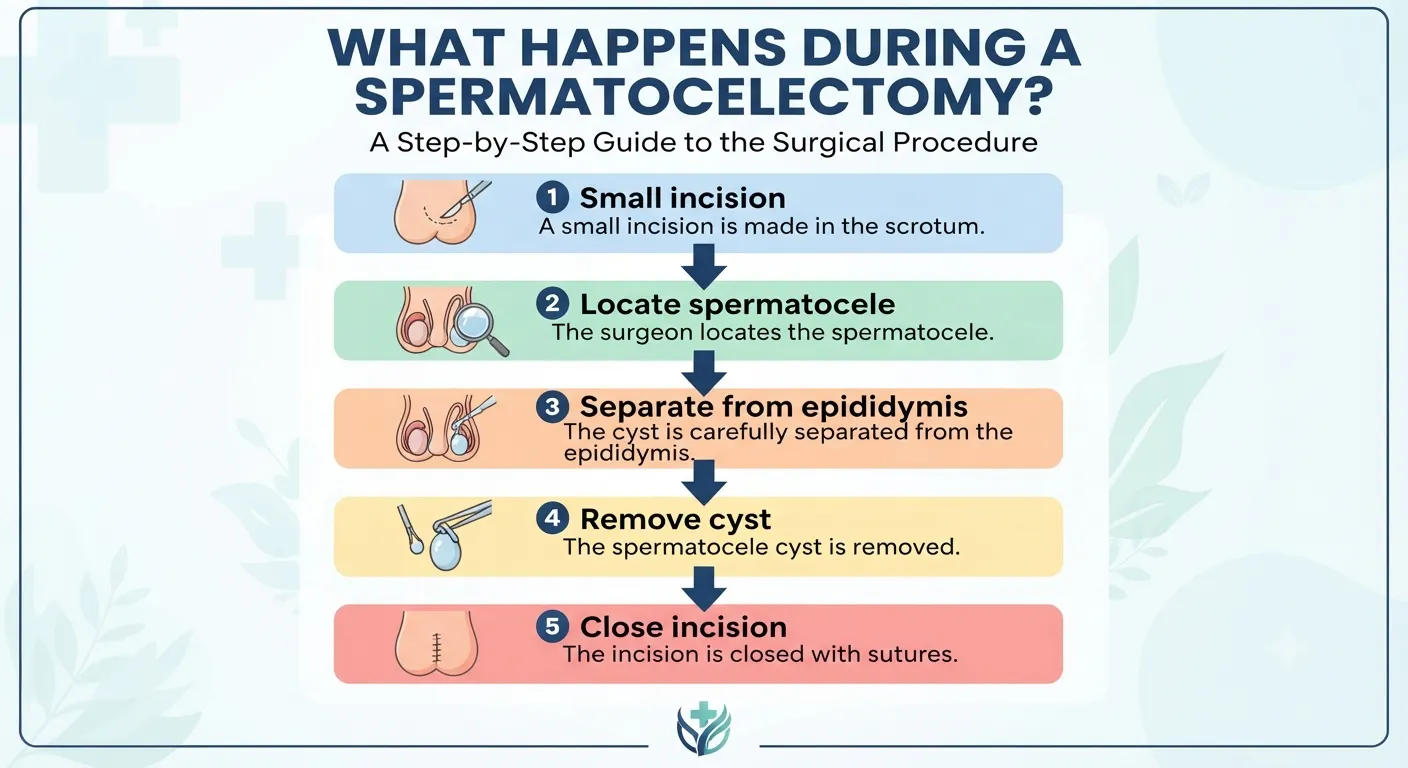
During the Procedure
- Anesthesia: Local or general anesthesia ensures comfort during the procedure.
- Incision: A small incision is made in the scrotum to access the spermatocele.
- Removal: The cyst is carefully separated from the epididymis, preserving nearby structures and nerve integrity whenever possible.
- Closure: The incision is closed with absorbable sutures that do not require removal.
- Duration: The surgery usually takes 30–60 minutes and is performed on an outpatient basis.
This minimally invasive outpatient procedure provides excellent long-term symptom relief and a relatively short recovery for most patients.
How Long Does a Spermatocelectomy Take?
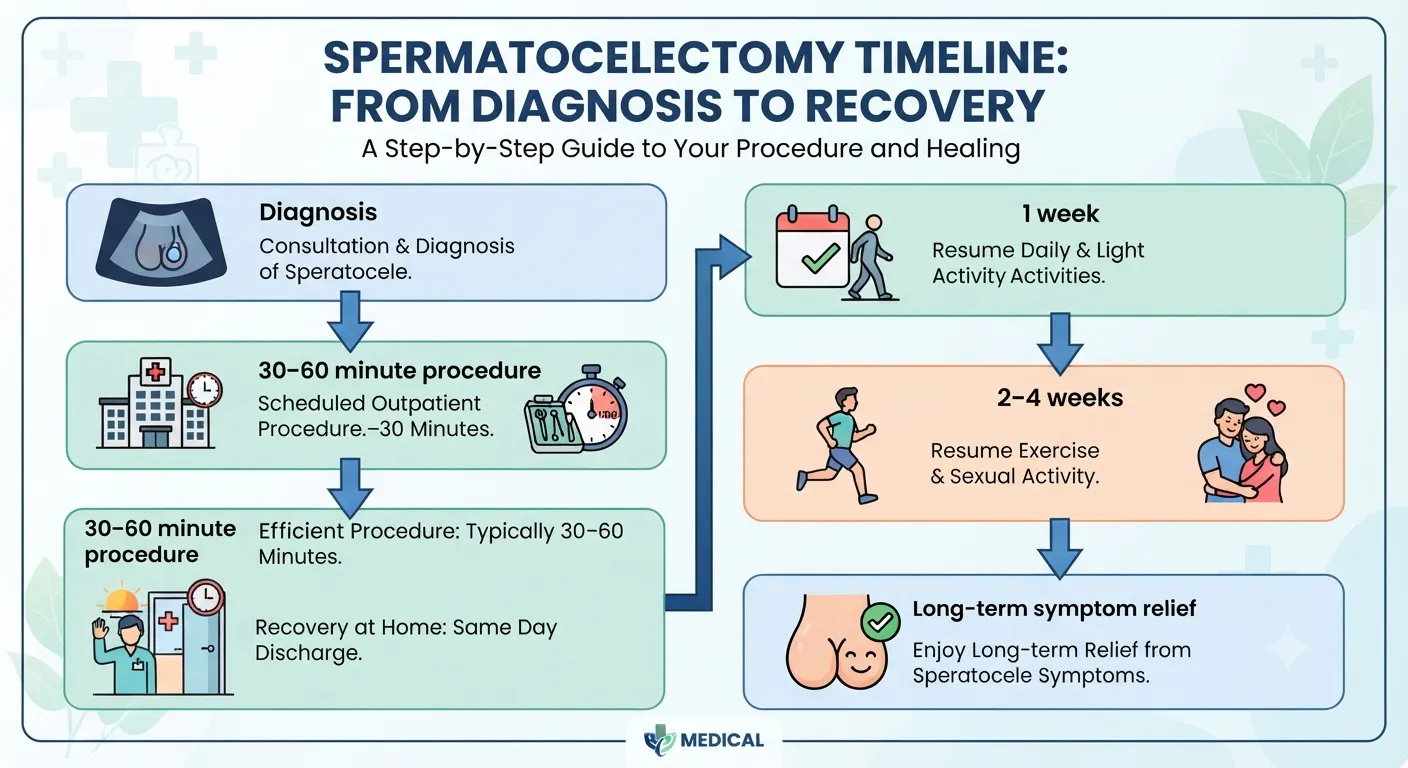
Most spermatocelectomy procedures take 30 to 60 minutes to complete and are performed on an outpatient basis, allowing patients to return home the same day.
Recovery Timeline
Although every patient's recovery is different, most people can expect the following:
First 48–72 hours
- Mild swelling, bruising, and soreness are common.
- Ice packs and supportive underwear help reduce discomfort.
After 1 week
- Pain and swelling continue to improve.
- Many patients return to work and other light daily activities.
After 2–4 weeks
- Most patients can gradually resume exercise, heavy lifting, and sexual activity after receiving clearance from their urologist.
Closely following your post-operative instructions ensures proper healing and reduces the chance of complications or recurrence.
Post-Operative Care
Your urologist may recommend:
- Ice packs: To minimize swelling in the first 48 hours.
- Supportive underwear: Scrotal support helps reduce discomfort and protect the surgical site.
- Pain relief: Over-the-counter medications like acetaminophen or ibuprofen are usually sufficient.
- Wound care: Keep the incision clean and dry; avoid swimming or soaking until cleared.
Rest: Light walking is encouraged, but avoid strenuous lifting for one week.
Success Rate and Long-Term Outlook
Most patients experience significant relief from pain and swelling after spermatocelectomy, and recurrence is uncommon when the cyst is completely removed. Rarely, if both sides are operated on or the epididymal nerves are affected, fertility can be impacted—so a pre-surgical discussion with your urologist is essential.
When to See a Urologist
You should see a urologist if you experience:
- Testicular or scrotal pain that radiates to the lower back
- Swelling, heaviness, or pressure in the testicle
- A new lump or mass near the testicle
- Concerns about fertility or ejaculation
- Nerve-related testicular pain that doesn’t improve with rest or medication
Although spermatoceles are benign, a proper evaluation helps rule out other causes of testicular pain, such as epididymal cysts, hydroceles, varicoceles, or testicular tumors. Your doctor may perform a scrotal ultrasound to confirm the diagnosis and recommend appropriate treatment.
When to Contact Your Urologist After Surgery
Contact your healthcare provider if you experience:
- Fever or chills
- Increasing redness or drainage from the incision
- Severe swelling or worsening pain
- Difficulty urinating
- Bleeding that does not improve
- Any new or concerning symptoms during recovery
Prompt evaluation can help identify and treat potential complications early.
Considering a Spermatocelectomy in Houston?
Our board-certified urologists in Houston specialize in spermatocele treatment and other male reproductive procedures. Each patient receives personalized care focused on precision, comfort, and long-term results.
If you're experiencing persistent testicular pain, scrotal swelling, or a lump near your testicle, our team provides expert evaluation and surgical care using advanced techniques with same-day discharge for most patients.
Book your consultation today to discuss your symptoms and treatment plan with a trusted Houston urologist.