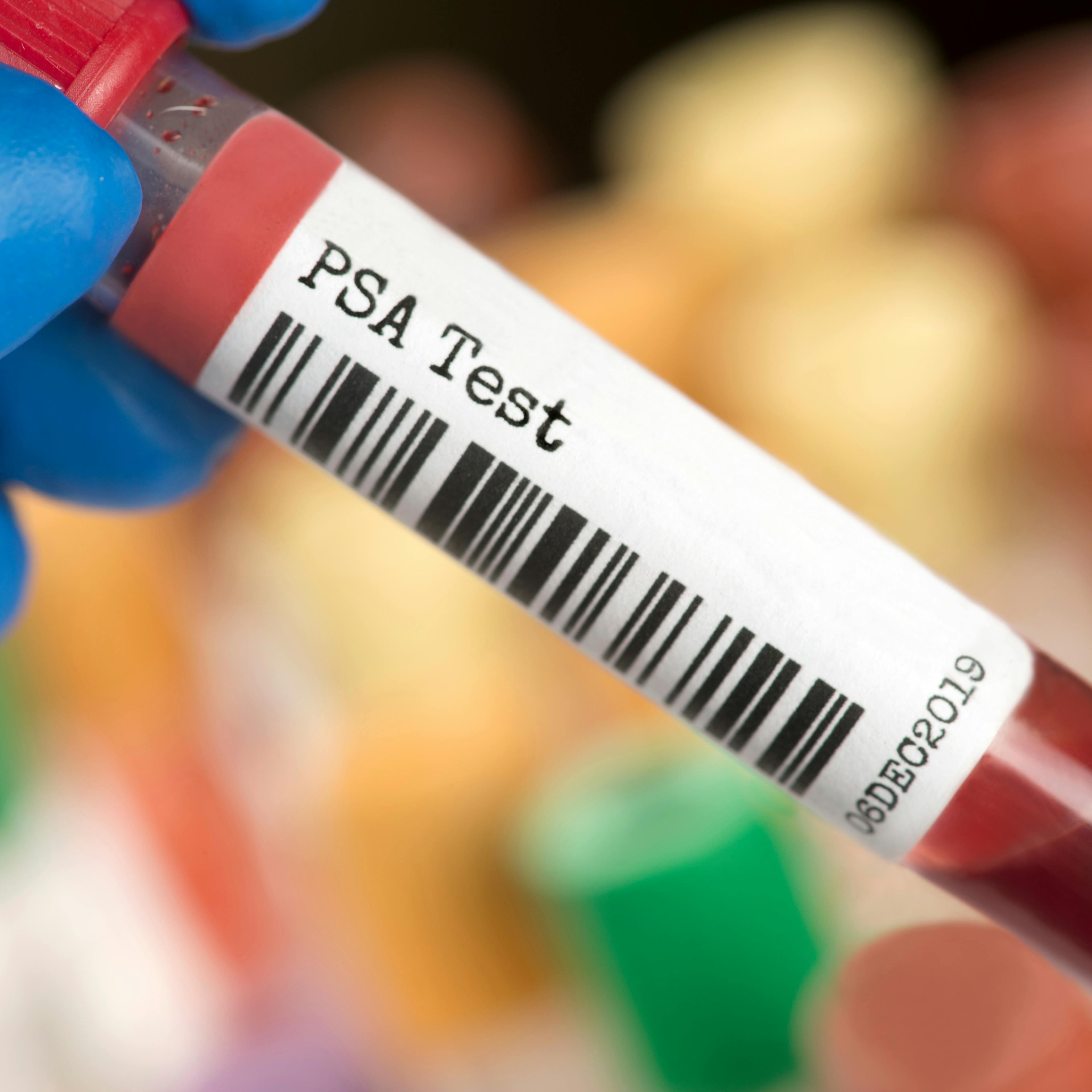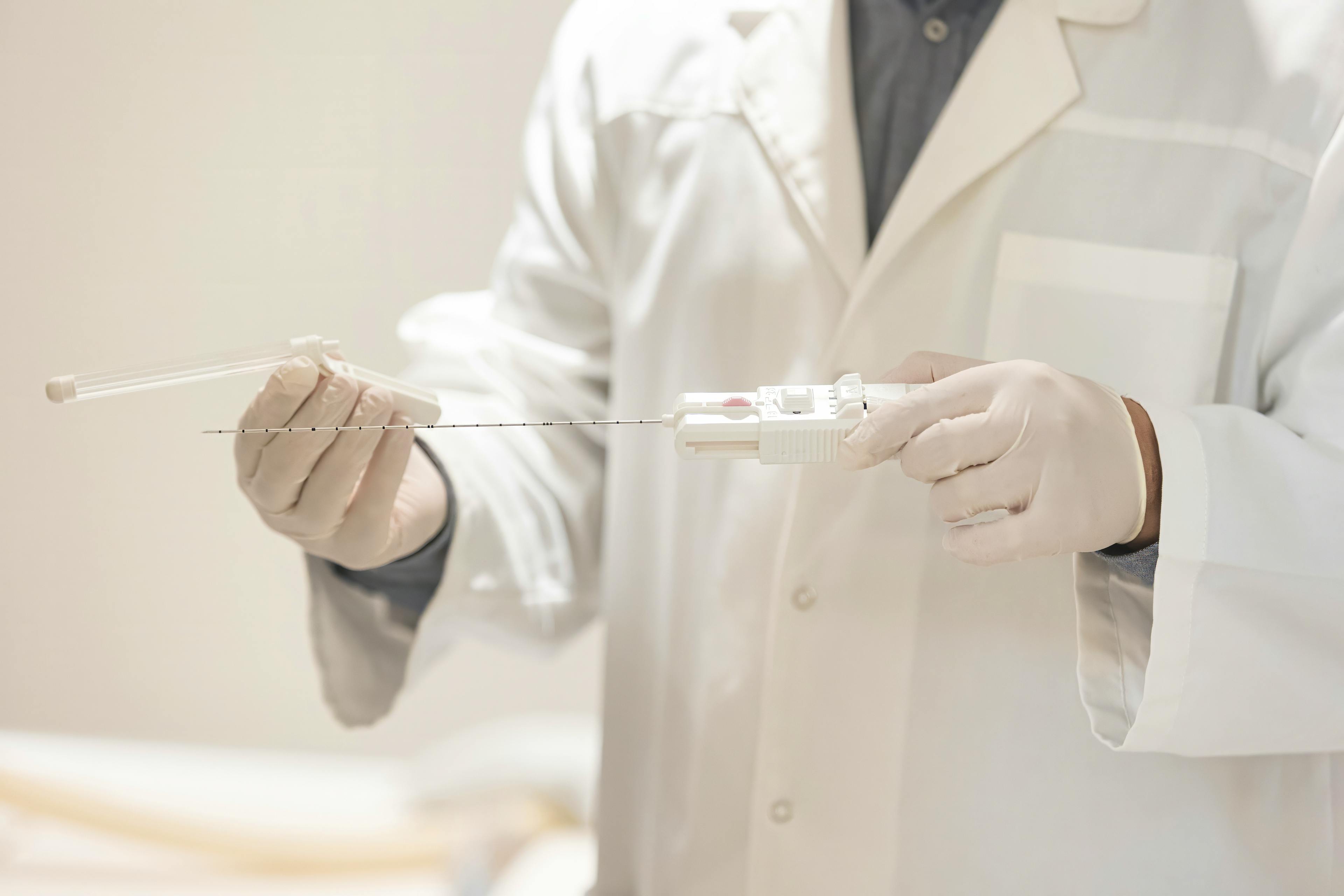

A prostate biopsy helps determine whether abnormal prostate screening results may be related to prostate cancer or another prostate condition. At CLS Health, our urology team uses image-guided biopsy techniques to collect small tissue samples from the prostate as precisely and comfortably as possible.
Your urologist may recommend a prostate biopsy if you have an elevated PSA level, an abnormal digital rectal exam, or a prostate MRI that shows an area needing closer evaluation.
What is a Prostate Biopsy?
A prostate biopsy is a procedure that removes small samples of tissue from the prostate gland so they can be examined under a microscope. It is typically recommended when prostate screening shows a possible concern, such as an elevated prostate-specific antigen (PSA) level, an abnormal digital rectal exam (DRE), or suspicious findings on prostate MRI. The goal is to determine whether cancer cells or other prostate abnormalities are present.
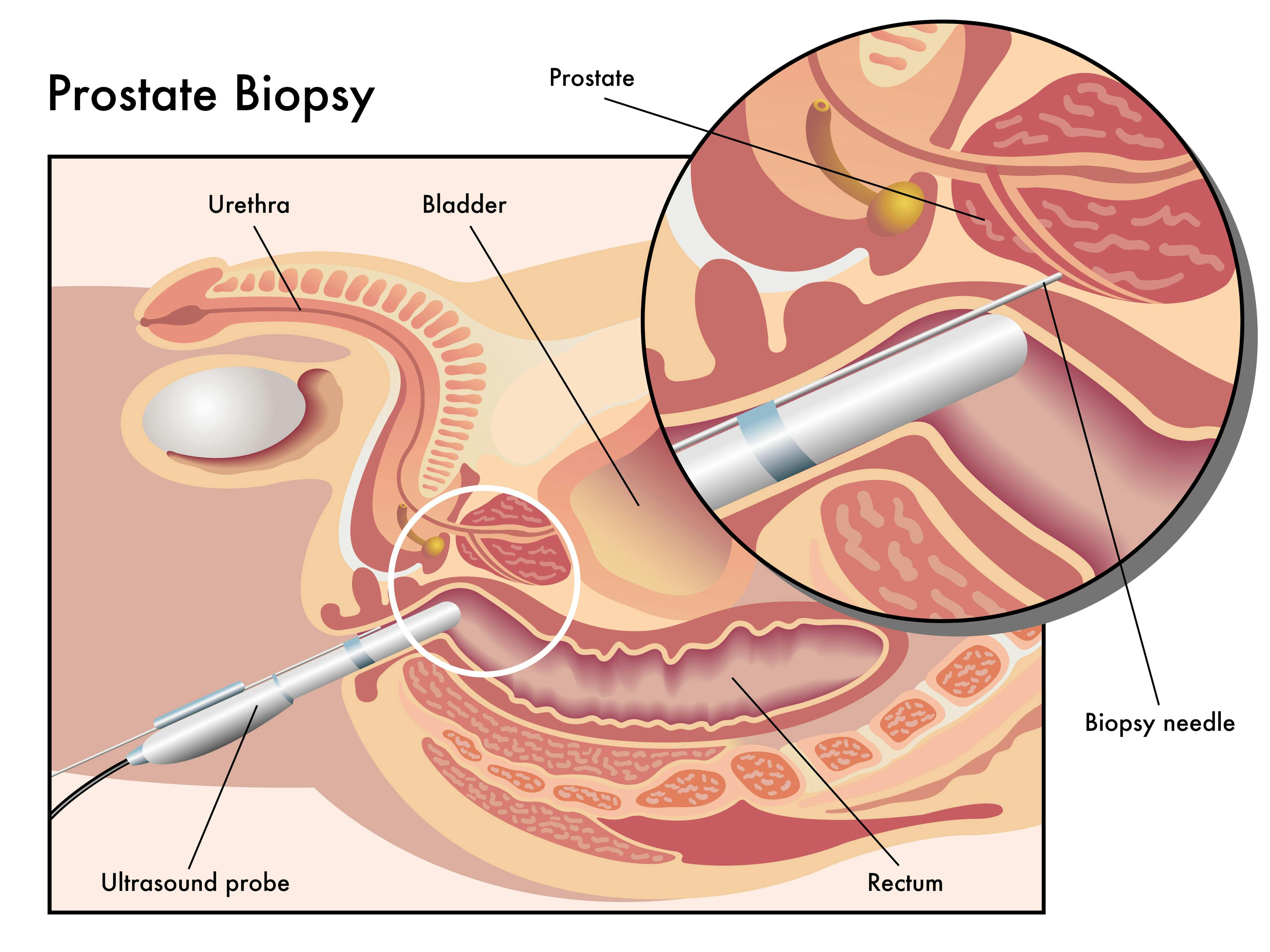
Transrectal ultrasound-guided (TRUS) prostate biopsy showing the ultrasound probe and biopsy needle entering through the rectum.
How Is a Prostate Biopsy Performed?
A prostate biopsy is typically performed using ultrasound guidance to help the urologist collect small tissue samples from the prostate. The biopsy needle may enter through the rectum (transrectal approach) or through the skin between the scrotum and anus (transperineal approach).
When appropriate, MRI fusion technology combines previously captured prostate MRI images with real-time ultrasound imaging to help target suspicious areas.
The tissue samples are sent to a pathology laboratory, where they are examined for cancer cells or other abnormalities. Your urologist will review the results with you and explain any recommended next steps.
What Is an MRI Fusion Prostate Biopsy?
MRI fusion prostate biopsy is an image-guided technique that combines previously captured prostate MRI images with live ultrasound imaging. If a prostate MRI identifies a suspicious area, these images can be combined during the biopsy to help the urologist more precisely target tissue samples for evaluation.
MRI fusion technology can be used with either transrectal or transperineal prostate biopsy. Your urologist will recommend the appropriate approach based on your MRI findings, medical history, and individual needs.
At CLS Health, Dr. Chris Kannady performs transperineal MRI fusion biopsies in an outpatient surgery center or hospital using total intravenous anesthesia (TIVA) or general anesthesia to help patients remain still during the procedure.
Transperineal vs. Transrectal Prostate Biopsy

Transperineal and transrectal prostate biopsies are two approaches used to collect tissue samples from the prostate. Both can help diagnose prostate cancer, but they differ in how the biopsy needle reaches the prostate and their associated infection risks.
Transperineal MRI Fusion Prostate Biopsy
During a transperineal prostate biopsy, the urologist guides a biopsy needle through the skin between the scrotum and anus, known as the perineum, to collect tissue samples from the prostate.
When combined with MRI fusion technology, this approach allows the urologist to target suspicious areas identified on prostate MRI.
Because the biopsy needle does not pass through the rectal wall, the transperineal approach generally carries a lower risk of infection than transrectal biopsy.
The transperineal approach also allows the urologist to use a specialized needle guide for more precise needle placement, which may be particularly helpful when targeting small, suspicious areas identified on prostate MRI.
At CLS Health, Dr. Chris Kannady offers transperineal MRI fusion prostate biopsy for patients who may benefit from this approach, including those concerned about infection or requiring targeted tissue sampling.
Transrectal Ultrasound-Guided (TRUS) Biopsy
During a transrectal prostate biopsy, an ultrasound probe is placed into the rectum to provide real-time images of the prostate. The urologist guides a biopsy needle through the rectal wall to collect tissue samples.
This approach may also incorporate MRI fusion technology when suspicious areas have been identified on prostate MRI.
Because the biopsy needle passes through the rectal wall, there is a risk of introducing bacteria that can cause infection. Your urologist will take appropriate precautions to reduce this risk.
Which Prostate Biopsy Approach Has a Lower Infection Risk?
Research generally shows that transperineal prostate biopsy has a lower risk of infection than transrectal biopsy. However, serious infections are uncommon with either approach, and the absolute difference in risk varies depending on the techniques and infection-prevention measures used.
Both approaches can provide tissue samples needed to diagnose prostate cancer. Your urologist will consider your medical history, MRI findings, infection risk, and the location and size of suspicious areas when recommending the most appropriate biopsy method.
Discuss Your Prostate Biopsy Options
Our Houston-area urologists can help you understand the differences between transrectal and transperineal biopsy and recommend an approach based on your medical needs and concerns.
What to Expect from a Prostate Biopsy Procedure
Here's a step-by-step overview of what typically happens before, during, and after a prostate biopsy. Your experience may vary depending on the biopsy approach and your urologist's recommendations.
Before your biopsy, your care team will review your medications, medical history, and preparation instructions. Depending on the biopsy approach and your individual risk factors, you may be prescribed antibiotics to reduce the risk of infection or asked to temporarily adjust certain medications.
Do not stop taking any medication unless your healthcare provider instructs you to do so.
Your care team will help position you for the procedure and administer anesthesia based on the biopsy approach.
For transperineal MRI fusion biopsy, Dr. Kannady uses total intravenous anesthesia (TIVA) or general anesthesia to keep patients comfortable and still during tissue sampling. His procedures are performed in an outpatient surgery center or hospital.
An ultrasound probe provides real-time images of the prostate to guide the biopsy. Depending on the approach, the urologist collects tissue samples through the rectal wall (transrectal) or through the skin between the scrotum and anus (transperineal).
When MRI fusion is used, previously captured MRI images are combined with live ultrasound imaging to help target suspicious areas.
The tissue samples are sent to a pathology laboratory to check for cancer cells or other abnormalities. Results are typically available within 7–10 days, although timing may vary.
Your urologist will review the findings with you, answer your questions, and discuss any recommended next steps.
Prostate Biopsy Recovery and Side Effects
Most patients can return to many of their usual activities within a few days after a prostate biopsy, although recovery varies depending on the approach, anesthesia, and individual health factors.
Patients undergoing transperineal biopsy may experience additional soreness in the area between the scrotum and anus. Dr. Kannady recommends resting as much as possible during the first 72 hours and using a soft donut cushion when sitting to help relieve discomfort.
To support recovery and reduce bleeding, your urologist may recommend:
- Avoiding heavy lifting and strenuous activity
- Preventing constipation and straining during bowel movements
- Resting during the first few days after the procedure
- Following all medication and post-procedure instructions
Common Side Effects
Temporary side effects may include:
- Mild soreness or discomfort around the biopsy area
- Blood in the urine or stool
- Blood in the semen, which may persist for several weeks
- Temporary urinary discomfort
Less common complications include significant bleeding, infection, and urinary retention (difficulty or inability to empty the bladder).
When to Contact Your Doctor
Contact your healthcare team promptly if you experience:
- Fever of 100°F or higher, or chills
- Worsening pain
- Difficulty urinating
- Unusual discharge from the penis
- Persistent nausea or vomiting
- Heavy bleeding or symptoms that worsen rather than improve
Seek urgent medical attention if you cannot urinate, experience severe bleeding, or develop symptoms of a serious infection. Although uncommon, a prostate biopsy can lead to sepsis, a potentially life-threatening response to infection that requires emergency treatment.
Your urologist will provide personalized recovery instructions and explain when you can safely return to work and normal activities.
Why Choose CLS Health for Your Prostate Biopsy
- Image-Guided Accuracy: Our urologists use ultrasound guidance and, when appropriate, MRI fusion technology to help target areas of concern and collect tissue samples for diagnosis.
- Personalized Biopsy Options: Our urologists offer transrectal and transperineal biopsy approaches, allowing treatment recommendations to reflect each patient's medical needs and risk factors.
- MRI Fusion Technology: MRI fusion guidance helps urologists target suspicious areas identified on prostate MRI, supporting accurate tissue sampling for diagnosis.
- Clear Follow-Up: After the biopsy, your care team will explain your results, answer your questions, and discuss any recommended next steps, including monitoring, additional testing, or treatment if needed.
FAQs
The procedure typically takes approximately 15 minutes for a transrectal biopsy and 30 minutes for a transperineal biopsy, according to Dr. Kannady.
Your total appointment will take longer to allow for preparation, anesthesia, and recovery, particularly when the procedure is performed in an outpatient surgery center or hospital.
Anesthesia or numbing medication helps minimize discomfort during a prostate biopsy. Some patients experience pressure or brief discomfort during the procedure, followed by mild soreness afterward. Your experience may vary depending on the biopsy approach and type of anesthesia used.
Common side effects include temporary soreness, blood in the urine or semen, and mild urinary discomfort. Rectal bleeding may occur after a transrectal biopsy, while transperineal biopsy may cause additional soreness around the perineum.
Less common complications include infection, significant bleeding, and urinary retention. Contact your healthcare team if you develop worsening symptoms or signs of infection.
A prostate biopsy involves collecting small tissue samples, which causes minor, localized tissue injury that typically heals. Permanent prostate damage is uncommon, although complications such as infection, bleeding, or urinary difficulties can occur.
Your urologist can explain the risks and benefits based on your individual health.
Yes. MRI fusion technology can be used with both transperineal and transrectal prostate biopsies. It combines MRI images with real-time ultrasound guidance to help target suspicious areas of the prostate.
After the procedure, your care team will monitor your recovery from anesthesia and provide instructions for home care. Dr. Kannady also asks patients to urinate before discharge to help identify potential urinary retention.
Your tissue samples will be examined by a pathologist, and your urologist will review the results with you during a follow-up appointment.
The percentage of prostate biopsies that detect cancer varies depending on factors such as PSA levels, prostate MRI findings, age, family history, and previous biopsy results.
Not every abnormal PSA test or suspicious MRI finding indicates cancer. A prostate biopsy helps determine whether cancer cells are present and provides information that can guide further care.
Schedule a Prostate Biopsy Consultation in Houston
If you have an elevated PSA level, abnormal prostate exam, or suspicious prostate MRI findings, a prostate biopsy may help determine whether further evaluation or treatment is needed.
CLS Health urologists offer image-guided prostate biopsy services in the Houston area, including transrectal and transperineal approaches with MRI fusion guidance when appropriate.
Schedule an appointment today to discuss your results, biopsy options, and any concerns about infection risks or recovery.
Meet Our Prostate Biopsy Specialists

Urology

Urology
- Aetna Select
- Open Access Selects
- Elect Choice
- Aetna Open Access Elect Choice
- Aetna Choice POS II
- Managed Choice
- Open Choice PPO
- Aetna Medicare Advantage Plans
CLS Health does not accept:
- Aetna CVS Marketplace Plans
* Some providers may not accept this insurance, please call to confirm.
- Superior Ambetter Core (Complete, Clear, Focused, Standard Silver and Gold)
- Superior Ambetter Value (Clear Value Silver, Focused Value Silver, CMS Standard Silver & Gold Value, Everyday Value Gold)
- Superior Ambetter Virtual (Ambetter Virtual Access Silver, CMS Standard Virtual Access Basic Silver, Ambetter Virtual Access Gold)
- Superior Health Plan CHIP*
- Superior Health Plan MAPD (Medicare Advantage Prescription Drug)
- Superior Health Plan Medicare
- Superior Health Plan MMP Medicaid*
- Superior Health Plan MMP Medicare
- Superior Health Plan STAR*
- Superior Health Plan STAR Kids*
- Superior Health Plan STAR+PLUS*
CLS Health participates in most Blue Cross Blue Shield plans including:
- Blue Choice PPO
- Blue Essentials
- Blue Essentials Access
- HealthSelect
- HealthSelect of Texas In Area
- Consumer Directed HealthSelect in Area
- HealthSelect of Texas Out of State
- Consumer Directed Health Select Out of State
- HealthSelect Secondary 65+
- Medicare Advantage HMO
- Medicare Advantage PPO
- Medicare Advantage Value HMO
- POS
- Traditional/Par Plan
- TRS-Active Care
- TRS-Care Standard
- BCBS MyBlue Health (Marketplace)
*Some providers may not accept Community Health Choice, please call to confirm.
- MarketplacePremier
- Medicaid*CHIPCHIP PerinateSTAR
- Medicare AdvantageDual-Special Needs Plan (D-SNP)
- ChoiceCare PPO
- EPO
- HMO
- HMO Premier
- Medicare Advantage Plans
- HumanaChoice - Medicare Advantage PPO plan
- Humana Gold Choice - Medicare Advantage Private Fee-for-Service (PFFS) plan
- Human Gold Plus - Medicare Advantage HMO & Special Needs Plan
- Military (TRICARE South Region Military Health Plan)
- POS - including Choice POS, National POS Open Access/Plus and Preferred POS Open Access.
- PPO
*Some providers may not accept United Healthcare, please call to confirm.
- Commercial, HMO, POS, EPO and PPO Plans (Charter, Choice,Core, Doctors Plan, Freedon, Heritage, Navigate, Nexus ACO, Options PPO, Passport Connect, Select)
- Indemnity
- Medicare Advantage (AARP, Care Improvement Plus, C-SNP, D-SNP, I-SNP, Erickson Advantage, ERS Medicare Advantage, TRS-Care Medicare Advantage, UnitedHealthcare Chronic Complete, UnitedHealthcare Connected (Medicare-Medicaid Plan), UnitedHealthcare Dual Complete, UnitedHealthcare Group Medicare Advantage PPO, United Healthcare Medicare Complete)
- Community Plans* (CHIP, CHIP Perinate, Star, Star Kids, Star Plus, MMP)
- Wellmed (Wellmed Dual SNP Focus, Wellmed Medicare Advantage Focus)
*Some providers may not accept Wellpoint, please call to confirm.
- Medicaid (All Texas Plans Including the Below)*
- CHIP
- CHIP Perinate
- STAR
- STAR+PLUS
- STAR Kids
- Medicare Advantage
- C-SNP
- D-SNP
- I-SNP
- Medicare Advantage HMO
- Medicare-Medicaid (MMP)
- Medicare-Medicaid Program (MMP)
- STAR+PLUS MMP
*Some providers may not accept insurance, please call to confirm.
PPO Networks
- Beechstreet PPO
- Carnival Cruise Lines PPO
- Envolve Benefit Options Vision-PPO, HMO
- First Health
- Curative/First Health
- Galaxy Health Network
- HealthSmart Preferred Care
- Accel
- Healthsmart Payors Organization
- Multiplan PPO
- Tricare (Humana) PPO/Prime
Employer-Specific Plans
- Brazoria County Employees – Aetna TPA Brazoria County Employees
Workers’ Compensation Plans
- Workers’ Comp
- Auto & Workers’ Comp
Medicare and Medicare Advantage
- Medicare Traditional
- Medicare Advantage
- Memorial Hermann Health Solutions Commercial and Medicare
- Molina Medicare Complete Care HMO SNP
- Medicare-Medicaid Program (MMP)
- STAR+PLUS MMP
- Alignment Health Plan
- AllyAlign Health
- American Health Plans
- Florida Complete Care
- Gold Kidney Health Plan
- Imperial Health
- Independent Health
- Kaiser Foundation Health Plan of Washington
- Kaiser Foundation Health Plan of Colorado
- Mass Advantage
- Presbyterian Health Plan
- PriorityHealth
- Provider Partners
- SCAN
- UCare
- Vantage Health Plan
- Verda Healthcare
- Zing Health
Medicaid and CHIP Programs
- Molina Healthcare* (Marketplace, Medicaid, CHIP, CHIP Perinate, STAR, STAR Kids, STAR+PLUS)
- Texas Children's Health Plans*
- TMHP (Traditional Medicaid) Traditional Medicaid
Specialty Plans
- VA Community Cares Network CCN