
Swollen ankle? Stiff back? Sore muscles? It’s not always easy to decide whether to use an ice pack or a heating pad. Both ice and heat therapy can help manage pain and support recovery, but knowing when to use ice vs heat can make a big difference in how quickly your body heals.
Below, we explain how ice and heat work, when to use each one, and what to do during the days after an injury.
For a quick visual breakdown, check out our Ice vs Heat quick guide on Instagram.
When Should You Use Ice vs Heat?
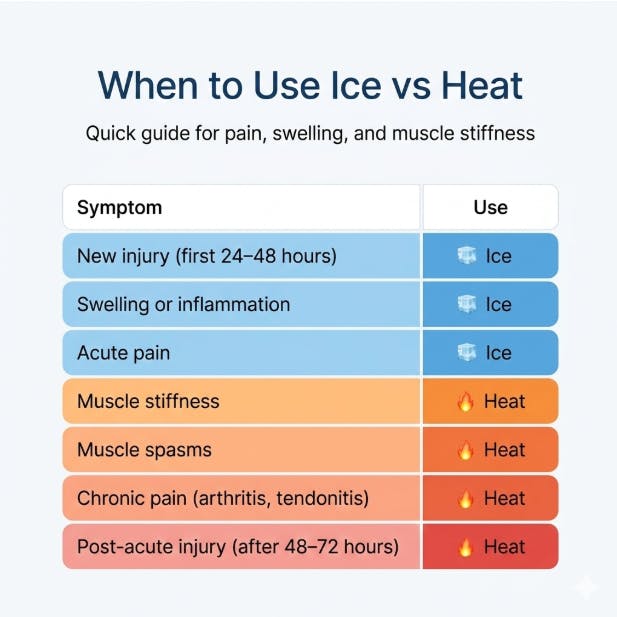
Use ice for new injuries and swelling. Ice reduces inflammation and numbs pain by slowing blood flow to the area.
Use heat for muscle stiffness and chronic pain. Heat increases circulation and relaxes tight muscles.
Quick rule:
- New injury or swelling → Ice
- Tight muscles or chronic pain → Heat
When to Use Ice
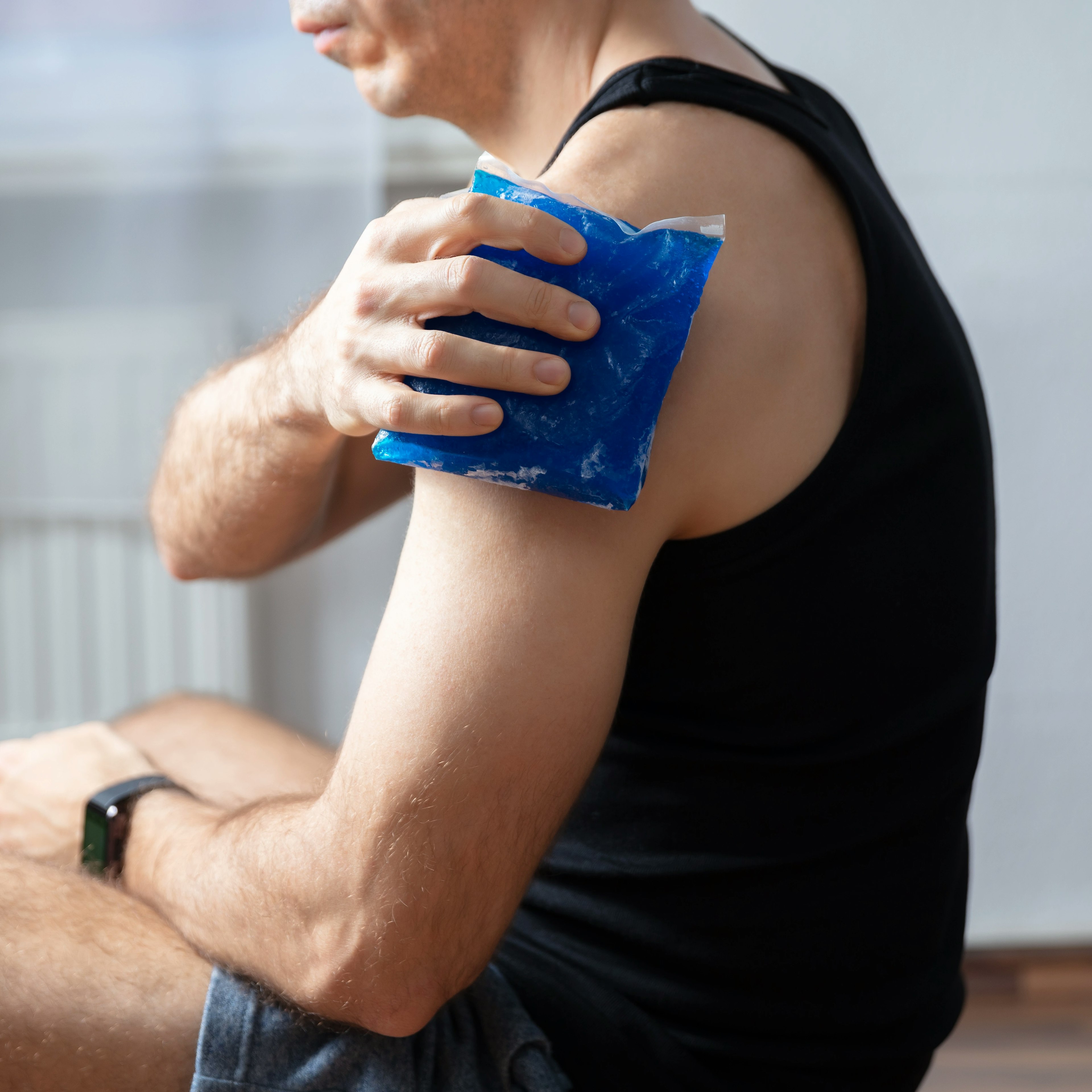
Ice therapy, also called cold therapy or cryotherapy, helps reduce inflammation by constricting blood vessels and slowing blood flow to the injured area. This makes ice most effective during the first few days after an injury.
Use ice when you have:
- A new sprain, strain, or rolled ankle
- A swollen joint after activity
- Redness or tenderness with movement
- Acute pain from overuse (such as after a long run)
Examples
Twisted your ankle? Ice.
Rolled your foot and it’s puffy? Ice.
Apply ice for 15–20 minutes at a time, then remove it for at least the same amount of time before reapplying.
Avoid using ice before stretching or physical activity, as cold temperatures can tighten tissues and make movement more difficult.
When to Use Heat
Heat works oppositely. It opens blood vessels, increases circulation, and relaxes tight muscles and stiff joints.
Heat does not reduce swelling, but it can help make chronic pain and muscle stiffness more manageable.
Use heat when you have:
- Tight muscles or tension
- Joint stiffness in the morning or after rest
- Chronic conditions such as arthritis or tendonitis
- Muscle spasms
- Soreness after activity once swelling has gone down
Examples
Tight hamstring? Heat.
Achy back that flares up during cold weather? Heat.
Apply a warm compress or heating pad for 15–20 minutes to help loosen muscles and improve mobility.
Do not use heat on a swollen or newly injured area, as it can worsen inflammation.
Ice vs Heat Cheat Sheet
Can You Use Both Ice and Heat?
Yes, but not at the same time.
Some people benefit from using heat before activity to loosen stiff muscles and ice afterward if inflammation or swelling develops.
General injury timeline
- Days 0–3
Use ice to control swelling and inflammation. - Days 4–7
Use ice if swelling remains.
Use heat if the area feels stiff or tight. - After 1 week
Use whichever therapy provides the most relief while monitoring for flare-ups.
How to Apply Ice or Heat Safely
To avoid skin irritation or injury, follow these safety tips:
- Always wrap ice or heat packs in a towel or cloth
- Limit use to 15–20 minute intervals
- Elevate the injured area when icing to help reduce swelling
- Stay hydrated, especially when using heat
- Stop treatment if you feel sharp, burning, or worsening pain
People with certain medical conditions should use caution.
If you have diabetes, circulation problems, or nerve conditions such as diabetic neuropathy, speak with your doctor before using heat or cold therapy. These conditions can reduce temperature sensitivity and increase the risk of burns or skin injury.
When to See a Primary Care Provider
If pain lasts longer than a few days, keeps returning, or interferes with your daily activities, it may be time to see a primary care provider.
A primary care clinician can evaluate your symptoms, rule out more serious injuries, and recommend the most appropriate treatment or referral if needed.
Consider scheduling an appointment if:
- You are unsure whether the injury is mild or more serious
- Pain continues despite rest and home treatment
- You notice bruising, numbness, or changes in how the joint looks or moves
- Symptoms keep returning after activity
When to See a Doctor for Muscle or Joint Pain
Most minor injuries improve with rest, ice, or heat. However, if symptoms persist or worsen, a primary care provider can evaluate the injury and recommend appropriate treatment.
At CLS Health, providers assess joint pain, muscle injuries, swelling, and other musculoskeletal concerns to help patients recover safely.
Schedule an appointment with a provider if your pain isn’t improving or keeps coming back.
FAQs
Ice is better for swelling. Cold therapy constricts blood vessels and reduces inflammation, helping control fluid buildup around injured tissues.
Ice is best immediately after an injury to reduce inflammation. Heat works better for muscle tightness, stiffness, and chronic pain conditions.
Ice should be applied for 15–20 minutes at a time, followed by a break of at least 20 minutes before reapplying.
Most people switch from ice to heat after 48–72 hours, once swelling decreases and stiffness becomes the main symptom.