

Heel pain can make every step feel like a challenge. If you’ve been diagnosed with plantar fasciitis, you know how persistent this condition can be.
Most people find relief through conservative care such as stretching, orthotics, supportive footwear, compression socks, and rest. However, if pain persists for several months, your provider may discuss advanced treatment options such as Tenex (a minimally invasive procedure) or traditional plantar fasciitis surgery.
This overview explains how both procedures work, their differences, and what to expect from each approach.
What Is the Tenex Procedure?
Tenex is a minimally invasive treatment that uses ultrasound technology to remove damaged tissue from the plantar fascia. By targeting only the unhealthy areas, Tenex helps restore the fascia to a normal, healthy thickness while protecting surrounding tissue.
During the procedure, your provider will:
- Give general anesthesia to prevent pain and ensure comfort
- Use ultrasound imaging to precisely locate the damaged tissue
- Make a tiny incision (about 3 mm)
- Use a debrider (medical device) that delivers ultrasonic energy to break down and remove the damaged tissue
- Insert a small needle into the tissue to stimulate your body’s natural healing response
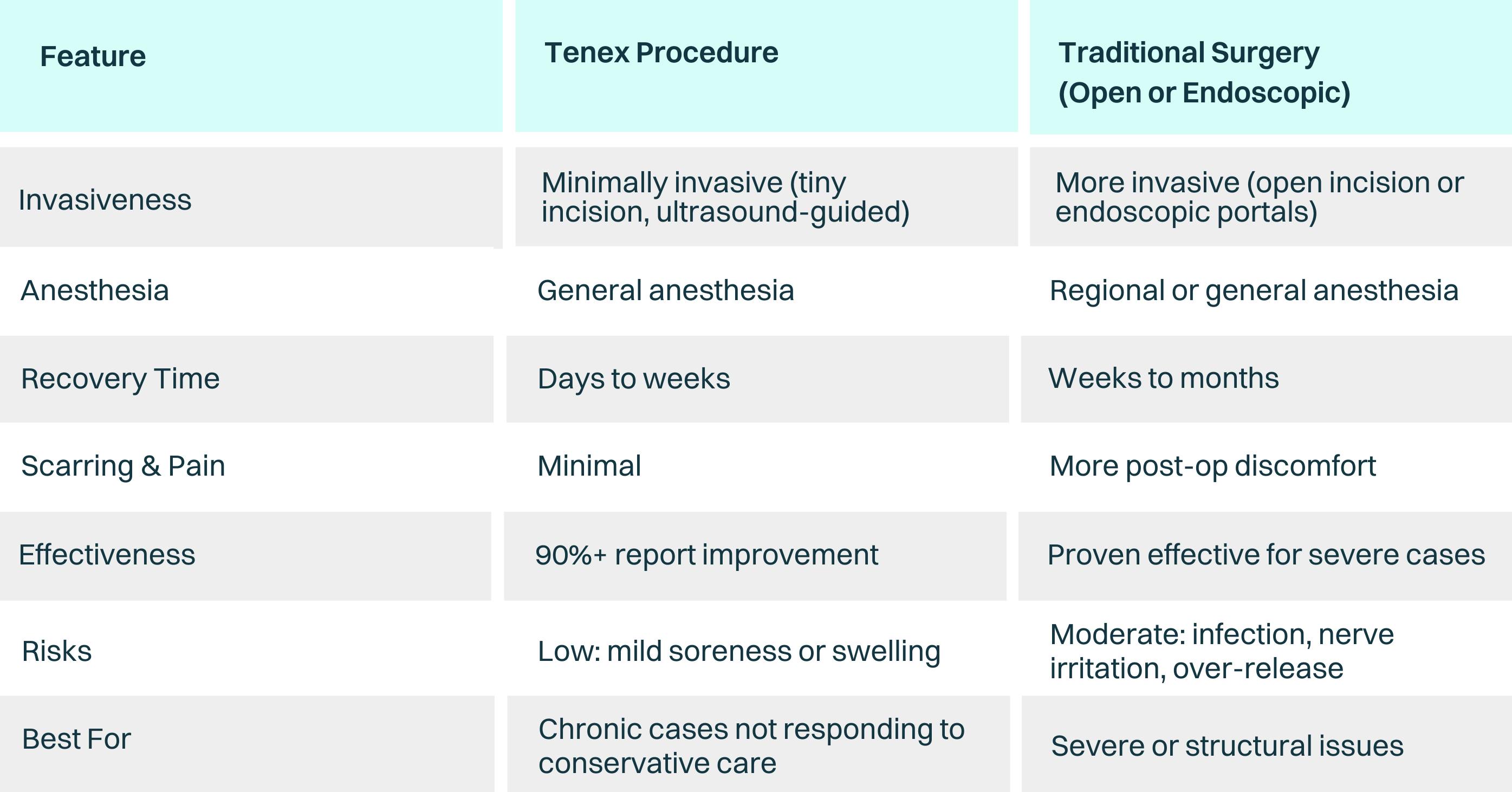
The Tenex procedure offers quicker recovery and less downtime than traditional surgery, with more than 90% of patients reporting significant pain relief.
What Is Traditional Plantar Fasciitis Surgery?
When other options aren’t effective, your provider may recommend traditional plantar fasciitis surgery, also called a plantar fasciotomy.
This procedure involves cutting or releasing part of the plantar fascia to reduce tension and inflammation. It can be performed as:
- Open surgery, with a small incision in the heel or arch
- Endoscopic surgery, using small portals and a camera to guide the release
Both open and endoscopic methods are proven to significantly improve pain and mobility, though recovery can take several months.
Potential risks include infection, nerve irritation, or changes in arch stability, as the plantar fascia plays a key role in supporting your arch and helping you walk properly.
In some cases, releasing the fascia may shift the original pain from the heel toward the outside (lateral) edge of the foot. This is why proper follow-up care and physical therapy are important after surgery to restore normal movement and prevent long-term issues.
How Do Tenex and Traditional Surgery Compare?
When Might These Procedures Be Considered?
Your provider will typically suggest advanced procedures only after conservative treatments have been tried for at least six months.
Tenex may be considered if:
- You have chronic heel pain that hasn’t improved with stretching, orthotics, or injections
- You want a quicker recovery and minimal downtime
- You prefer a minimally invasive option before open surgery
Traditional surgery may be appropriate if:
- The plantar fascia shows severe structural damage or tears
- You’ve already tried Tenex or other nonsurgical treatments without success
- Your imaging shows significant mechanical tension or deformity
A podiatrist can help you decide which treatment best matches your condition and goals.
Recovery and Outlook
After a Tenex procedure, most patients resume light activity within one to two weeks, with full recovery expected in about eight weeks.
For traditional surgery, recovery is longer and may include several weeks in a boot or cast.
Patients who undergo the Tenex procedure generally experience less pain and faster recovery than those who have traditional open surgery.
Find Relief from Chronic Heel Pain in the Houston Clear Lake Area
Plantar fasciitis can be stubborn, but modern treatments like Tenex provide new ways to find relief without major surgery.
Both Tenex and traditional surgical options can successfully reduce chronic heel pain — what matters most is timing, diagnosis, and individualized care.
If you’re struggling with persistent heel pain, visit our podiatry clinic in Clear Lake. Our dedicated team will help you explore every option, from conservative care to advanced procedures, so you can get back on your feet.
Book With Dr. Matthew Rockett, DPM — Houston’s Top Tenex Specialist
Don’t let heel pain slow you down. Schedule an appointment with Dr. Matthew Rockett, DPM, who has over a decade of experience performing Tenex procedures and more than 25 years of expertise in foot and ankle care. Take the first step toward lasting relief with advanced, patient-centered treatment options.