A lump on the top, side, or bottom of your foot can have several causes, including ganglion cysts, plantar fibromas, and other soft-tissue growths. Some lumps are painless, while others cause discomfort when walking, wearing shoes, or applying pressure.
Although many foot lumps are harmless, not every bump is a cyst. Understanding the possible causes, symptoms, and treatment options can help you recognize when it's time to see a podiatrist.
Key Takeaways
Foot lumps can develop on the top, side, bottom, or near the ankle and may have different causes.
Ganglion cysts are fluid-filled, while plantar fibromas are solid, noncancerous growths.
Treatment depends on the diagnosis and symptoms, and may include monitoring, padding, drainage, or surgery.
A new, growing, or painful foot lump should be evaluated by a healthcare provider.
What Causes a Lump on the Top, Side, or Bottom of Your Foot?
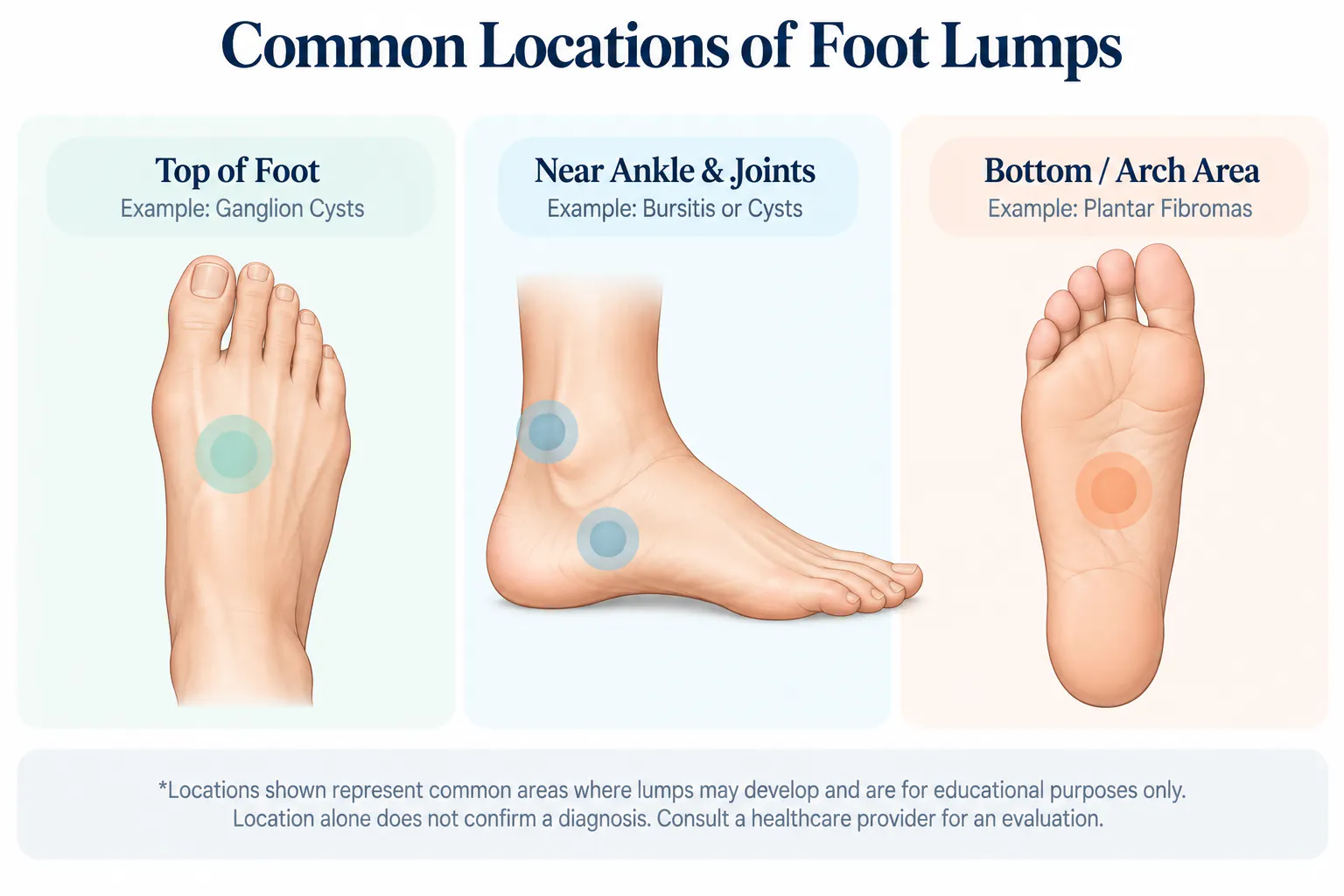
The location of a foot lump can offer clues about its cause, although a physical examination may be needed to identify it.
- Lump on top of foot: May be a ganglion cyst, bony prominence, or another soft-tissue growth. Some become uncomfortable when shoes press against them.
- Lump on side of foot: May result from a ganglion cyst, a prominent bone, a bunionette near the little toe, or another condition.
- Lump on bottom of foot: A firm knot in the arch may be a plantar fibroma. Other lumps can develop beneath the skin.
- Lump near the ankle: Ganglion cysts and other soft-tissue masses may form around joints and tendons.
Because different conditions can look similar, a podiatrist can help determine the cause and whether treatment is necessary.
Types of Foot Cysts and Other Common Lumps
Ganglion Cyst
A ganglion cyst is one of the most common types of cysts found on the foot or ankle. This benign, typically round or oval, fluid-filled growth often forms near joints or tendons, such as the top of the foot or around the ankle. While a ganglion cyst on the foot is usually painless, it can become uncomfortable if it presses on nearby nerves or structures, potentially making it difficult to walk.
Symptoms: A noticeable lump, trouble walking, tenderness, especially if the cyst grows over time or interferes with joint movement.
Plantar Fibroma
A plantar fibroma is a benign, firm, solid growth that develops within the plantar fascia, the thick band of tissue supporting the arch of your foot. Unlike a fluid-filled ganglion cyst, a plantar fibroma often appears as a knot or lump on the bottom of the foot and may cause discomfort when walking or standing for long periods.
Symptoms: A firm lump in the arch of the foot, tenderness when pressure is applied, and discomfort when walking or standing.

Giant Cell Tumor of the Tendon Sheath
A giant cell tumor of the tendon sheath (GCTTS) is a usually benign, solid growth that develops in tissue surrounding a tendon. It may appear as a slow-growing lump on the foot or near the toes and is often painless. Unlike a fluid-filled cyst, this type of growth is solid and may cause discomfort if it presses against nearby structures or footwear.
Symptoms: A firm, slowly growing lump, tenderness or discomfort with pressure, and occasional difficulty wearing shoes or walking comfortably.
Mucoid Cyst
A mucoid cyst is a benign, jelly-like, fluid-filled lump that typically develops near a toe joint, often close to the nail. These cysts may be associated with degenerative joint conditions such as osteoarthritis.
Symptoms: A small lump near the toenail, changes in nail growth or appearance, tenderness, or discomfort around the affected joint.
What Causes Foot Cysts and Lumps?
There are several causes of a cyst on the foot, often depending on the underlying cause. You may develop a cyst on the foot or ankle due to one of the following reasons:
- Underlying medical conditions that cause inflammation, like arthritis or gout
- Trauma or injury to the foot or ankle
- Repetitive stress on the foot or ankle
- Joint or tendon irritation
How Are Foot and Ankle Lumps Diagnosed?
A podiatrist can evaluate a foot or ankle lump by examining its location, size, firmness, and tenderness. Your provider may also ask when the lump appeared, whether it has changed, and if it affects walking or wearing shoes.
Depending on the findings, diagnostic tests may include:
- X-rays: To identify bony changes or abnormalities.
- Ultrasound: To help distinguish fluid-filled cysts from solid growths, such as plantar fibromas or giant cell tumors of the tendon sheath.
- MRI: To examine deeper soft tissues or investigate an unclear diagnosis.
- Biopsy: Occasionally needed when a growth has unusual or concerning features.
Not every foot lump requires imaging. Your podiatrist will recommend testing based on your symptoms and examination.
Treatments for Foot and Ankle Cysts
Treatment for foot and ankle cysts depends on the type of growth, its location, and whether it causes pain or interferes with daily activities. Some lumps only require monitoring, while others may benefit from treatment to relieve discomfort or improve mobility.
Common treatment options include:
- Observation: Small, painless cysts or benign lumps may not require immediate treatment. Your podiatrist may recommend monitoring for changes in size, appearance, or symptoms.
- Aspiration: Certain fluid-filled cysts, such as ganglion cysts, may be drained using a needle to relieve discomfort. However, these cysts can return after drainage.
- Orthotics or Padding: Custom orthotics, shoe modifications, or protective padding may help reduce pressure and discomfort caused by plantar fibromas or other foot lumps.
- Surgery: Surgical removal may be recommended for certain solid growths, including giant cell tumors of the tendon sheath, or for cysts that cause persistent symptoms or recur. Not every foot lump requires surgery.
A podiatrist can evaluate the growth and recommend an appropriate treatment plan based on your symptoms and diagnosis.
When to See a Podiatrist for a Foot or Ankle Lump
Many foot lumps are noncancerous, but it's important to have a new or unexplained growth evaluated, especially if it changes over time.
Schedule an appointment with a podiatrist if you notice:
- A lump that is growing or changing shape
- Persistent pain or tenderness
- Numbness, tingling, or pressure near the lump
- Difficulty walking or wearing shoes comfortably
- A firm or unexplained mass that does not go away
Seek prompt medical attention if a lump becomes rapidly swollen, red, hot, or severely painful, particularly if accompanied by fever.
A podiatrist can identify the possible cause and recommend appropriate next steps.
Frequently Asked Questions
A hard lump on the side of your foot may be caused by a bony prominence, bunionette, cyst, or another soft-tissue growth. A podiatrist can examine the lump and determine whether imaging is needed.
Ganglion cysts are one possible cause of a lump on top of the foot, but other conditions can produce similar bumps. An examination can help identify the cause.
Yes. Some ganglion cysts shrink or disappear without treatment. If a cyst causes pain, presses on nearby nerves, or interferes with walking, a podiatrist may recommend treatment.
Many painless foot lumps are benign. However, a new, persistent, or growing lump should be evaluated to confirm its cause, even if it doesn't hurt.
Get Expert Care for Foot and Ankle Lumps
If you've noticed a new lump, cyst, or unexplained bump on your foot or ankle, CLS Health podiatrists can evaluate your symptoms, identify possible causes, and recommend treatment options tailored to your needs.
Book with Dr. Rathnayake

Podiatry, Foot and Ankle Surgery