
Key Takeaways
In-center hemodialysis removes waste and excess fluid from the blood when the kidneys can no longer do so effectively.
Treatment is commonly scheduled three times per week, with sessions often lasting about 3–4 hours, although your individual dialysis prescription may vary.
CLS Health provides physician-supervised dialysis care in Houston, Webster, and Sugar Land, with ongoing monitoring and coordinated nephrology care.
In-Center Dialysis Care in Houston
If you or a loved one needs dialysis, having convenient access to consistent treatment and an experienced kidney care team can make ongoing care easier to manage. CLS Health provides in-center hemodialysis in Houston, Webster, and Sugar Land, with treatment overseen by nephrology providers and supported by experienced dialysis professionals.
Our dialysis centers provide scheduled hemodialysis, ongoing monitoring, laboratory testing, and coordinated kidney care for patients with advanced chronic kidney disease and End-Stage Kidney Disease (ESKD).
Whether you're starting dialysis or transferring from another dialysis center, our team can help coordinate your treatment and ongoing nephrology care.
What Is Hemodialysis?
Hemodialysis is a life-sustaining treatment for advanced kidney disease and End-Stage Kidney Disease (ESKD). When the kidneys lose the ability to filter the blood effectively, dialysis replaces essential kidney function.
A dialysis machine and specialized filter (called a dialyzer) remove:
- Waste products
- Extra fluid
- Excess electrolytes, such as potassium, when needed
During treatment, blood is gently circulated through the dialysis machine, filtered, and safely returned to the body. While hemodialysis does not cure kidney disease, it helps prevent dangerous buildup of waste and excess fluid.
How Does Hemodialysis Work?
Understanding how hemodialysis works can make the process feel more manageable.
- A vascular access (fistula, graft, or catheter) provides safe access to the bloodstream.
- Blood flows into the dialyzer, which acts as an artificial kidney.
- Waste and excess fluid are removed.
- Clean blood returns to your body.
Each session is monitored by trained dialysis nurses under nephrology supervision. Vital signs, fluid balance, and laboratory values are reviewed regularly to ensure safe and effective treatment.
In-Center Hemodialysis: What to Expect
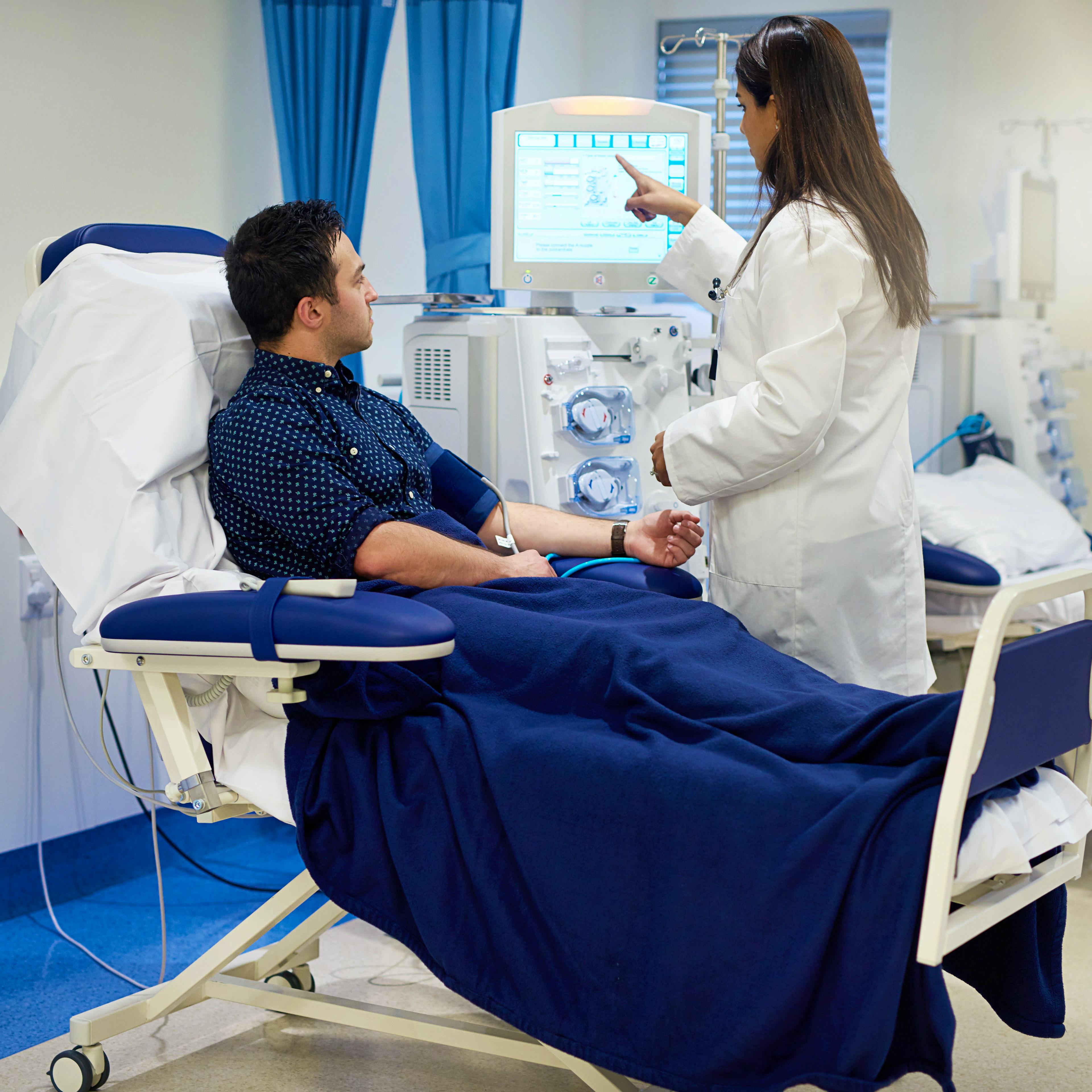
In-center hemodialysis is commonly scheduled three times per week, with each treatment often lasting approximately 3–4 hours. Your exact schedule and treatment time depend on your individual dialysis prescription and medical needs.
During treatment, patients may rest, read, watch shows, or use personal devices. Our dialysis centers focus on consistent treatment, predictable scheduling, and ongoing clinical monitoring.
Your nephrology team adjusts treatment based on factors such as:
- Laboratory results
- Fluid balance
- Blood pressure
- Symptoms
- Overall health
If you are new to dialysis, our team provides education and guidance to help you understand your treatment schedule and care plan.
Need In-Center Dialysis Care?
Whether you're preparing to begin dialysis or looking to transfer your care, our team can help you understand your treatment options and find a convenient Houston-area dialysis location.
How Long Does Dialysis Take?
A common question is: how long does dialysis take?
- Each treatment: 3–4 hours
- Frequency: Typically, three times weekly
- Duration of therapy: Ongoing unless a kidney transplant is performed
Your nephrologist adjusts treatment time and fluid removal based on lab results, symptoms, and overall health needs.
Dialysis Side Effects & Monitoring
Some patients may experience dialysis side effects, including:
- Fatigue
- Muscle cramps
- Low blood pressure
- Nausea
Our care team closely monitors your response to treatment and adjusts fluid removal rates and medications as needed. Regular lab testing helps maintain safe electrolyte levels and prevent complications.
In-Center vs. Home Dialysis Options
Different types of dialysis may be appropriate depending on your medical needs, lifestyle, home environment, and treatment goals.
In-Center Hemodialysis
- Performed at a dialysis center
- Uses a dialysis machine to filter the blood
- Commonly scheduled three times per week
- Treatment is monitored by the dialysis care team
Home Hemodialysis
- Performed at home after appropriate training
- Uses dialysis equipment designed for home treatment
- Treatment schedules vary and may allow more frequent or flexible dialysis
- Requires appropriate home setup and patient/caregiver training
Peritoneal Dialysis
- Usually performed at home
- Uses the lining of the abdomen to filter waste and excess fluid
- Can be performed manually during the day or with a machine, often overnight
- Requires training and appropriate catheter care
Some patients prefer the flexibility of home-based therapy, while others benefit from the structure and clinical support of in-center treatment.
Your nephrologist can help determine which dialysis option is appropriate for your medical needs and lifestyle.
Nutrition & Lifestyle During Dialysis
Nutrition and fluid management are important parts of dialysis care. Depending on your laboratory results and treatment plan, your care team may recommend monitoring:
- Fluid intake
- Sodium
- Potassium
- Phosphorus
- Protein intake
Nutrition recommendations can vary from patient to patient, so your care team can help determine which dietary changes are appropriate based on your individual needs.
Insurance, Medicare & Dialysis Referrals
Many people with End-Stage Kidney Disease (ESKD) may qualify for Medicare coverage for dialysis, including some patients under age 65. Eligibility and coverage can vary based on individual circumstances.
We also accept most major commercial insurance plans. Our staff can assist with insurance verification and care coordination before your first visit.
We welcome:
- New dialysis patients
- Individuals transferring from another dialysis clinic
- Referrals from nephrologists and hospital teams
Our staff assists with insurance verification and coordination before your first visit.
Dialysis Centers in Houston, Webster & Sugar Land
CLS Health provides in-center hemodialysis at convenient locations across the Greater Houston area.
We serve surrounding communities including Friendswood, Nassau Bay, Missouri City, Stafford, and Clear Lake Shores—offering convenient Houston-area access with coordinated specialty care.
CLS Health Nephrology — Houston Galleria
4615 SW Freeway Service Rd., 9th floor, Houston, TX 77027
4615 SW Freeway Service Rd., 10th floor, Houston, TX 77027
CLS Health Nephrology — Clear Lake
600 N. Kobayashi Rd., Ste. 311, Webster, TX 77598
CLS Health Nephrology — Sugar Land
14100 Southwest Fwy., Suite 500, Sugar Land, TX 77478
Why Choose CLS Health for Dialysis Care?
Patients choose CLS Health for:
- Physician-supervised dialysis care
- Experienced nephrology providers
- In-center hemodialysis
- Ongoing laboratory and clinical monitoring
- Coordinated kidney care
- Support for new and transferring dialysis patients
- Convenient Houston, Webster, and Sugar Land locations
- Medicare and major insurance plans accepted
Our goal is to provide consistent, coordinated dialysis care while helping patients manage their kidney health over the long term.
FAQs
Many people receiving conventional in-center hemodialysis have treatment three times per week. However, your dialysis schedule is prescribed based on your kidney function, laboratory results, fluid balance, overall health, and individual treatment needs.
Yes. Patients may be able to transfer dialysis care when moving, changing providers, or looking for a more convenient location. Your current and new dialysis teams can coordinate medical records, treatment information, and scheduling to help maintain continuity of care.
Medicare may cover dialysis for eligible patients with End-Stage Kidney Disease, including certain patients who are younger than 65. Coverage, eligibility, and out-of-pocket costs depend on your individual circumstances and insurance benefits.
Hemodialysis filters your blood through a dialyzer outside the body. Peritoneal dialysis uses the lining of your abdomen as a natural filter and is typically performed at home. Your nephrologist can help determine which approach is appropriate for you.
Your dialysis center can provide specific instructions before your first treatment. Patients may be asked to bring identification, insurance information, an updated medication list, and any requested medical records or treatment information.
Find a Dialysis Center Near You
Whether you're preparing to start hemodialysis or need to transfer your existing dialysis care, CLS Health provides physician-supervised treatment with convenient locations in Houston, Webster, and Sugar Land.
Our nephrology and dialysis teams can help coordinate your treatment, monitoring, and ongoing kidney care.
Dr. Perez

Nephrology