

Key Takeaways
Colonoscopy can detect and remove precancerous polyps during the same procedure, helping prevent colorectal cancer.
Colorectal cancer screening generally begins at age 45 for adults at average risk, although earlier screening may be recommended based on personal or family history.
Most colonoscopies are performed with sedation, and patients typically return home the same day.
Colonoscopy & Colon Cancer Screening in Houston
CLS Health provides colonoscopy and colorectal cancer screening for patients throughout Houston, Webster, Clear Lake, Pasadena, and surrounding communities. Colonoscopy can detect precancerous polyps and colorectal cancer and allows polyps to be removed during the same procedure.
For most adults at average risk, colorectal cancer screening begins at age 45. Earlier screening or diagnostic colonoscopy may be recommended based on family history, previous polyps, digestive conditions, or symptoms such as rectal bleeding or changes in bowel habits.
Colorectal cancer is the second leading cause of cancer-related death in the United States and is increasingly affecting adults under age 50. Unlike many cancers, colorectal cancer is often preventable through early detection and removal of polyps.
What Is a Colonoscopy?
A colonoscopy is a procedure that allows a gastroenterologist to examine the lining of the colon and rectum using a thin, flexible camera.
During the exam, your provider can:
- Detect and remove precancerous polyps
- Identify inflammation or bleeding
- Diagnose colorectal cancer
- Evaluate conditions such as inflammatory bowel disease
Because polyps can often be removed and tissue samples can be collected during the same procedure, colonoscopy can be used for both colorectal cancer screening and diagnostic evaluation.
When Should You Get a Colonoscopy?
For most adults at average risk, screening begins at age 45. A colonoscopy may also be recommended at any age to evaluate certain symptoms. In these cases, the procedure is considered diagnostic rather than routine screening.
Earlier or more frequent screening may be recommended if you:
- Have a family history of colorectal cancer
- Have inflammatory bowel disease
- Have previously had colon polyps
- Experience symptoms such as rectal bleeding, unexplained anemia, weight loss, or changes in bowel habits
If your results are normal, repeat screening is typically recommended every 10 years. Your provider will personalize the schedule based on your risk factors and findings.
If you’re unsure about the right timing, a gastroenterologist in Houston, Webster, or Pasadena can help determine an appropriate screening plan.
What to Expect During a Colonoscopy
Before Your Procedure
You'll follow bowel preparation and dietary instructions provided by your care team.
During Your Colonoscopy
Your provider examines the colon using a flexible camera. Polyps may be removed and biopsies taken when necessary. The procedure itself commonly takes approximately 20–30 minutes, although total appointment time is longer.
After Your Colonoscopy
You'll spend time recovering from sedation before returning home. Because sedation can impair your ability to drive, arrange for a responsible adult to take you home and follow your care team's instructions about returning to normal activities.
This is more useful than the existing isolated bullets and provides an easy featured-snippet structure.
Colonoscopy Preparation
Proper preparation is essential for accurate results. A clean colon allows your provider to clearly visualize and safely remove polyps.
Preparation typically includes:
- Temporary dietary adjustments
- A prescribed bowel preparation solution
- Clear written instructions in the days leading up to the procedure
Careful preparation reduces the likelihood of repeat testing and improves detection.
Due for a Colonoscopy?
If you're 45 or older, have a family history of colorectal cancer, or have symptoms that may require further evaluation, our gastroenterology team can help determine whether a colonoscopy is appropriate.
Colonoscopy vs. Other Screening Options
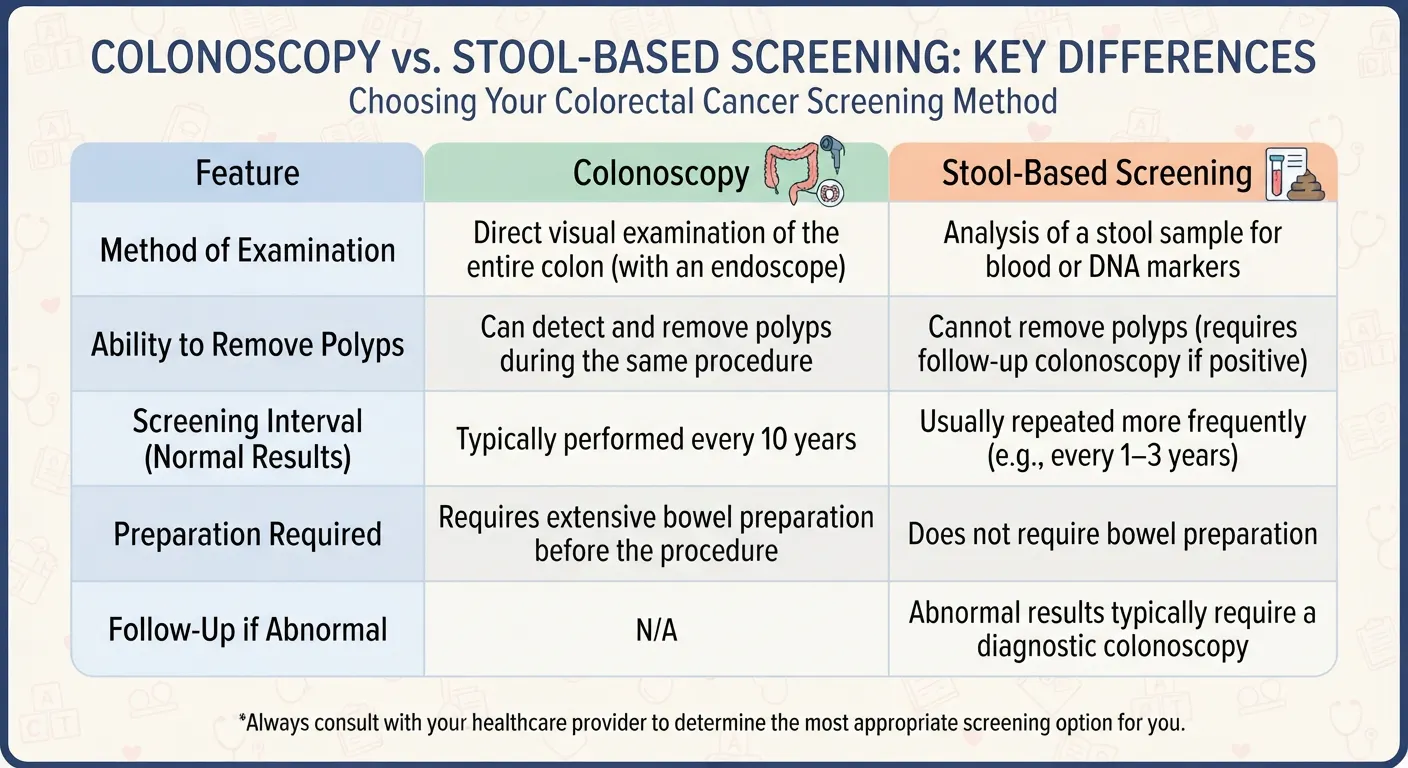
Several colorectal cancer screening methods exist, but they differ in scope and effectiveness.
Colonoscopy
- Directly visualizes the colon
- Detects and removes polyps in one exam
Stool-Based Tests (FIT / Cologuard)
- Non-invasive
- Detect hidden blood or abnormal DNA
- Cannot remove polyps
- May require colonoscopy if results are abnormal
Colonoscopy is unique among commonly used colorectal cancer screening options because it allows your provider to examine the colon directly and remove precancerous polyps during the same procedure.
Colonoscopy vs. Endoscopy
These procedures evaluate different parts of the digestive tract:
- Colonoscopy examines the colon and rectum
- Upper endoscopy evaluates the esophagus, stomach, and upper small intestine
Is a Colonoscopy Covered by Insurance?
Many insurance plans, including Medicare, provide coverage for colorectal cancer screening when eligibility requirements are met. Your individual costs can depend on your insurance plan, screening eligibility, and whether the procedure is performed for preventive screening or to evaluate symptoms or previous findings.
If a polyp is found or removed during a screening colonoscopy, coverage and cost-sharing can vary by plan and circumstances.
Our team can help verify your benefits before your procedure.
Why Choose CLS Health for a Colonoscopy?
Patients choose CLS Health for:
- Experienced gastroenterology and colorectal care
- Preventive colorectal cancer screening
- Diagnostic colonoscopy for digestive symptoms
- Polyp detection and removal
- Coordinated follow-up care
- Multiple convenient Houston-area locations
- Insurance and Medicare participation
Our team provides screening, diagnostic evaluation, and follow-up care to help patients protect their digestive health and reduce their risk of colorectal cancer.
Colonoscopy Locations Near Houston
CLS Health provides colonoscopy and colorectal cancer screening for patients throughout Greater Houston, with convenient access at the following locations:
Webster
CLS Health Gastroenterology — Clear Lake
Address: 600 N. Kobayashi Road, Suite 213, Webster, TX 77598
Houston
CLS Health Gastroenterology — Houston Galleria
Address: 4615 SW Freeway Service Rd., 9th floor, Houston, TX 77027
Pasadena
CLS Health Gastroenterology — Pasadena Vista
Address: 3801 Vista Road, Suite 100, Pasadena, TX 77504
Sugar Land
CLS Health Gastroenterology — Sugar Land
Address: 14100 Southwest Freeway, Suite 500, Sugar Land, TX 77478
Convenient locations, experienced providers, and coordinated follow-up care help ensure a smooth and reassuring screening experience.
Colonoscopy FAQs
For adults at average risk of colorectal cancer, routine screening generally begins at age 45. Your provider may recommend earlier or more frequent screening if you have certain risk factors, including a family history of colorectal cancer, inflammatory bowel disease, or previous colon polyps.
For average-risk adults with a normal screening colonoscopy, another colonoscopy is commonly recommended in 10 years. Your recommended interval may be shorter based on your findings, family history, previous polyps, or other risk factors.
A colonoscopy performed as routine colorectal cancer screening may be considered preventive care when you meet applicable screening criteria. Colonoscopies performed to investigate symptoms or follow up on previous findings may be classified differently for insurance purposes.
Start by scheduling with a CLS Health provider who can review your age, symptoms, medical history, and colorectal cancer risk and determine the appropriate next steps for screening or diagnostic evaluation.
Yes. If your provider identifies certain polyps during colonoscopy, they can often be removed during the same procedure and sent to a laboratory for examination.
If you receive sedation, you generally need a responsible adult to drive you home after the procedure. Follow the specific transportation and recovery instructions provided by your care team.
Schedule a Colonoscopy in Houston
Whether you're due for routine colorectal cancer screening or need a colonoscopy to evaluate digestive symptoms, CLS Health can help you determine the appropriate next step.
Our providers offer colonoscopy care for patients throughout Houston, Webster, Clear Lake, Pasadena, and surrounding communities.
Book with Dr. Zafar

Gastroenterology