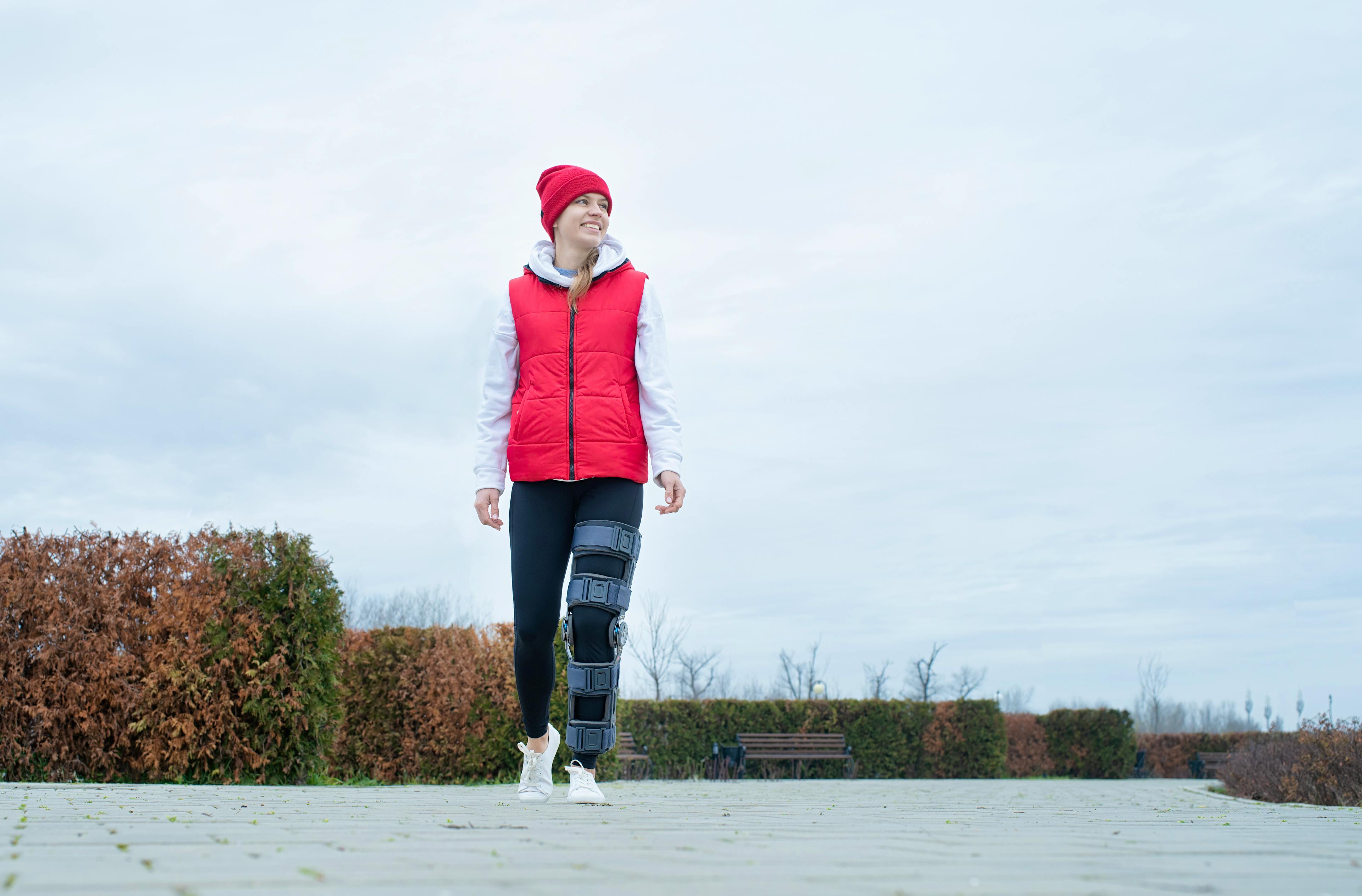
CLS Health orthopedic surgeons provide ACL tear treatment and ACL surgery in Houston, including ACL reconstruction, primary ACL repair, and BEAR implant treatment for eligible patients. Our orthopedic and sports medicine specialists evaluate the type and severity of your ACL injury, knee stability, activity level, and treatment goals to determine whether nonsurgical care or surgery may be appropriate.
ACL tears can cause knee instability and make it difficult to return to sports, exercise, or everyday activities. Treatment depends on the severity and location of the tear, associated knee injuries, and your individual needs.
How ACL Injuries Are Diagnosed
Accurate diagnosis is the first step toward the right treatment plan. Evaluation typically includes:
- A detailed physical examination to assess knee stability
- MRI imaging to confirm the type and severity of the ACL tear
- Assessment of the meniscus, cartilage, and other ligaments
This comprehensive approach helps identify whether the ACL is partially torn, completely torn, or associated with other knee injuries that may influence treatment decisions.
Non-Surgical Care for ACL Injuries
Not every ACL injury requires surgery. Partial tears and injuries that do not cause significant knee instability may sometimes be managed without surgery, depending on the patient's symptoms, activity level, knee stability, and treatment goals.
Non-surgical treatment may include physical therapy, bracing, and activity modification. Patients who continue to experience instability or want to return to cutting, pivoting, or other high-demand activities may be evaluated for ACL surgery.
Types of ACL Surgery at CLS Health
ACL Reconstruction Surgery in Houston
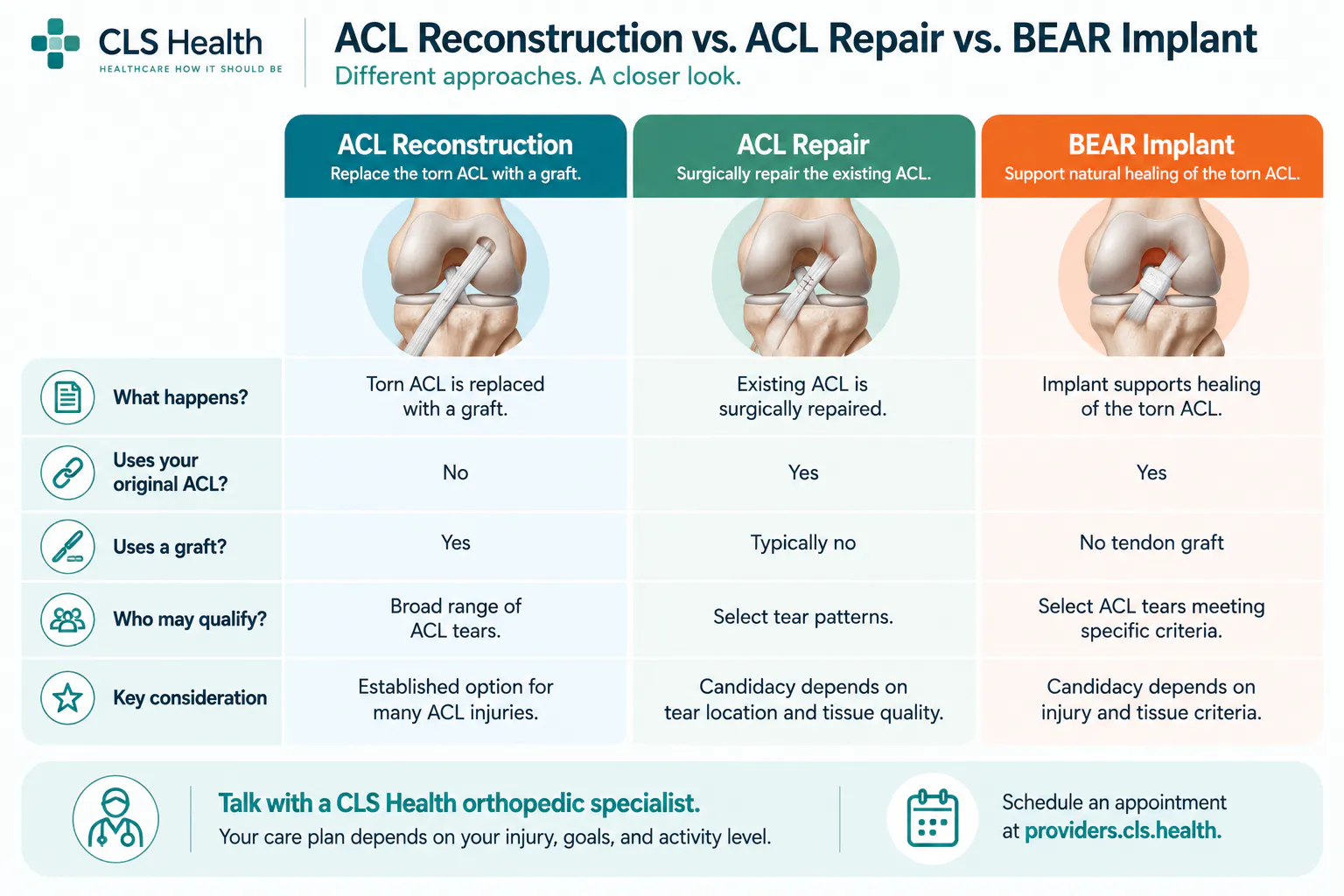
ACL reconstruction is a commonly performed surgical treatment for ACL tears. During the procedure, the torn ligament is replaced with a tissue graft to restore knee stability.
Depending on the patient's needs, the graft may come from the patient's own tissue (autograft) or donor tissue (allograft). ACL reconstruction may be recommended for patients with significant instability, complete or chronic tears, high activity demands, or associated knee injuries.
Your orthopedic surgeon will discuss graft options and recommend an approach based on factors such as your age, activity level, injury characteristics, knee health, and treatment goals.
ACL Repair (Select Cases)
In certain situations, primary ACL repair may be an option instead of reconstruction.
Repair may be considered when:
- The tear is located near where the ligament attaches to the bone
- Tissue quality is good
- The injury is addressed soon after it occurs
Because not all ACL tears are suitable for repair, candidacy is determined carefully by your surgeon based on imaging, timing, and knee anatomy.
BEAR Implant Treatment (Bridge-Enhanced ACL Restoration)
What Is the BEAR Implant?
The BEAR implant is an FDA-approved device designed to support the healing of the native ACL, rather than replacing it with a graft. It works by creating a scaffold that allows the torn ligament to heal together using the body’s own tissue.
Potential Advantages
- Preserves natural ACL tissue
- Avoids the need to harvest an autograft tendon
Who May Qualify
BEAR implant treatment is appropriate only for select patients. Candidates typically:
- Have a recent ACL tear
- Meet specific timing and tissue-quality criteria
- Do not have advanced arthritis or chronic instability
Your surgeon will determine whether BEAR is a safe and appropriate option for your knee.
BEAR Implant vs. ACL Reconstruction
While both procedures aim to restore knee stability, they work differently.
- ACL reconstruction replaces the torn ligament with a graft and has a long track record of success.
- BEAR implant treatment supports the healing of the original ligament and may be an option for select early injuries.
The best choice depends on injury timing, activity level, knee health, and long-term goals. Not all patients are candidates for BEAR, and reconstruction remains the standard for many ACL injuries.
Comparing ACL Reconstruction vs. ACL Repair vs. BEAR
Not Sure Which ACL Surgery Is Right for You?
Your orthopedic surgeon can evaluate your ACL tear, knee stability, activity goals, and associated injuries to determine which surgical approach may be appropriate.
Recovery & Rehabilitation After ACL Surgery
Recovery after ACL surgery is a gradual process guided by physical therapy and orthopedic follow-up.
Rehabilitation focuses on:
- Restoring strength, balance, and knee control
- Improving range of motion
- Progressing safely toward work, sports, or recreational goals
Recovery timelines vary by procedure and individual, but structured rehab is essential for protecting the knee and achieving the best outcome.
Why Choose CLS Health for ACL Surgery
Patients choose CLS Health for:
- Orthopedic surgeons and sports medicine physicians providing comprehensive ACL care
- Surgical and nonsurgical treatment options based on your injury and activity goals
- ACL reconstruction, repair, and BEAR implant treatment for appropriate candidates
- Coordinated rehabilitation and physical therapy
- Multiple orthopedic locations throughout Greater Houston
Meet Our ACL Surgeons
CLS Health offers ACL surgery evaluations and treatment at orthopedic locations throughout the Greater Houston area. Find a location near you to meet with an orthopedic surgeon and discuss your ACL treatment options.
Orthopedic Surgeons
- Joseph C. Allen Jr., MD — Clear Lake & Pasadena
- Kenneth Brooks, MD — Sugar Land & Clear Lake
- Barkha Chhabra, MD, MPH, FAAOS — Clear Lake
- Marilyn E. Copeland, MD — Clear Lake
- Laura Linscheid, MD — Sugar Land, Cypress & Clear Lake
- Michael Monmouth, MD — Clear Lake
- John Sparks, MD — Conroe
ACL Surgery Locations in the Houston Area
CLS Health offers ACL evaluation and treatment at orthopedic and sports medicine locations throughout the Greater Houston area. Find a location near you to schedule an evaluation with an orthopedic surgeon or sports medicine physician.
Clear Lake
CLS Health Orthopedics & Sports Medicine — Clear Lake
905 West Medical Center Boulevard, Suite 201, Webster, TX 77598
Sugar Land
CLS Health Orthopedics & Sports Medicine — Sugar Land
14100 Southwest Freeway, Suite 500, Sugar Land, TX 77478
Cypress
CLS Health Orthopedics & Sports Medicine — North Cypress
21216 Northwest Freeway, Suite 400, Cypress, TX 77429
Pasadena
CLS Health Orthopedics & Sports Medicine — Pasadena Vista
3801 Vista Road, Suite 100, Pasadena, TX 77504
Conroe
CLS Health Orthopedics & Sports Medicine — Conroe
1020 Riverwood Court, Suite 340, Conroe, TX 77304
FAQs
ACL surgery may be recommended if you have a complete tear, ongoing knee instability, associated knee injuries, or want to return to sports or activities that involve cutting and pivoting. An orthopedic surgeon can evaluate your injury and determine whether surgery or nonsurgical treatment is appropriate.
Recovery varies depending on the procedure, injury, and individual. Rehabilitation typically takes several months, with return to sports or higher-demand activities determined by your strength, knee function, healing, and your care team's guidance.
Some ACL injuries can be managed without surgery, particularly partial tears or injuries that do not cause significant instability. Physical therapy, activity modification, and bracing may be appropriate depending on the injury and your activity goals.
ACL repair preserves and repairs the existing ligament, while ACL reconstruction replaces the torn ligament with a tissue graft. Repair is appropriate only for certain tears, while reconstruction can be used for a broader range of ACL injuries.
The BEAR implant may be an option for select patients with certain ACL tears that meet specific injury and tissue criteria. An orthopedic surgeon can evaluate the tear, timing of the injury, knee health, and other factors to determine whether BEAR is appropriate.
Find an Orthopedic Surgeon for ACL Surgery in Houston
If an ACL tear is causing knee instability or limiting your activities, CLS Health orthopedic surgeons can evaluate your injury and help determine the appropriate treatment based on your knee health, activity level, and goals.
With ACL surgeons at locations throughout the Greater Houston area, CLS Health offers access to surgical options including ACL reconstruction, repair, and BEAR implant treatment for appropriate candidates. Specific procedures vary by surgeon and location.
Schedule an ACL evaluation today and take the next step toward restoring knee stability and returning to the activities that matter to you.
Book with Dr. Brooks
Orthopedic Sports Medicine, Hip and Knee Orthopedic Surgery, Shoulder Orthopedic Surgery