
Key Takeaways
Non-prescription bladder support options—such as supplements, teas, and patches—may improve control and reduce symptoms in mild cases of overactive bladder
Oxybutynin is available over the counter as a patch for women, while ingredients like pumpkin seed extract and soy germ are commonly used in bladder support supplements. Supplements may help some people, but they are not a substitute for medical evaluation or prescription treatment.
Persistent, worsening, or disruptive symptoms should prompt a visit to a healthcare provider to rule out more serious conditions and explore prescription treatments.
Overactive bladder, sometimes described by patients as an “irritable bladder,” is a common condition that can disrupt daily routines and interfere with sleep. This guide reviews OTC options for OAB, including the oxybutynin patch, bladder support supplements, and lifestyle strategies, while explaining when symptoms should be evaluated by a healthcare provider.
What Is Overactive Bladder?
Some people use the term “irritable bladder” to describe similar symptoms, such as urgency, frequent urination, bladder sensitivity, or needing to urinate at night. It can affect people of any age but is more common as people get older. OAB may result from changes in bladder muscles, nerve function, hormone levels, or other underlying conditions.
What to Look for in OTC Overactive Bladder Products
- Botanical ingredients – Some bladder support supplements use pumpkin seed or soy germ extract, though results vary.
- Clear labeling – Choose products with transparent ingredient lists, dosing instructions, and realistic claims.
- Evidence and safety – Look for products with clear ingredient information, realistic claims, and guidance from a healthcare provider.
- FDA-approved medication when appropriate – Oxytrol for Women is an FDA-approved OTC medication for OAB in women. Bladder supplements are not FDA-approved to treat overactive bladder.
- Side effect awareness – Even OTC products can cause side effects or interact with medications, so ask a healthcare provider if you are unsure.
Before You Try OTC Overactive Bladder Medicine
Before starting an OTC bladder product, consider whether your symptoms could be caused by something other than OAB. Frequent urination, urgency, or leakage can also happen with urinary tract infections, diabetes, pregnancy, kidney stones, prostate problems, medication side effects, or other bladder conditions. If symptoms are new, worsening, painful, or include blood in the urine, talk with a healthcare provider before using OTC treatment.
OTC Options for Overactive Bladder
Oxytrol for Women (Oxybutynin patch)
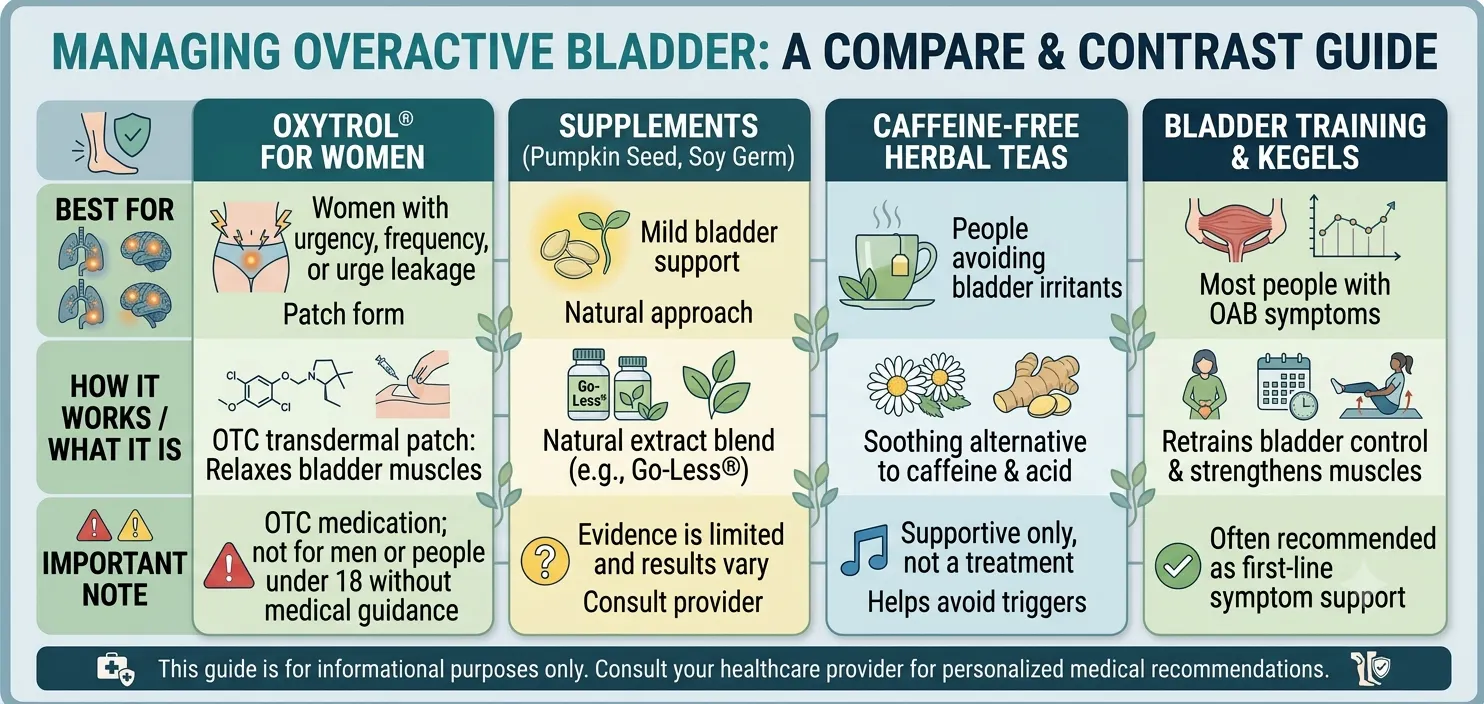
Oxytrol for Women is an over-the-counter patch used to help manage overactive bladder symptoms in adult women, including sudden urges to urinate, frequent urination, and urge-related leakage. Because similar symptoms can sometimes be caused by infections, diabetes, pregnancy, urinary retention, prostate issues, or other conditions, this product is not appropriate for everyone. Men, people under 18, and anyone with painful urination, blood in the urine, fever, chills, unusual urine odor or appearance, or unexplained back or side pain should speak with a healthcare provider before using it.
Bladder Support Supplements
Products containing pumpkin seed extract, soy germ extract, or other botanicals may support bladder control for some people with mild symptoms, but results vary and evidence is more limited than prescription OAB treatments.
Herbal Teas and Bladder-calming Drinks
Caffeine-free teas may be soothing for some people, but they do not treat the underlying cause of OAB. Avoid caffeinated teas if caffeine worsens urgency.
Additional Tips for Bladder Control
- Practice timed voiding and Kegel exercises to strengthen pelvic muscles.
- Limit caffeine, spicy foods, and alcohol, all of which can trigger urgency.
- Stay hydrated, but space fluids throughout the day.
- Avoid constipation, which can put pressure on the bladder.
When OTC Options May Not Be Enough
OTC products and lifestyle changes may help with mild overactive bladder symptoms, but they may not be enough if urgency, leakage, or nighttime urination continues to disrupt your daily life. You should also talk with a healthcare provider if symptoms are new, getting worse, painful, or associated with blood in the urine.
A urologist can help determine whether your symptoms are truly caused by overactive bladder or another condition, such as a urinary tract infection, kidney stone, prostate issue, diabetes, or bladder condition.
Talk to a Urologist About Overactive Bladder Treatment
If bladder symptoms are affecting your sleep, confidence, work, or daily routine, CLS Health can help. Our urology team evaluates and treats overactive bladder, urinary urgency, leakage, nighttime urination, and related bladder concerns with treatment options based on your symptoms and health history.
Schedule an appointment with CLS Health today for an overactive bladder evaluation.
Book with Dr. Dhir

Urology
FAQs
For women, Oxytrol for Women is an OTC oxybutynin patch used for symptoms of overactive bladder. Other OTC products, such as supplements, may support bladder health but are not considered medications for treating OAB.
“Irritable bladder” is not always a formal diagnosis, but people often use the term to describe urgency, frequent urination, or bladder sensitivity. OTC options may help some people with mild symptoms, but the right treatment depends on the cause. A urologist can determine whether symptoms are due to overactive bladder, infection, bladder irritation, prostate issues, or another condition.
Men should talk with a healthcare provider before using OTC OAB products, especially because urinary symptoms in men may be related to prostate enlargement, urinary retention, urinary tract infection, or another condition.
Some people report improvement with bladder support supplements, but results vary and evidence is limited. Supplements should not replace medical evaluation if symptoms are persistent, worsening, or disruptive.
See a urologist if symptoms interfere with sleep or daily life, do not improve with home care, worsen over time, or occur with pain, blood in the urine, fever, back pain, or trouble emptying your bladder.
Disclaimer
This article is for informational purposes only and is not a substitute for medical advice, diagnosis, or treatment. Over-the-counter products, supplements, and lifestyle strategies may help some people manage mild overactive bladder symptoms, but results vary. Urinary urgency, frequency, or leakage can also be caused by other medical conditions, so talk with a licensed healthcare provider before starting a new medication, supplement, or self-directed treatment plan.